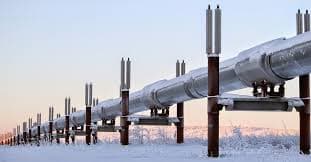
For years, lawmakers on both sides of the aisle have quietly agreed on this fundamental truth: America cannot build like it used to. From critical mineral mines and natural gas pipelines to high-voltage electric transmission lines, vital energy projects remain endlessly trapped in a swamp of bureaucratic red tape and frivolous litigation.
Yet, just as a generational compromise on permitting reform seems poised to pass Congress, Senate Minority Leader Chuck Schumer (D., N.Y.) appears ready to snatch defeat from the jaws of victory, multiple Senate sources told the Washington Reporter.
The high-level Senate sources view Schumer as being driven more by partisan posturing than what’s good for the country; the Senate’s top Democrat recently intervened in ongoing bipartisan negotiations for a package that would have benefited energy projects of all kinds, giving Senators of both parties wins to take home to their constituents.
While committee leaders and stakeholders have been working towards a bipartisan package for several years, the momentum behind permitting reform received a massive boost this spring with the appointment of Sen. Alan Armstrong (R., Okla.) to the United States Senate; Armstrong previously spoke with the Reporter at length about how he planned to bring 40 years of real-world experience as an engineer and eventually CEO of the Williams Companies, Armstrong injected crucial momentum into Capitol Hill’s negotiations with an unshakeable focus on permitting reform since his swearing-in at the end of March.
In that interview, he explained why he was “optimistic” at the time that permitting reform would pass the Senate. But time is running out for this Congress to deliver.
Armstrong’s pragmatism — and self-described naiveté to the politics of the Senate — had helped coalesce lawmakers from both parties and from both chambers around simple, commonsense goals: modernizing environmental review, setting firm deadlines, and ensuring that lawfully issued federal permits are actually respected.
Taking his fight directly to the American public, Armstrong lambasted the partisanship that hijacked negotiations and stalled the introduction of a bipartisan bill. “It’s a shame that the men and women elected to serve their constituents in the United States Senate allow petty partisanship and political games to get in the way of what’s best for our country,” he lamented. “Call me naïve, but I’d hoped to see more courage from my colleagues.”
Armstrong almost exclusively speaks about permitting reform on his social platforms and in his events, sharing that fixing America’s broken regulatory system is the single most important step Congress can take to unlock capital investment, lower skyrocketing energy costs, and ensure reliable domestic energy reaches American families.
But in recent days, both Schumer has all but scuttled what once seemed inevitable. For a brief moment, Senate leaders seemed ready to deliver. Stakeholders across energy sectors rallied around a balanced framework that promised faster, predictable reviews without lowering environmental standards.
But pressure from far-left activist groups opposed to traditional energy development threatens to sabotage the entire effort. Armstrong’s senior staff are running out of patience with Schumer’s delay tactics; Miranda Dabney, Armstrong’s Deputy Communications Director, explained that “Schumer is threatening to blow up the whole deal because he’s a partisan hack who never had any intention of doing what’s best for the country.”
With this legislative week wrapping up and a giant question mark over whether or not the Senate returns next week, lawmakers are running out of time to deliver a permitting reform bill. Should the week expire without bill text, many senators anticipate leaving D.C. until after the midterm elections, a result Senator Armstrong considers to be “a betrayal of the trust the American people have placed in us.”
“The fate of the nation’s power grid, pipeline capacity, and energy independence hangs in the balance,” a Senate energy policy veteran explained to the Reporter. “Senate Democrats under Schumer’s command have made their position clear: they would rather preserve regulatory gridlock than join realists like Armstrong to pass historic, bipartisan reform.”
But it’s not only Senate Democratic leadership that is scuttling the progress on permitting reform; moderate House Democrats had privately indicated support for a permitting bill; those lines of communication were cut off when Minority Leader Hakeem Jeffries (D., N.Y.) found out about the bicameral conversations, a person involved with those conversations told the Reporter.
“America can’t win if America can’t build, but Schumer seems perfectly fine letting the country lose,” one Senate staffer said to the Reporter.