EXCLUSIVE: How PBM reform and TrumpRx delivered a historic affordability win for Republicans
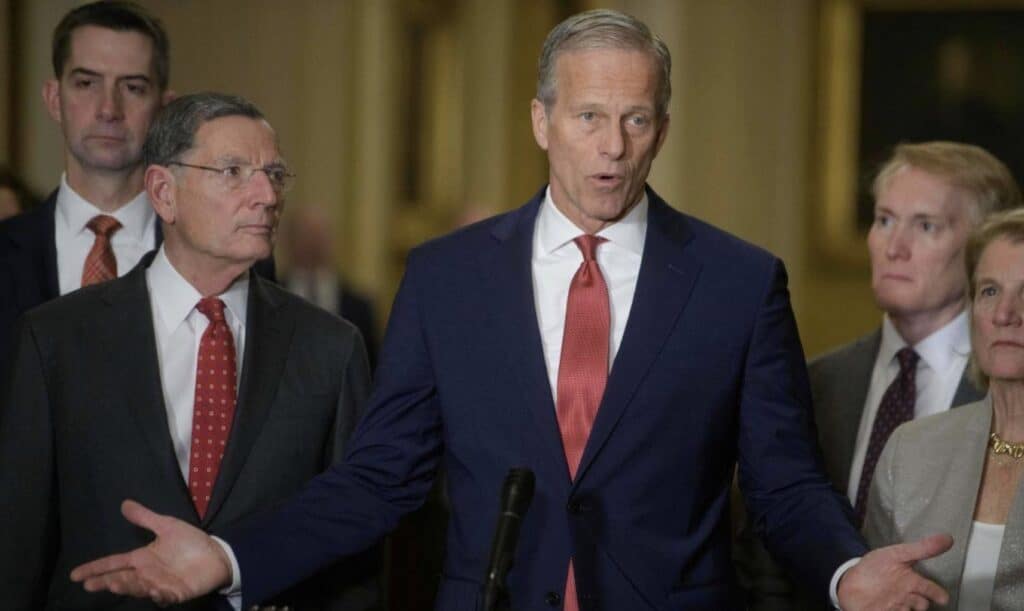
Senate Majority Leader John Thune (R., S.D.) made a prediction in February after Republicans enacted sweeping reforms of pharmacy benefit managers.
The legislation “will help bring down health care costs,” Thune said.
Six months later, prescription drug prices have posted their largest annual decline in more than 60 years.
The White House announced last week that prescription drug prices are down 3.9% since President Donald Trump took office and have fallen every month this year. The administration says its TrumpRx platform has already generated $700 million in savings for American patients.
The historic decline comes after Republicans pursued two major efforts to lower prescription drug costs: congressional reforms targeting pharmacy benefit managers, or PBMs, and the Trump administration’s push to give consumers more direct access to lower-priced drugs through TrumpRx.
Thune specifically highlighted PBM reform when he predicted lower prices in February.
“Under the Republican majority, Congress has taken concrete action to drive down costs at the pharmacy counter,” Thune said. “That starts with pharmacy benefit manager – or PBM – reform.”
Thune was explicit about what Republicans believed those policies would accomplish.
The package, he said, would “help bring down health care costs” while ensuring “the United States remains the leader in health care innovation.”
The Trump administration was pursuing its own approach at the same time.
President Trump launched TrumpRx in February following agreements with major pharmaceutical manufacturers to offer lower prices to American patients. The administration has since expanded the program to more than 600 generic medications, allowing consumers to compare cash prices and potentially purchase medicines without going through insurance middlemen.
According to the White House, GLP-1 medications that previously cost more than $1,000 per month are available through TrumpRx starting as low as $149, while some fertility drugs, inhalers, insulin and cholesterol treatments have seen discounts of 50% to 90% or more.
The Washington Reporter has documented the growing Republican support for TrumpRx for months.
Sen. Eric Schmitt (R., Mo.) told the Reporter that prescription costs have “gone way down” and called patients’ ability to directly access cheaper medicines “important.”
Sen. Tom Cotton (R., Ark.) called the administration’s expansion of TrumpRx to generic drugs a “huge deal” for lowering costs.
RNC Chairman Joe Gruters also backed TrumpRx as part of Republicans’ broader affordability message heading into the midterms.
There is also evidence that lower prices have come at the same time as increased investment in the sector. Major pharmaceutical companies are simultaneously making enormous investments in American manufacturing and research while prices are declining.
Johnson & Johnson has announced more than $50 billion in U.S. investment, AstraZeneca $50 billion, Roche $50 billion, GSK $30 billion and Eli Lilly more than $30 billion, according to investment announcements compiled by the White House. Amgen invested billions and Pfizer has added an additional $70 billion in U.S. investments above the $83 billion spent in recent years.
BMS announced a $2.3 billion advanced manufacturing campus in Houston expected to create nearly 500 permanent skilled jobs. The project is part of BMS’s broader commitment to invest $40 billion in American research, development, technology and manufacturing.
Sen. John Cornyn (R., Texas) praised the investment in an exclusive statement to the Reporter, while the White House called it evidence that the administration’s economic policies were encouraging companies to build in the United States.
And in a difficult midterm year, Republicans clearly see a political opportunity.
“While Democrats allow waste, fraud, and abuse to threaten Medicaid and Medicare benefits, Senate Republicans are delivering price transparency and making medications more affordable for American families,” NRSC National Press Secretary Bernadette Breslin told the Washington Reporter in an exclusive statement.