As artificial intelligence takes flight, cloud-based data management continue to grow, manufacturing returns to our shores, and technology in general demands more and more 24/7 power, the demands on our strained grid is surging. Meeting that demand while maintaining grid reliability and energy affordability will require an enormous buildout of transmission infrastructure.
But the political coalition pushing for that expansion is colliding with an uncomfortable reality: the same broken permitting system that spent the last decade stopping pipelines is fully capable of stopping transmission lines too.
For years, America’s permitting regime has strangled major infrastructure projects. Processes originally intended to ensure legitimate environmental review have increasingly evolved into de facto veto points. At the center of this dysfunction is Section 401 of the Clean Water Act.
Congress intended Section 401 to ensure projects complied with legitimate water quality standards, but over time states have expanded its use to evaluate the overall “campaign funding potential” of projects — effectively weaponizing the process to block infrastructure that political leaders oppose.
We have already seen this authority used to kill projects like the Constitution Pipeline. Because there are not clear standards governing these reviews, states can delay or deny permits for almost any reason. The result is a permitting regime increasingly optimized to stop infrastructure rather than build it.
Many transmission advocates assume projects associated with renewable energy will receive fundamentally different treatment than pipelines or other traditional energy infrastructure. That assumption misunderstands the nature of modern permitting fights. These battles are rarely just about the underlying energy source. They are disputes over land use, local opposition, litigation leverage, and political incentives — dynamics that apply just as readily to transmission lines as they do to pipelines.
Large-scale transmission projects face many of the same physical and regulatory realities as pipelines. They must cross state lines, waterways, wetlands, forests, private property, and environmentally sensitive areas. In states like Oklahoma, major interstate infrastructure projects cannot realistically move north-south or east-west without triggering overlapping federal and state permitting reviews.
We’re already seeing this happen. From the Cardinal-Hickory Creek transmission line in the Midwest to New England Clean Energy Connect in Maine and the SunZia project in the Southwest, transmission projects across the country are encountering years of litigation, permitting disputes, environmental review battles, and political opposition. That should serve as a warning sign for anyone who believes the renewable buildout will somehow avoid the permitting paralysis that has crippled other forms of linear infrastructure development.
The political dynamics driving these delays are straightforward. Interstate infrastructure often produces broad national economic benefits while concentrating political controversy at the local level. Governors and state regulators may see little political advantage in approving projects when the electricity, economic gains, or reliability benefits primarily flow elsewhere.
That creates powerful incentives for local opposition groups, competing utility interests, and political activists to pressure states into withholding approvals or extending review processes indefinitely. In practice, this creates a state-level veto over nationally important infrastructure.
The veto for transmission will take many forms, just as it has for pipelines. States can refuse to begin the Section 401 review process until an Environmental Impact Statement is complete, creating years of duplication and delay. Regulators can demand reroutes, supplemental studies, or additional mitigation requirements that trigger additional rounds of review or multi-year delays. Under current judicial standards, courts often grant substantial deference to these state decisions, making politically motivated permit denials extraordinarily difficult to overturn.
Federal Energy Regulatory Commission (FERC) Chairman Laura Swett recently described Section 401 authority as a “double-edged sword.” States that oppose transmission lines will increasingly pivot toward using Section 401 as their primary tool for obstruction. As she wisely observed, “if you’re trying to build an interstate high-voltage transmission line, a red state can shut that project down, even if every other state around it is blue and wants it.”
The consequences of inaction on Section 401 reform will be severe. This uncertainty drives up the cost of capital and, ultimately, the utility bills paid by American families. The United States cannot pursue AI dominance, industrial reshoring, advanced manufacturing growth, and long-term energy reliability while tolerating a permitting regime that is fertile ground for procedural obstruction and endless litigation.
The solution requires a technology-neutral approach that makes it easier to site all forms of linear infrastructure. Section 401 reviews should be integrated into the broader Environmental Impact Statement process rather than operating in a separate procedural silo. State and federal agencies should work through routing and mitigation issues together in one coordinated process. America needs a durable permitting framework that reduces redundant agency reviews, quickly resolves disputes and ensures nationally important infrastructure can actually get built.
If Congress misses this window to modernize America’s broken permitting laws, the country risks entering a future where every form of linear infrastructure — whether fossil fuel or renewable — is trapped in endless litigation and political deadlock. That outcome will raise prices for consumers, weaken our economy, undermine energy reliability and affordability, and leave the United States less competitive in an increasingly energy-hungry world.
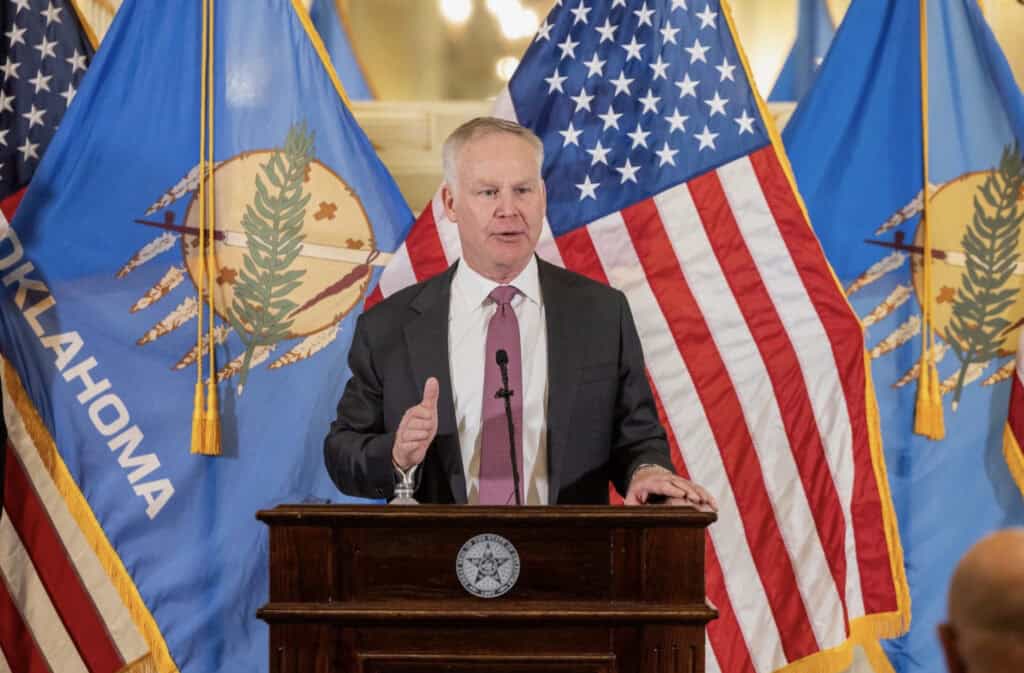
Sen. Alan Armstrong represents Oklahoma in the United States Senate. He served as CEO and then as executive board chairman of Williams from 2011 to 2026.