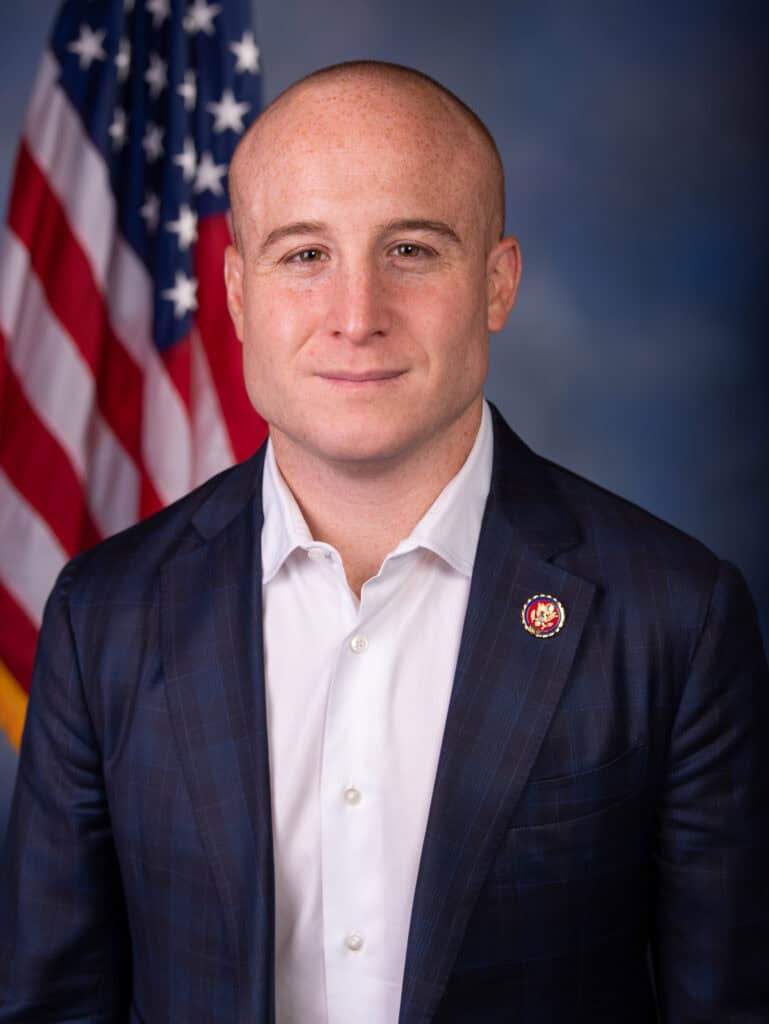
I served in Congress, and the experience taught me something I have not forgotten. When a technology transforms American life faster than Washington can comprehend it, lawmakers get one shot at shaping it. Most of the time, they miss.
I learned this on the House Homeland Security counterterrorism subcommittee in 2019. By then, the major social media platforms had been operating for over a decade. ISIS recruitment videos circulated freely. The Christchurch massacre was livestreamed on Facebook and copied across the internet faster than human moderators could pull it down. I worked with colleagues to push the platforms to take terrorist content seriously and to build the Global Internet Forum to Counter Terrorism into a real institution with dedicated staff and a budget. I’m proud of that work, but it was also more than a decade overdue.
I’m now watching my former colleagues make the same mistake with AI, and the stakes are higher. The mistake is the same one we made with the internet: letting technology run ahead of the rules until it was too late to write them well.
The Washington AI debate has narrowed to one question: should we stop it or let it run. Hearings get scheduled. Bills get drafted and abandoned. The technology keeps progressing while practical questions about how it touches American lives, jobs, schools, and hospitals get pushed off the agenda. We have spent more time on science fiction scenarios than on the choices actually in front of us.
That is a mistake, because this generation of tech looks different from the last one in ways that should inspire optimism while also changing and shaping the policy conversation.
Start with the physical footprint. Social media was capital light by design. Mark Zuckerberg built Facebook in a dorm room. The product needed almost no infrastructure. AI does not work that way. The five largest American hyperscalers spent roughly $448 billion on capital expenditures in 2025 and are on track to spend between $660 and $690 billion in 2026. Meta alone spent $72 billion last year and has committed to at least $600 billion in U.S. data center infrastructure by 2028. This is the largest privately funded infrastructure buildout in American history.
That spending lands in parts of the country that watched the last tech boom pass them by. A single large data center can require 1,500 workers during peak construction. Nvidia’s Jensen Huang told the World Economic Forum that the AI buildout will need “plumbers and electricians and construction and steel workers and network technicians.”
Demand for welders is up 27 percent since 2022. Data center electricians are earning up to $280,000 a year without a college degree. Amazon’s $12 billion data center in Louisiana will create 540 full-time jobs on site and another 1,700 for electricians, technicians, and security specialists. These are jobs my old district on Staten Island and South Brooklyn used to advocate for. They exist now in states across the country in places like Ohio, Texas, Iowa, and Virginia because of AI.
The applications are also different. The last consumer tech generation optimized for clicks and attention. AI is being applied to problems we have actually wanted technology to solve. Insilico Medicine moved an AI-designed drug into Phase II trials for idiopathic pulmonary fibrosis, a disease with almost no treatment options. MIT researchers used generative AI to identify new antibiotic candidates against drug-resistant gonorrhea and Staph. In 2025, a seven-month-old infant with a rare liver disorder received a personalized CRISPR therapy designed in six months. Novartis used generative AI to design 15 million potential compounds, then synthesized 60 in the lab. These are real outcomes in medicine, energy, and materials science, and they accelerate every quarter.
And the economics make it hard for any one founder to capture all the upside. You cannot build this technology in a garage. It needs fabs, power plants, transmission lines, and tens of thousands of skilled workers.
Washington tends to squander conditions like these. So here is the question I would put to my former colleagues. If you could go back to 1998, knowing what you know now about the internet, what would you do differently? Would you shut it down? Of course not. Instead you would set out to write rules for kids’ safety. You would protect intellectual property. You would build a national framework for privacy and data. You would seek to address projected and untenable hyper wealth concentration. You would invest in equitable access so broadband did not become another class, racial and regional divide. You would ensure that American hardware sold by American companies to the rest of the world was the foundation for this global transformation. You would make sure platforms had real responsibilities to the public, set early, before the business models hardened around the absence of them.
The real threat to most workers is being out-competed by other workers who have learned to use AI. The small business that builds the better agent pulls ahead of the one that cannot afford the tools. The school district that teaches AI literacy gives its students a generation-defining head start. The dynamic looks like the broadband divide of the early 2000s, only wider and faster, and Democrats should be the ones leading the response.
Instead, the loudest voices in the debate are telling Americans to be afraid. To be blunt, this brand of AI doomerism is an elitist project. A moratorium on AI data centers will only make AI more expensive, which means AI ends up available only to the people and companies that can already afford it. A data center ban does the opposite of what it advertises: big corporations can absorb the higher costs, while everyone else falls further behind. Restrictions sold as a check on elite power will instead serve to further concentrate it.
The Americans who would pay the price for that slowdown look different from the people advocating for it. Consider the welder in Phoenix earning six figures wiring a data center, the rural hospital using AI imaging to catch cancers earlier, the small business owner who finally has access to legal and accounting tools that used to cost thousands of dollars a month, the immigrant entrepreneur using AI translation to reach customers who used to be out of reach, or the families using AI to find their way through medical and legal systems they could never afford to navigate before. The harder we make it to build AI in America, the more we reinforce the socioeconomic barriers to progress that liberals should be focused on breaking down.
This technology will be built. The only question worth asking is whether we build it here, with a federal framework that protects kids and workers and competition, or whether we spend the next decade explaining to our constituents why we missed another opportunity to truly legislate as progressives.
I served in Washington. I’ve seen it miss this kind of moment before. I’d rather not watch it happen again.
Rep. Max Rose (D., N.Y.) represented New York’s 11th District in Congress.