To “Make America Great Again,” President Donald Trump understands that America must make the materials to enable greatness here at home. This principle has guided his bold actions on energy dominance, rare earth minerals, A.I., steel, ship building, and manufacturing, to name a few.
All have improved our economic and national security.
Now it’s time for something that can fly under the radar but is the literal foundation of our nation: cement.
Every road, bridge, runway, in America starts with cement. Our builder-president knows that every home, skyscraper, and data center requires cement. It is the most basic building block of the physical economy, so basic that we rarely think about its origin.
Yet right now, the foundation of the American infrastructure is increasingly sourced from abroad.
For years, cement from foreign countries like Turkey and Greece has flowed into American ports at prices no domestic manufacturer could match. Now, a new wave is arriving from Asia. In March, the U.S. Trade Representative launched Section 301 investigations into structural excess manufacturing capacity across sixteen economies, and cement is squarely on the list.
The evidence from the bad actors is plentiful. Vietnam maintains cement overcapacity of nearly 100 percent of its own domestic demand — meaning it can produce roughly twice what its own economy can absorb. Indonesia shows the same pattern of persistent oversupply. Their surplus gets dumped into the American market.
President Trump has rightly sought to eradicate this practice in other commodities. Now it’s cement’s turn.
This is not a case of foreign producers out-competing American cement manufacturing through better technology, smarter management, or genuine efficiency. Nor is the undercutting by foreign cement imports an example of “free trade.”
It is state-fueled overproduction untethered, propped up not by demand, but by their government’s subsidies and cheap state credit. The surpluses are exported at prices designed to move volume, not earn profit. When a foreign government undercuts the market, the “competition” American producers face isn’t a rival firm. It’s a rival treasury.
That distinction matters, because fair markets require honest prices. Prices dictate how a free economy allocates capital, labor, and investment. When dumped cement distorts them, American producers don’t just lose sales — they lose the price signals that justify investing in the next kiln, the next plant, the next generation of workers. The damage compounds for years, until one day, the domestic capacity simply isn’t there.
America has lost critical infrastructure capacity to these unfair practices, and President Trump is trying to correct it. If America does not refine, smelt, mine, crack, or produce the raw materials, but depends on another nation, then we are not a free nation. We cannot allow dependency to cripple us.
During the summer of our 250th birthday, importing cement undermines our independence. Cement is heavy, perishable in practice, and consumed in staggering volumes by this Administration’s generational construction boom: reshored factories, expanded ports, new power generation, and data centers to lead the AI century.
There is also a workforce story here that Washington may ignore but gets to the ethos of my organization, Power The Future. Cement plants anchor rural communities with high-paying jobs in places that don’t get many second chances. These are the same workers and towns hollowed out by the last several decades of watching Washington shrug while subsidized imports gutted one industry after another. The coal necessary for cement production is found all throughout Vice President JD Vance’s beloved Appalachia.
The men and women in these industries deserve the same protection against foreign finance ministries as Michigan’s auto industry and North Carolina’s textiles.
The USTR investigations should be pursued vigorously and concluded with remedies targeted at the state-subsidized overcapacity itself. Done right, they can restore honest pricing, which paired with the permitting and energy reforms, will allow American producers to expand to meet demand.
Trade remedies fix the unfair part; unleashing domestic production fixes the rest.
Critics will call this protectionism. It’s the opposite. Enforcing rules against state-subsidized dumping is what defending a free market looks like. A market flooded with government-financed product isn’t free: it’s rigged. The choice isn’t between free trade and trade enforcement. It’s between markets governed by prices and markets governed by politburos.
As the Builder-in-Chief, President Trump is implementing policies and regulations to power the largest building campaign in a generation. We must build it on our own foundation, with American cement produced fairly by American labor in American factories. That is the foundation to Make America Great Again.
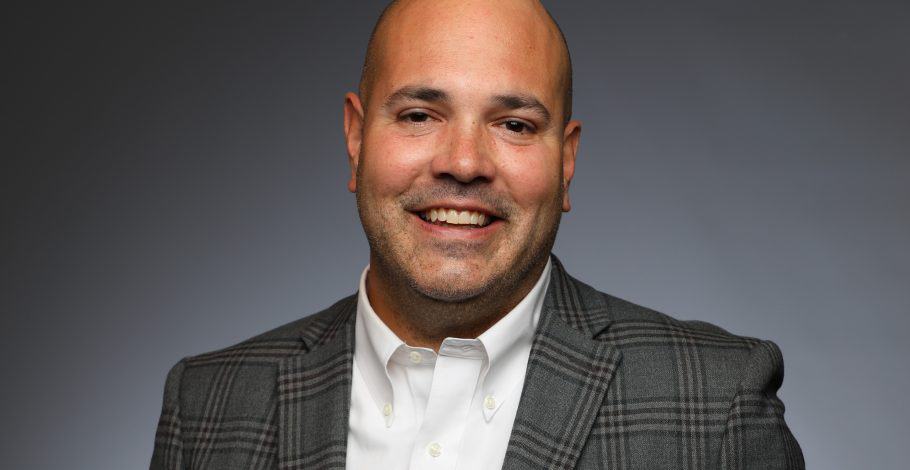
Daniel Turner is the founder and executive director of Power The Future, a national nonprofit organization that advocates for American energy jobs. He also runs a sheep and cattle farm in rural Virginia. Contact him at daniel@powerthefuture.com and follow him on Twitter @DanielTurnerPTF.