For years, Democratic candidates have worked to own the issue of healthcare in elections. But in Kentucky’s 6th District this year, Ralph Alvarado is looking to change that.
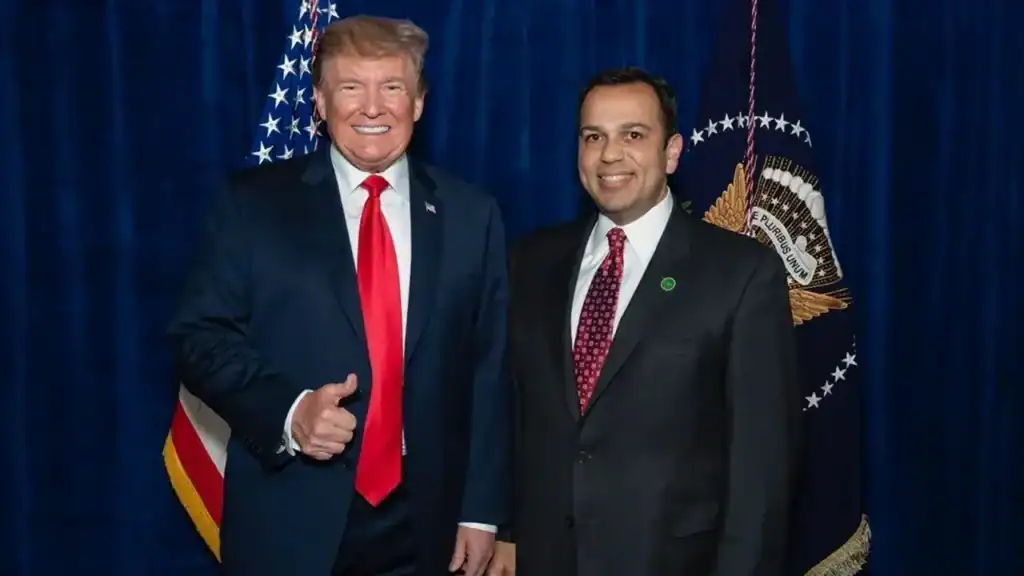
Armed with endorsements from President Donald Trump, Speaker Mike Johnson (R., La.), Majority Leader Steve Scalise (R., La.), Majority Whip Tom Emmer (R., Minn.), Reps. Andy Barr (R., Ky.) Brett Guthrie (R., Ky.), Hal Rogers (R., Ky.), Jim Jordan (R., Ohio), Greg Murphy (R., N.C.), and Matt Van Epps (R., Tenn.), alongside state and local officials from in and around the district, Alvarado easily won his primary, proving that Trump’s support remains “the strongest, most powerful endorsement right now in the country by far,” he told the Washington Reporter in an interview.
As the 2026 cycle has unfolded, Trump has proved time after time that he remains the GOP’s kingmaker, and Alvarado handed him one of his many recent wins. But Kentucky itself provided Trump much to celebrate; in addition to catapulting Alvarado into a likely seat in Congress, Trump also easily dispatched Rep. Thomas Massie (R., Ky.) and helped Barr avoid a messy finish to his primary for Senate, by endorsing the longtime legislator and announcing that he would appoint one of his rivals, businessman Nate Morris, to a job in his administration.
“When [Trump] came through with that endorsement, there was 35 percent undecided,” Alvarado told the Reporter. “A lot of those folks, once they heard that, broke in our direction, just because it validated my candidacy, and our polling showed that a lot of Kentucky voters in our district, particularly Republicans, wanted to see people who are aligned with the president’s vision for the country, and they wanted to see people who were going to be supportive of what he wanted to do and to get things done. They didn’t want folks who were gonna slow things down or gum up government. They wanted people who were going to work with the president and advance his agenda. Once people saw that I was the choice for him, they were supportive, and it gave us a shot of adrenaline towards the end of the campaign.”
While Trump’s endorsement was the most helpful for Alvarado, he credited with lawmakers like Jordan for backing him earlier, which he thinks helped guide the president to his side.
“Chairman Jordan actually endorsed us before the president endorsed, so his endorsement provided a lot of weight,” Alvarado explained. “There are people who are aligned with the Liberty Caucus and that gave me some validation with them. Before the White House endorses, they often want to make sure they have a full picture of who has endorsed me on a state level and on a federal level, and to be able to provide that name as someone who’s been very supportive of the president added to the confidence of the president to say that I am the right guy. That all adds up and it builds my case.”
“President Trump doesn’t just give out his endorsements,” Alvarado added. “You have to earn that endorsement. He wants to see that you’re working it, that you’re raising the money, that you’re getting the support you need from important and influential people federally and on the state level, and I think that just added to our case for the president’s endorsement. For a lot of people, when Chairman Jordan’s endorsement came out, that got attention, people were talking, and then once the president endorsed, leadership felt comfortable to be able to come in, and what they were feeling all along was to go ahead and back us and provide the support that we need. We’re going to need everybody’s help for this. It’s going to be a knife fight, and we know it’s going to be a major battle of ideas and of funding. We want to make sure that we’re best prepared to handle it.”
As he turns to the general election, he said that he “want[s] everybody’s help,” from his district and from Congress. While Alvarado is heavily favored to defeat Zach Dembo, his Democratic opponent, he is taking nothing for granted.
“I’ve told people that this race is going to be an old school battle,” he said. “It’s Obama influence and Obama money that’s coming through, but the traditional supporters of his who are backing Dembo; a lot of his funding has come from those sources, and it’s coming from the Obama network. That’s what we’re hearing, both at the state, and at the federal level, so that means it’s going to be a money battle for us…President Obama is funding a lot of his campaign along with a lot of his cronies, and we know what this country was like under President Obama. Do we want to go back to that? Do we want to have that kind of influence back in our federal government? I would argue that we don’t. I would argue that a lot of that influence was probably running Biden’s administration as well, and that’s when we saw the disaster of inflation going through the roof; the cost of everything went so high, the border was completely destroyed. All those sorts of things were under an Obama-influenced Biden administration, so the less we can have of the Obama minions, the better our country is going to be, the better our state’s going to be.”
On his side, he said, “we have to be able to raise the funds necessary to be able to beat them in messaging and getting our influence out, so we’re going to need help from everybody, and I think that’s going to be from House leadership. We were able to meet with them during the campaign.”
Kentucky voters, he said, are “still learning a lot about Dembo, [but] what people need to know is that this guy was a member of the Department of Justice under Biden, and the guy is talking about trying to get rid of, or control ICE, these kinds of things. That’s a bit of a concern; he wants to hold them accountable, is what he’s saying. And my question is, for what? They’re wanting to enforce immigration laws. It would have been better if he had held ICE accountable under Biden when they weren’t enforcing our laws and babysitting illegals at the border.”
Dembo, Alvarado added, “also resigned from DOJ, because he thought that President Trump was going after political enemies, but was he okay with Biden prosecuting an 80-year-old pro-lifer for praying? Or for Biden targeting Catholics? Or was he okay with DOJ coordinating with a lot of state prosecutors to persecute Trump? Or with early morning FBI raids on Mar-a-Lago? Or with giving CNN and other news outlets the heads up so they could cover the raid? Biden has tons of Department of Justice abuses and targeting of political opponents, and him claiming that that wasn’t the case is just outrageous.”
Alvarado believes the race between him and Dembo will come down to “uncommon nonsense versus common sense that the president is trying to advocate for every day.”
“I’m looking forward to those debates and discussions,” he said. “I think we have a much better case to make. The people of Kentucky want someone who is going to advocate for our values up in Washington, D.C.”
In that contest, expect Alvarado to lean heavily on healthcare, as he did repeatedly during the interview.
“First and foremost, you have to set expectations, because everybody thinks ‘you’re going to fix health care, that’s just flipping the switch, and it’s all done,’” he said, before adding that “it’s taken decades to get to the mess that it’s in right now, and what’s created the mess, I would argue, is lots of government and lots of insurance companies — and not your traditional insurance, like you would think of auto insurance or homeowners insurance.”
“These are really health plans that the federal government lot of times doesn’t want to manage, doesn’t understand, and they’ve turned them over to separate organizations that have become effectively a shadow government, where they take dollars and they are running a system and telling you what you can and cannot do for your own health,” he said. “I don’t think that’s the proper approach. As people don’t know how to fix health care, they go to the government and say, ‘you’ve got to fix this,’ or they go to the insurance companies, and the response from government is they squeeze tighter, and they push it to the insurance companies, and the insurance companies will say, ‘this is so complicated, let us take care of it for you,’ and they take more out of it, they squeeze harder, they make it as opaque as possible, so that people don’t have any transparency, and they do it all under the guise of ‘this is proprietary information, and you’re going to hurt my chances of doing business with my competitors, so I’m not going to tell you what’s in it.’ We’ve got to get away from that.”
On one hand, he said that “the answer that the Democrats propose constantly is to put more money in, broaden the influence of government, broaden the influence of the insurance companies,” but he “would say we need to go in the opposite direction. The more that we can get away from the federal government, and the more you can get back to people, and the doctors, and the providers, and away from insurance, would help. We need to give the ability to shop to patients; that will increase transparency, that will reduce costs. It’s not a free market system, either, that we want it to be. It’s not free market, but it will inject free market principles into healthcare that we don’t currently have. You can start with drugs; instead of telling patients, ‘here are the drugs you can pick from. If you have a disease state, let me tell you how much money we’re willing to cover for that disease state.’ Give the patient a voucher and let them shop and use those dollars and control it that way. Big pharma, who might want to charge a lot of money for a drug, will have to adapt. If they don’t fit underneath that budget that’s being provided, they’ll find a way to lower their price, or they won’t sell their product. The same thing can apply for radiology studies and lots of things that way. You’ve got to do it in stepwise approaches.”
“You start with things that people can control first,” he added, “and then you gradually move on, and I would argue that the system should be set up like we would do a utility in our country right now. If you’re going to run an electrical company to provide electricity to people’s homes, you are a utility. You could be a private company, but if you want to raise rates, you have to go before a government committee here in Kentucky to explain why the rates are going up, you’re bound by how you increase charges.”
“Health insurance has gotten to that point where we have to treat it like a private utility, but government would have to provide oversight in which any private entity could come in and offer a product, but you’re going to have to fall within certain guidelines and rules, and if you want to increase costs, you have to provide a lot of transparency, which is that’s the biggest problem right now, is that nobody wants to know what’s under the hood, so that’s part of what we have to start going towards,” he said, explaining that he saw this firsthand when he ran a public health department in Tennessee. “Public health is also very important; I ran an entire department in Tennessee as Commissioner of Health for two and a half years, with 3,000 employees, and a $1.1 billion budget. I managed dozens and dozens of federal grants that were multi-million dollar grants for lots of different things, and there’s an importance to public health, and I think people act like that isn’t important. It really is, in terms of trying to keep people healthy in our country. I will advocate for the importance of funding public health projects, but I do think that more of that needs to go to the states and less to the federal government. I do believe in block granting money. I’ve had a chance to talk to RFK and to HHS about the importance of block granting money to the states and trusting them.”
But, Democrat-run states have complicated the ability for many to trust their state and local governments, he cautioned. “Now, what we’re seeing in Minnesota and California with all this fraud doesn’t add to that trust,” he said. “We’ve got to find ways to, I would argue, create some kind of an auditing mechanism automatically in the federal government, and I’ll get to that in a second, but I think states can handle that better. They can use a dollar better. I would use a state dollar and would get 50 more more things done because of the flexibility of a state dollar versus that of a federal dollar. The states can save money by channeling the funds they have now, or even less, to state government; give them liberty and say these are meant to be used for these programs, and put loose guidelines on them, but let them use it however they need to. They’ll do it better than the feds will, and you could operate Medicaid like an accountable care organization model. Tennessee does that; they save hundreds of millions of dollars that they can then channel into innovation grants and things that people can use, and I think every state should do something similar. It’s basically a block grant model for Medicaid, and they find savings every year. I have talked about this a little bit behind closed doors. Every state government I’ve worked for has an auditor. With the state government here in Kentucky, we have an auditor that we elect.”
Alvarado pitched himself as a logical partner to the work that the Trump administration, led by Vice President JD Vance, is doing to counter fraud, because he has done it already. “When I was in the Department of Health in Tennessee, they have a comptroller, but I had an internal auditor within my own department who was a person who responded to me and investigated. When we found fraud, when we found something, we would fire people, we would take action; we would turn that over to the state auditor, who could take action further,” he said. “But our department was audited every year, and if we had findings, we had to answer to the legislature. I would argue we could do the same thing on the federal level. I don’t like to create more government, but we’re seeing the vice president do that right now. Why not allow the vice president’s office to be the federal auditor who would have to audit departments within the federal government and do the same thing to start looking for fraud and make that a permanent fixture within our federal government to start identifying these things?”
Alvarado also sees plenty of areas where he wants to work with the Make America Health Again (MAHA) movement, and its foremost champion, Health and Human Services (HHS) Secretary Robert F. Kennedy, Jr.
“I also want to look at Making America Healthy Again,” he said. “That model is also very important, with things like medical freedom, but then also trying to encourage people to lead healthier lifestyles. Secretary Kennedy’s got a good plan, which is Public Health 101. I really like what he’s trying to promote there, and that should be done on a national level as well, so there are lots of things. It’s very complicated. I understand all of it bores a lot of people, but for me, I find I have a lot of passion in what we need to do and how we can make our country healthier.”
“The beauty of MAHA is that it is a movement outside of government,” he said. “Right now the biggest push in this, politically, is young mothers. You’ve got young 20-somethings who, because of TikTok and because of social media, have learned about what processed foods have what compounds. ‘I don’t want to feed that to my baby, or to my children, or to my family.’ And you’ve got young people right now who are focusing on what they’re putting into their body, with less processed foods, less contaminated foods, and people are very conscious of that, and that’s a political power.”
“Secretary Kennedy and President Trump got a lot of attention from young adults because of their emphasis on this,” he noted. “Leaning into that is very important. The government should do everything it can to either require labeling, so that people know what they’re getting, where they’re getting their foods from, and then trying to provide again as clean a water supply as possible, removing preservatives, contaminants, getting back to normal foods, as Secretary Kennedy talks about, and then also normal exercise and movement.”
Alvarado is very optimistic that Americans can do more to increase their quality of life, based on a lot of those premises. “There’s some Netflix specials, one that’s called Blue Zones, and Blue Zones have been around for 30-40 years, but they’re basically places in the world where people live to 100 years or more of age at 10 times the international average, and the people are functional at that age, and they look at what causes it to happen,” he said. “Eating plant-based proteins, natural movement, having purpose every day, having the importance of relationships, and having faith in your life are what cause this. HHS is starting to promote all five of those things, and more about teaching people how to eat right, how to exercise, how to move, how to have relationships, how to have faith in your life. They have an office of faith now in HHS. All those things are really important, and people are starting to buy into that because they want to live longer naturally. They don’t want to have to rely on medicines and chemicals and compounds to live longer lives, and they want to have active, productive lives, without having to be invalid, basically. There’s a lot of emphasis, a lot of push on that. That’s a lot of the MAHA movement…It behooves us all to start looking into that and encouraging people to live that kind of lifestyle. If we can do it, we’ll live a lot longer and a lot healthier and save a lot of money.”
Another area in healthcare that Alvarado sees Trump succeeding in is Trump Rx, which has won bipartisan plaudits from former Democrats like Kenendy and from current Democrats, like businessman Mark Cuban.
“The beauty of that is that the president’s fixing the trade imbalance, and the situation that this country has paid for the world’s research and development when it comes to any kind of drugs or modern procedures needs to be fixed,” he said. “We’re the ones who are testing it, we’re spending all the money, and the rest of the world benefits from that; that includes medications, and we continue to pay much higher costs. Part of that’s also that we’re not manufacturing a lot of our drugs right here in our country, so we’ve got to be able to find a way to bring drug manufacturing back. When there have been shortages on penicillin, we rely on countries like China and Austria, and no one else has it, and if something happens with either one of those two supplies, it is a matter of national security, so the more we can manufacture drugs here and find reduction in costs, that would be the way to do it.”
“I’m tired of the insurance companies negotiating [deals] for you, and then they’re the ones who reap the savings,” he said. “They don’t need to be doing any of that. Get out of the way, you figure out what it costs you to treat hypertension, give the patient that amount, and then let them shop it and figure it out. Same thing should apply for radiology studies. They should apply for procedures. People will shop if they know where to look. That happens with everything everywhere. It’s the same thing that needs to apply for this, and the president’s injecting a lot of that. A lot of the things he wants to do are based off of transparency, free trade deals, not letting other countries take advantage of our country’s research and development.”
Alvarado’s focus on healthcare is so deep that he even considers jettisoning the term altogether in favor of “medical care.”
“The system’s gotten so used to if I have an emergency or something occurs, and someone else is paying the tab, I don’t care where I go, or what the costs are,” he said. He saw this firsthand with his daughter. “I remember when my daughter was in high school, she had her opening senior trip for high school, and they were playing capture the flag in the rain and having a blast, and she rolled her ankle and broke her fibula, and the teacher sent me a picture, and I said ‘bring her home,’ and she didn’t want to leave, she wanted to stay with her classmates, and I said, ‘well, as long as you have a way to immobilize and keep it elevated, I’ll see her tomorrow,’ and so next day I had to decide, ‘do I go to the ER?’ No, it’s going to cost me 5,000 bucks to go to the ER; I know an orthopedic surgeon, we make an appointment, get the X-ray, and it will cost me 150 bucks. I paid through my health savings account and saved a bunch of money, but I know to shop that, not to think about it. If I’m paying for it, you figure out quickly how to do those things, but it’s also about finding ways to prevent from getting sick to begin with.”
In the medical care realm, he noted that “a lot of Americans are frightened of the last stages of life; they’re frightened of death. Families are having a hard time letting go of people. A lot of money is spent in those last two weeks of life; those discussions have to be had by families about what do you want when the time comes. How do you want to handle those situations? Do we need to prolong things unnecessarily? People, if they can lead healthier lives, the odds of requiring the health system are markedly reduced.”
Another medical care change that he wants to see is in concierge medicine. Wealthy Americans “pay for a direct primary care provider, so if they go out and pay a doctor $2,000 a year, that doctor’s at their beck and call, and they help them navigate the system, they’ll be there to come to your house, all kinds of stuff.”
At the same time, he explained that “the people who over utilize our system, people who might be in the emergency room two, three times a week, are running up millions of dollars in cost per year. Five percent of the people in the system use up about 70 percent of the costs. I’ve argued with the insurance companies, what they ought to do is take those very expensive people and hire them as a concierge doctor, pay that doctor the $2,000 bucks, $3,000 whatever the fee is, but that doctor gets to do whatever he wants; he gets to order whatever test he wants, whatever medicine he wants. We hire him for a year and you will save millions of dollars because that guy will be at that person’s beck and call, and will see them three times a week, but you’ve got to do whatever that doctor says, and the insurance companies, the resistance they have to that they can’t let someone else have control; they have got to have their thumb on that doctor and they just are unwilling to do it, but it makes a lot of sense to me that you could provide a doctor to do that, and they’d be able to find a way to reduce that patient, keep them out of the hospital, even if you have to see them often.”
While Massie’s race was defined mostly by the incumbent’s hostility to Trump on a series of Trump’s priorities, Alvarado said that he completely rejects the anti-Semitism that took over Massie’s final months in Congress, saying that both parties need to reckon with it.
“I’m concerned about what we’re seeing nationally and internationally; both parties are involved in what I view as kind of an anti-Semitic approach to things,” he said. “It really bothers me. I’m a man of faith, I have a lot of beliefs that even the existence of Israel, in and of itself, is a miracle, but it’s also our strongest ally in the Middle East. I’m an America First guy; this is my country. I’m an American, I love my country. I want to see our country maintain its dominance in the world, to continue to be the best country in the world forever. That’s my goal, and I know at least in my lifetime I want to make sure that this country is the best, and I want for my kids and my grandkids to enjoy that as well.”
“The things that we want to do are for the benefit of our country,” he said. “I always tell people that I envision this country like we live in a neighborhood, and we’ve got the nicest house on the block, we make the most money, we’re the wealthiest family on the block, but our roof leaks, and we have a hole in the floorboard. One of our windows is broken. The basement door’s lock is broken. People have snuck in and squatted in our basement and eaten our food and slept in our bed sometimes. But we have the nicest house on the block, so do we spend money on everybody else’s home in the neighborhood, or do we fix our roof first and our floorboard and our window and lock our basement door and do we have to do? I say to do that first, but we have money left over. We’re a generous people, so if we have money to help our neighbors to help beautify the neighborhood, we will. Who do we want to help? We want to help our friends, not those who are enemies, and there are some of our friends who live on the edge of the neighborhood, and as people try to break into houses or try to come in and rob and kill people and do different things in our neighborhood, it behooves us if we have friends on the edge of the neighborhood who are willing to be the watchdogs and help protect them and help us guard, so that people don’t come into our house.”
Those friends, he explained, clearly include Israel. “It’s important for us to help those folks as well, and that’s how I view the relationship with Israel,” he said. “They’re a friend, and they’ve been a friend of ours for decades, they’re our staunchest ally in the Middle East, the only Western democracy in the Middle East, and a protector of civil rights in that area as well. I think it’s very important for us to continue to maintain that relationship. People out there that think that they’re somehow pulling our strings and pulling us; I don’t think that is true, but it’s become a narrative. It’s become a narrative by a lot of people out there. I know it’s the generation that’s coming up now. A lot of people are bought into that, they’ve watched a lot of information online, and are seeing that, and it concerns me. It concerns me because it’s happening on both sides of the aisle, and I’m worried, because we’ve seen a lot of these things happen internationally in the past, and the endings are not good, and it worries me. Obviously, our country comes first. We want to do what’s best for our country, but a lot of times, the benefits to the actions that we take benefit us and our allies as well.”
While Alvarado sees minimal similarities between himself and Massie, he sees major areas of overlap with Barr, his longtime friend who he is aiming to succeed in Congress.
“He’s been a tremendous congressman here, and he is leaving big shoes to fill,” he said, citing the “urban-rural mix” that the two of them bring to the table. “People can never criticize Andy Barr for his constituent services, his veterans’ services, he’s been tremendous at both of those. I’m looking forward to continuing those same levels of service; people have grown to expect it. It’s the gold standard in a congressional office.”
“I tell people that Andy Barr has been a very present congressman, and I hope to do the same, but with a healthcare slant,” he added. “He can do more financial services, and I can do more healthcare services. He’s a very popular figure in the 6th District…we want to get out the vote, and make sure people know that he and I are going to be cut from the same cloth and we are willing to advance the needs for things the 6th District needs. I will do that from the House and he will do that from the Senate.”
He explained how he envisions that partnership playing out in real life. “As we start to repatriate jobs from overseas, and bring manufacturing and industry and jobs into the district, we want them to come here to central Kentucky and to explain to other states why the importance of our location, and the water and energy that we have here, along with the workforce that we have here, is the best in the country,” he said.
“I remind people that Kentucky is the best place, because we are the right blend of Rust Belt work ethic, Midwestern sensibility, and southern hospitality that you won’t find anywhere else in the country,” Alvarado noted. “Andy has been a good friend for many years, and I can’t wait to keep working with him.”
Below is a transcript of our interview with Rep. Ralph Alvarado, lightly edited for clarity.
Washington Reporter:
Before your primary win, you had endorsements from President Donald Trump, from Speaker Mike Johnson, and of course from Rep. Andy Barr, who you’re running to replace. How did national Republicans, and also the local Republicans, help power you to this fairly decisive victory in the primary?
Ralph Alvarado:
The Speaker, like you mentioned, was helpful, but there was more than that too. I was honored to also have support from Tom Emmer, Leader Steve Scalise, Jim Jordan, Matt Van Epps, who I served with in Governor Bill Lee’s cabinet, and also Rep. Greg Murphy, who’s a physician and in the same tribe, as far as a physician and a conservative who wants to see some health care reforms. All of them were pretty vocal and endorsed me. We also had a lot of county and local elected officials, in addition to Kentucky Congressmen Hal Rogers and Brett Guthrie, who also came out and endorsed me as well. Those were big endorsements, because a lot of people look are on the fringes of the 5th District or something, and they look to them for direction. Those are big endorsements, but we also had a lot of state senators who people know and trust and who have served with me and know and trust me. When people hear local names, they have some trust there. With the president’s endorsement, in particular, when he came through with that endorsement, there was 35 percent undecided. A lot of those folks, once they heard that, broke in our direction, just because it validated my candidacy, and our polling showed that a lot of Kentucky voters in our district, particularly Republicans, wanted to see people who are aligned with the president’s vision for the country, and they wanted to see people who were going to be supportive of what he wanted to do and to get things done. They didn’t want folks who were gonna slow things down or gum up government. They wanted people who were going to work with the president and advance his agenda. Once people saw that I was the choice for him, they were supportive, and it gave us a shot of adrenaline towards the end of the campaign. So it really helped.
Washington Reporter:
You’re a couple of miles outside the district with Thomas Massie. What did you hear from voters about what Trump’s decision meant to them elsewhere in Kentucky?
Ralph Alvarado:
I didn’t hear as much with the Massie-Gallrein race. There were people I would encounter here and there who were frustrated with people who weren’t willing to work with the president. The perception from a lot of people in the 6th District was that Congressman Massie didn’t work with the president, wasn’t advancing the agenda for the Republicans, and that he was holding things back. I probably couldn’t give you as much information for that. For the Senate run, however, I think that once Andy Barr got the endorsement, it did the same thing for him. A lot of people who were probably undecided broke that way. When Nate Morris backed out and he endorsed him, I think that just pushed Andy Barr. I think it broke all the undecideds for him, and he had the kind of margin of victory that we all saw there too. That final result, it doesn’t really show a true picture of what the race was like for the whole year. It just shows the late break that came his way, and a lot of that was from President Trump’s endorsement, which is the strongest, most powerful endorsement right now in the country by far.
Washington Reporter:
How did the endorsements from Johnson, Scalise, Emmer, and others impact your race through the primary, and are you going to need their help in the general election?
Ralph Alvarado:
I want everybody’s help. I’ve told people that this race is going to be an old school battle. It’s Obama influence and Obama money that’s coming through, but the traditional supporters of his who are backing Dembo; a lot of his funding has come from those sources, and it’s coming from the Obama network. That’s what we’re hearing, both at the state, and at the federal level, so that means it’s going to be a money battle for us. We have to be able to raise the funds necessary to be able to beat them in messaging and getting our influence out, so we’re going to need help from everybody, and I think that’s going to be from House leadership. We were able to meet with them during the campaign. Chairman Jordan actually endorsed us before the president endorsed, so his endorsement provided a lot of weight. There are people who are aligned with the Liberty Caucus and that gave me some validation with them. Before the White House endorses, they often want to make sure they have a full picture of who has endorsed me on a state level and on a federal level, and to be able to provide that name as someone who’s been very supportive of the president added to the confidence of the president to say that I am the right guy. That all adds up and it builds my case. President Trump doesn’t just give out his endorsements. You have to earn that endorsement. He wants to see that you’re working it, that you’re raising the money, that you’re getting the support you need from important and influential people federally and on the state level, and I think that just added to our case for the president’s endorsement. For a lot of people, when Chairman Jordan’s endorsement came out, that got attention, people were talking, and then once the president endorsed, leadership felt comfortable to be able to come in, and what they were feeling all along was to go ahead and back us and provide the support that we need. We’re going to need everybody’s help for this. It’s going to be a knife fight, and we know it’s going to be a major battle of ideas and of funding. We want to make sure that we’re best prepared to handle it.
Washington Reporter:
Let’s talk about you; you’re the guy who they’re endorsing. You’ve got a long background in healthcare, so it’s perhaps inevitable, and unsurprising that this is a big priority for you. But you don’t oftentimes see Republicans going on the offensive about health care issues. What are your priorities in that realm?
Ralph Alvarado:
First and foremost, you have to set expectations, because everybody thinks ‘you’re going to fix health care, that’s just flipping the switch, and it’s all done.’ It’s taken decades to get to the mess that it’s in right now, and what’s created the mess, I would argue, is lots of government and lots of insurance companies — and not your traditional insurance, like you would think of auto insurance or homeowners insurance. These are really health plans that the federal government lot of times doesn’t want to manage, doesn’t understand, and they’ve turned them over to separate organizations that have become effectively a shadow government, where they take dollars and they are running a system and telling you what you can and cannot do for your own health. I don’t think that’s the proper approach. As people don’t know how to fix health care, they go to the government and say, ‘you’ve got to fix this,’ or they go to the insurance companies, and the response from government is they squeeze tighter, and they push it to the insurance companies, and the insurance companies will say, ‘this is so complicated, let us take care of it for you,’ and they take more out of it, they squeeze harder, they make it as opaque as possible, so that people don’t have any transparency, and they do it all under the guise of ‘this is proprietary information, and you’re going to hurt my chances of doing business with my competitors, so I’m not going to tell you what’s in it.’ We’ve got to get away from that. I think the answer that the Democrats propose constantly is to put more money in, broaden the influence of government, broaden the influence of the insurance companies, and I would say we need to go in the opposite direction. The more that we can get away from the federal government, and the more you can get back to people, and the doctors, and the providers, and away from insurance, would help. We need to give the ability to shop to patients; that will increase transparency, that will reduce costs. It’s not a free market system, either, that we want it to be. It’s not free market, but it will inject free market principles into healthcare that we don’t currently have. You can start with drugs; instead of telling patients, ‘here are the drugs you can pick from. If you have a disease state, let me tell you how much money we’re willing to cover for that disease state.’ Give the patient a voucher and let them shop and use those dollars and control it that way. Big pharma, who might want to charge a lot of money for a drug, will have to adapt. If they don’t fit underneath that budget that’s being provided, they’ll find a way to lower their price, or they won’t sell their product. The same thing can apply for radiology studies and lots of things that way. You’ve got to do it in stepwise approaches. You start with things that people can control first, and then you gradually move on, and I would argue that the system should be set up like we would do a utility in our country right now. If you’re going to run an electrical company to provide electricity to people’s homes, you are a utility. You could be a private company, but if you want to raise rates, you have to go before a government committee here in Kentucky to explain why the rates are going up, you’re bound by how you increase charges. Health insurance has gotten to that point where we have to treat it like a private utility, but government would have to provide oversight in which any private entity could come in and offer a product, but you’re going to have to fall within certain guidelines and rules, and if you want to increase costs, you have to provide a lot of transparency, which is that’s the biggest problem right now, is that nobody wants to know what’s under the hood, so that’s part of what we have to start going towards. Public health is also very important; I ran an entire department in Tennessee as Commissioner of Health for two and a half years, with 3,000 employees, and a $1.1 billion budget. I managed dozens and dozens of federal grants that were multi-million dollar grants for lots of different things, and there’s an importance to public health, and I think people act like that isn’t important. It really is, in terms of trying to keep people healthy in our country. I will advocate for the importance of funding public health projects, but I do think that more of that needs to go to the states and less to the federal government. I do believe in block granting money. I’ve had a chance to talk to RFK and to HHS about the importance of block granting money to the states and trusting them. Now, what we’re seeing in Minnesota and California with all this fraud doesn’t add to that trust. We’ve got to find ways to, I would argue, create some kind of an auditing mechanism automatically in the federal government, and I’ll get to that in a second, but I think states can handle that better. They can use a dollar better. I would use a state dollar and would get 50 more more things done because of the flexibility of a state dollar versus that of a federal dollar. The states can save money by channeling the funds they have now, or even less, to state government; give them liberty and say these are meant to be used for these programs, and put loose guidelines on them, but let them use it however they need to. They’ll do it better than the feds will, and you could operate Medicaid like an accountable care organization model. Tennessee does that; they save hundreds of millions of dollars that they can then channel into innovation grants and things that people can use, and I think every state should do something similar. It’s basically a block grant model for Medicaid, and they find savings every year. I have talked about this a little bit behind closed doors. Every state government I’ve worked for has an auditor. With the state government here in Kentucky, we have an auditor that we elect. When I was in the Department of Health in Tennessee, they have a comptroller, but I had an internal auditor within my own department who was a person who responded to me and investigated. When we found fraud, when we found something, we would fire people, we would take action; we would turn that over to the state auditor, who could take action further. But our department was audited every year, and if we had findings, we had to answer to the legislature. I would argue we could do the same thing on the federal level. I don’t like to create more government, but we’re seeing the vice president do that right now. Why not allow the vice president’s office to be the federal auditor who would have to audit departments within the federal government and do the same thing to start looking for fraud and make that a permanent fixture within our federal government to start identifying these things? That’s a lot of detail there, Matthew, but that’s how I’m thinking things through, knowing how government works, what we should be doing to provide transparency and confidence for voters and citizens at large. I also want to look at Making America Healthy Again; that model is also very important, with things like medical freedom, but then also trying to encourage people to lead healthier lifestyles. Secretary Kennedy’s got a good plan, which is Public Health 101. I really like what he’s trying to promote there, and that should be done on a national level as well, so there are lots of things. It’s very complicated. I understand all of it bores a lot of people, but for me, I find I have a lot of passion in what we need to do and how we can make our country healthier.
Washington Reporter:
What more do you see happening with the MAHA movement in President Trump’s second half of the second term and beyond?
Ralph Alvarado:
The beauty of MAHA is that it is a movement outside of government, right now the biggest push in this, politically, is young mothers. You’ve got young 20-somethings who, because of TikTok and because of social media, have learned about what processed foods have what compounds. ‘I don’t want to feed that to my baby, or to my children, or to my family.’ And you’ve got young people right now who are focusing on what they’re putting into their body, with less processed foods, less contaminated foods, and people are very conscious of that, and that’s a political power. Secretary Kennedy and President Trump got a lot of attention from young adults because of their emphasis on this. Leaning into that is very important. The government should do everything it can to either require labeling, so that people know what they’re getting, where they’re getting their foods from, and then trying to provide again as clean a water supply as possible, removing preservatives, contaminants, getting back to normal foods, as Secretary Kennedy talks about, and then also normal exercise and movement. There’s some Netflix specials, one that’s called Blue Zones, and Blue Zones have been around for 30-40 years, but they’re basically places in the world where people live to 100 years or more of age at 10 times the international average, and the people are functional at that age, and they look at what causes it to happen. Eating plant-based proteins, natural movement, having purpose every day, having the importance of relationships, and having faith in your life are what cause this. HHS is starting to promote all five of those things, and more about teaching people how to eat right, how to exercise, how to move, how to have relationships, how to have faith in your life. They have an office of faith now in HHS. All those things are really important, and people are starting to buy into that because they want to live longer naturally. They don’t want to have to rely on medicines and chemicals and compounds to live longer lives, and they want to have active, productive lives, without having to be invalid, basically. There’s a lot of emphasis, a lot of push on that. That’s a lot of the MAHA movement. If this generation growing up can eat food properly, when they’re in their 30s and 40s, and they’re craving mom’s cooking, it’ll be normal foods, and the odds of you living a much healthier and more normal existence without having to rely on the health care system is much, much, much higher. So it behooves us all to start looking into that and encouraging people to live that kind of lifestyle. If we can do it, we’ll live a lot longer and a lot healthier and save a lot of money.
Washington Reporter:
That is an area of bipartisanship with Kennedy himself as former Democrat leading the charge, but we also just saw Mark Cuban with Trump working on the drastically expanded rollout of Trump Rx; there are 600 more drugs on that. How have you seen that already impacting people in Kentucky, or how do you think that will be something that you would work on in Congress?
Ralph Alvarado:
The beauty of that is that the president’s fixing the trade imbalance, and the situation that this country has paid for the world’s research and development when it comes to any kind of drugs or modern procedures needs to be fixed. We’re the ones who are testing it, we’re spending all the money, and the rest of the world benefits from that; that includes medications, and we continue to pay much higher costs. Part of that’s also that we’re not manufacturing a lot of our drugs right here in our country, so we’ve got to be able to find a way to bring drug manufacturing back. When there have been shortages on penicillin, we rely on countries like China and Austria, and no one else has it, and if something happens with either one of those two supplies, it is a matter of national security, so the more we can manufacture drugs here and find reduction in costs, that would be the way to do it. Part of that is also, again, if you have hypertension, and I say, ‘look, I need to put you on a blood pressure medicine,’ instead of going to your insurance company that says, ‘we’ll let you pick from these six drugs, because our palms are getting greased for these six drugs,’ why not just say, ‘our actuarial says we want to spend $30 towards the treatment of your hypertension every month. Here’s a $30 voucher; you and your doctor figure out how you want to spend it, and then I can sit down with a pharmacy price list and tell them that I can put you on this drug, and that it’s going to cost you $4 a month. Another dollar will pay for the pharmacist cost, and you can make it happen for 30 bucks; you can find a lot of drugs that way, and pick whatever drugs you want,’ or if you want to order a drug that’s worth $100 they’ll pay $30 of it, you pay the other $70, I’m telling you, pharmaceuticals will figure out a way to bring their price points down to fit underneath that $30 mark, or whatever the price that’s set by the insurance company. I’m tired of the insurance companies negotiating the deal for you, and then they’re the ones who reap the savings. They don’t need to be doing any of that. Get out of the way, you figure out what it costs you to treat hypertension, give the patient that amount, and then let them shop it and figure it out. Same thing should apply for radiology studies. They should apply for procedures. People will shop if they know where to look. That happens with everything everywhere. It’s the same thing that needs to apply for this, and the president’s injecting a lot of that. A lot of the things he wants to do are based off of transparency, free trade deals, not letting other countries take advantage of our country’s research and development.
Washington Reporter:
My most controversial health care question is, do you think that ‘healthcare’ is one or two words?
Ralph Alvarado:
That’s a good question. I’ve got a lot of doctors who don’t like the term healthcare; they like it to be medical care. I would argue that they’re probably correct. I use it just because it’s the vernacular that people understand, but I probably should use the term medical care, because I’ve talked to a lot of physicians who are like-minded and prefer that term. So, I’ll answer it that way. It should be medical care. The system’s gotten so used to if I have an emergency or something occurs, and someone else is paying the tab, I don’t care where I go, or what the costs are. I remember when my daughter was in high school, she had her opening senior trip for high school, and they were playing capture the flag in the rain and having a blast, and she rolled her ankle and broke her fibula, and the teacher sent me a picture, and I said ‘bring her home,’ and she didn’t want to leave, she wanted to stay with her classmates, and I said, ‘well, as long as you have a way to immobilize and keep it elevated, I’ll see her tomorrow,’ and so next day I had to decide, ‘do I go to the ER?’ No, it’s going to cost me 5,000 bucks to go to the ER; I know an orthopedic surgeon, we make an appointment, get the X-ray, and it will cost me 150 bucks. I paid through my health savings account and saved a bunch of money, but I know to shop that, not to think about it. If I’m paying for it, you figure out quickly how to do those things, but it’s also about finding ways to prevent from getting sick to begin with. A lot of Americans are frightened of the last stages of life; they’re frightened of death. Families are having a hard time letting go of people. A lot of money is spent in those last two weeks of life; those discussions have to be had by families about what do you want when the time comes. How do you want to handle those situations? Do we need to prolong things unnecessarily? People, if they can lead healthier lives, the odds of requiring the health system are markedly reduced. And another thing I’ve talked about, Matthew, is about how the wealthy pay for people with concierge medicine; they pay for a direct primary care provider, so if they go out and pay a doctor $2,000 a year, that doctor’s at their beck and call, and they help them navigate the system, they’ll be there to come to your house, all kinds of stuff. The people who over utilize our system, people who might be in the emergency room two, three times a week, are running up millions of dollars in cost per year. Five percent of the people in the system use up about 70 percent of the costs. I’ve argued with the insurance companies, what they ought to do is take those very expensive people and hire them as a concierge doctor, pay that doctor the $2,000 bucks, $3,000 whatever the fee is, but that doctor gets to do whatever he wants; he gets to order whatever test he wants, whatever medicine he wants. We hire him for a year and you will save millions of dollars because that guy will be at that person’s beck and call, and will see them three times a week, but you’ve got to do whatever that doctor says, and the insurance companies, the resistance they have to that they can’t let someone else have control; they have got to have their thumb on that doctor and they just are unwilling to do it, but it makes a lot of sense to me that you could provide a doctor to do that, and they’d be able to find a way to reduce that patient, keep them out of the hospital, even if you have to see them often. It’s all under one big local fee, and if in a year it doesn’t work out, you can fire the doctor and go back to the old system that you had, but you’d be surprised at how much resistance I get on those kinds of concepts of letting medical providers do whatever they think is best; they just can’t handle it. They have to have control over that.
Washington Reporter:
Massie was defeated fairly decisively for a variety of reasons. Do you think that he is an outlier with Republicans when it comes to Israel specifically?
Ralph Alvarado:
I’m concerned about what we’re seeing nationally and internationally; both parties are involved in what I view as kind of an anti-Semitic approach to things. It really bothers me. I’m a man of faith, I have a lot of beliefs that even the existence of Israel, in and of itself, is a miracle, but it’s also our strongest ally in the Middle East. I’m an America First guy; this is my country. I’m an American, I love my country. I want to see our country maintain its dominance in the world, to continue to be the best country in the world forever. That’s my goal, and I know at least in my lifetime I want to make sure that this country is the best, and I want for my kids and my grandkids to enjoy that as well. The things that we want to do are for the benefit of our country, and I always tell people that I envision this country like we live in a neighborhood, and we’ve got the nicest house on the block, we make the most money, we’re the wealthiest family on the block, but our roof leaks, and we have a hole in the floorboard. One of our windows is broken. The basement door’s lock is broken. People have snuck in and squatted in our basement and eaten our food and slept in our bed sometimes. But we have the nicest house on the block, so do we spend money on everybody else’s home in the neighborhood, or do we fix our roof first and our floorboard and our window and lock our basement door and do we have to do? I say to do that first, but we have money left over. We’re a generous people, so if we have money to help our neighbors to help beautify the neighborhood, we will. Who do we want to help? We want to help our friends, not those who are enemies, and there are some of our friends who live on the edge of the neighborhood, and as people try to break into houses or try to come in and rob and kill people and do different things in our neighborhood, it behooves us if we have friends on the edge of the neighborhood who are willing to be the watchdogs and help protect them and help us guard, so that people don’t come into our house. It’s important for us to help those folks as well, and that’s how I view the relationship with Israel, which is what you’re talking about here. They’re a friend, and they’ve been a friend of ours for decades, they’re our staunchest ally in the Middle East, the only Western democracy in the Middle East, and a protector of civil rights in that area as well. I think it’s very important for us to continue to maintain that relationship. People out there that think that they’re somehow pulling our strings and pulling us; I don’t think that is true, but it’s become a narrative. It’s become a narrative by a lot of people out there. I know it’s the generation that’s coming up now. A lot of people are bought into that, they’ve watched a lot of information online, and are seeing that, and it concerns me. It concerns me because it’s happening on both sides of the aisle, and I’m worried, because we’ve seen a lot of these things happen internationally in the past, and the endings are not good, and it worries me. Obviously, our country comes first. We want to do what’s best for our country, but a lot of times, the benefits to the actions that we take benefit us and our allies as well. I don’t know how much that’s affected the race up in the 4th District. I have been so focused on ours that I haven’t dived into that, but it is a theme that’s out there, and I think it’s important for voices who have opposing views to that to continue to speak up to express the reason why it’s important for us to have strong alliances with friends who help protect our country and other parts of the world.
Washington Reporter:
You’ve talked a little bit about the money going to your Democratic opponent; what do voters in Kentucky’s 6th District need to know about Zach Dembo, and what is your case that you’ll be making to voters about why they should continue sending a Republican to Congress?
Ralph Alvarado:
We’re still learning a lot about Dembo, but we’ve been so focused on our race, so we’re going to be learning a lot of information. What people need to know is that this guy was a member of the Department of Justice under Biden, and the guy is talking about trying to get rid of, or control ICE, these kinds of things. That’s a bit of a concern; he wants to hold them accountable, is what he’s saying. And my question is, for what? They’re wanting to enforce immigration laws. It would have been better if he had held ICE accountable under Biden when they weren’t enforcing our laws and babysitting illegals at the border. That’s part of it. He also resigned from DOJ, because he thought that President Trump was going after political enemies, but was he okay with Biden prosecuting an 80-year-old pro-lifer for praying? Or for Biden targeting Catholics? Or was he okay with DOJ coordinating with a lot of state prosecutors to persecute Trump? Or with early morning FBI raids on Mar-a-Lago? Or with giving CNN and other news outlets the heads up so they could cover the raid? Biden has tons of Department of Justice abuses and targeting of political opponents, and him claiming that that wasn’t the case is just outrageous. That’s part of it. Also, President Obama is funding a lot of his campaign along with a lot of his cronies, and we know what this country was like under President Obama. Do we want to go back to that? Do we want to have that kind of influence back in our federal government? I would argue that we don’t. I would argue that a lot of that influence was probably running Biden’s administration as well, and that’s when we saw the disaster of inflation going through the roof; the cost of everything went so high, the border was completely destroyed. All those sorts of things were under an Obama-influenced Biden administration, so the less we can have of the Obama minions, the better our country is going to be, the better our state’s going to be, and we’re going to be talking about a lot of basic philosophies of what the Democrats stand for in this country, which I think is incredibly uncommon nonsense versus common sense that the president is trying to advocate for every day. I’m looking forward to those debates and discussions; I think we have a much better case to make. The people of Kentucky want someone who is going to advocate for our values up in Washington, D.C.
Washington Reporter:
What’s your view on Congressman Andy Barr’s legacy for the 6th District of Kentucky? Where will you work with him when he is in the Senate?
Ralph Alvarado:
He’s from Lexington, I’m from Winchester, that’s an urban-rural mix. He’s been a tremendous congressman here, and he is leaving big shoes to fill. People can never criticize Andy Barr for his constituent services, his veterans’ services, he’s been tremendous at both of those. I’m looking forward to continuing those same levels of service; people have grown to expect it. It’s the gold standard in a congressional office. I tell people that Andy Barr has been a very present congressman, and I hope to do the same, but with a healthcare slant. He can do more financial services, and I can do more healthcare services. He’s a very popular figure in the 6th District, so it’s going to be important for us to get out the vote. Andy Barr can win this district by 25 points, and we want to get out the vote, and make sure people know that he and I are going to be cut from the same cloth and we are willing to advance the needs for things the 6th District needs. I will do that from the House and he will do that from the Senate. As we start to repatriate jobs from overseas, and bring manufacturing and industry and jobs into the district, we want them to come here to central Kentucky and to explain to other states why the importance of our location, and the water and energy that we have here, along with the workforce that we have here, is the best in the country. I remind people that Kentucky is the best place, because we are the right blend of Rust Belt work ethic, Midwestern sensibility, and southern hospitality that you won’t find anywhere else in the country. Andy has been a good friend for many years, and I can’t wait to keep working with him.