TAMPA BAY, Fla. —
The Trump administration has a multifaceted approach to artificial intelligence (AI), and how it can be used to help American workers, according to Keith Sonderling, the Acting Secretary of Labor.
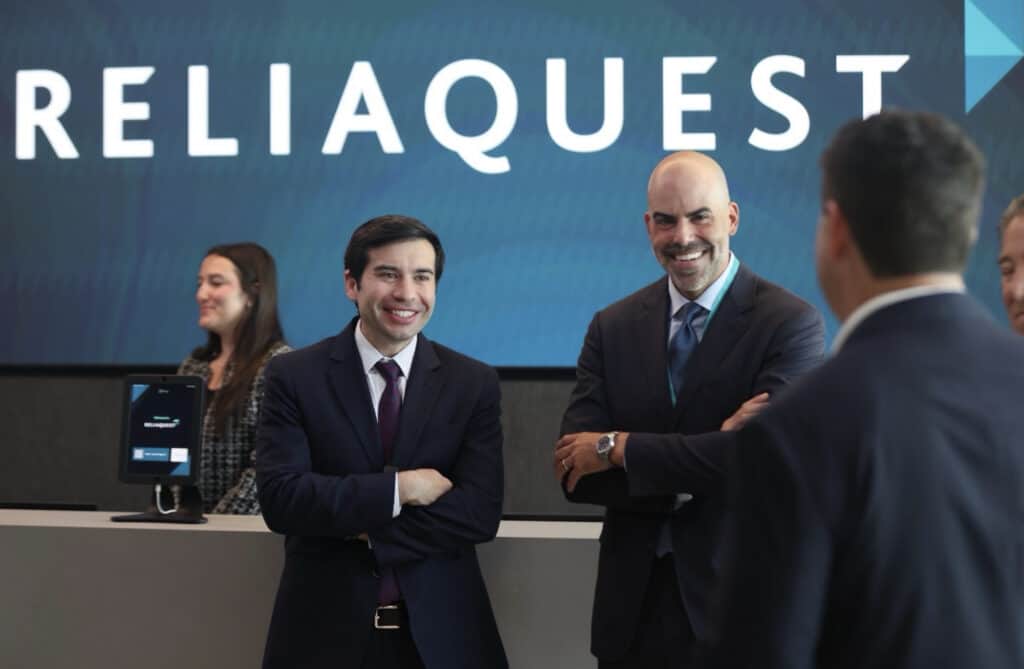
The Washington Reporter interviewed Sonderling at ReliaQuest’s Tampa Bay office; ReliaQuest is an American cybersecurity company that is best known for GreyMatter, its Agentic AI-driven security operations platform. While Sonderling toured the company’s office, he met with workers and with management. One worker told Sonderling that AI transformed his job “100 percent.”
That, Sonderling told the Reporter, is something that American workers should take heart in hearing. “His job was changed 100 percent by AI, but his job was not eliminated by AI, and that’s the message we’re trying to deliver at the Department of Labor: that AI is coming, and we need to make sure that American workers have those skills to understand the technology, that they’re not afraid of the technology, that the employer’s investments in the technology actually work, because American workers know how to use that,” he said.
At the Department of Labor, Sonderling continued, “our big AI literacy push is to make sure that American workers and students have that baseline AI literacy, so they can come in to their job or be in the job they are in and get their skills, and then be more productive and have their job changed to make their job better and more productive for their employer, and not be displaced.”
Part of his department’s work to facilitate that is to help reshore AI jobs to America. “From the Department of Labor’s perspective, we need these jobs coming back to America,” he said. Sonderling explained that this is in part a national security imperative as well, given the high volume of state-sponsored cyberattacks them come from a variety of American adversaries. “We need American workers skilled with these cyber skills, and that’s the best way to prevent the foreign attacks — by having American workers building, designing, and employing people in the cyber industry. We haven’t seen that, but now President Trump is bringing these jobs here, and more importantly, we’re making sure that American workers get those skills.”
Fortunately for American workers, Sonderling added, there is plenty of opportunity for Americans to work in the cybersecurity field.
“We see that there are so many open-skilled, high-paying jobs, and the workers need the skills for these jobs,” he said. “For instance, in the cybersecurity industry, we know there’s over 15,000 job openings right now that American workers need to take, so we’re working very closely with the Department of Education to make sure that people can get these jobs right away, even directly out of high school.”
“We’re working on cybersecurity registered apprenticeships, for example,” he added. “When you think about registered apprenticeships, a lot of times we’re just thinking about the trades. Great jobs are available in construction, and some of these high-skilled trade jobs. We’re trying to expand registered apprenticeships into the tech industry, working with those jobs and moving to those jobs right away. We’re working very closely with the Department of Education to make sure that high schools and middle schools and colleges and community colleges have the up-to-date skills and training curriculum from industry that they need to be able to get these American workers into these high-paying tech jobs; that’s a very big initiative of ours.”
Another initiative, he explained, that his department is working on is “the workforce Pell grants…We’re very excited about that, because these are going to go to students in need. They are eight to 15 month programs to be able to get them directly with financial assistance into these tech jobs where they need American workers.”
As a company, ReliaQuest is best-known for its work in Agentic AI, but it also sponsors the annual ReliaQuest Bowl every year for college football, and it has an annual rock, paper, scissors tournament for its employees from around the world.
Sonderling capped his visit to the company off by decisively beating the Reporter’s Matthew Foldi in a round of the legendary playground game — although he did not leave the facility with its championship belt.
Below is a transcript of our interview with Acting Labor Secretary Keith Sonderling, lightly edited for clarity.
Washington Reporter:
Secretary Sonderling, we’re here at ReliaQuest, a top cyber security firm. Can you talk about what the Department of Labor has been working on with the Department of Education in terms of Pell grants and in terms of workforce development?
Acting Labor Secretary Keith Sonderling:
We see that there are so many open-skilled, high-paying jobs, and the workers need the skills for these jobs. For instance, in the cybersecurity industry, we know there’s over 15,000 job openings right now that American workers need to take, so we’re working very closely with the Department of Education to make sure that people can get these jobs right away, even directly out of high school. We’re working on cybersecurity registered apprenticeships, for example. When you think about registered apprenticeships, a lot of times we’re just thinking about the trades. Great jobs are available in construction, and some of these high-skilled trade jobs. We’re trying to expand registered apprenticeships into the tech industry, working with those jobs and moving to those jobs right away. We’re working very closely with the Department of Education to make sure that high schools and middle schools and colleges and community colleges have the up-to-date skills and training curriculum from industry that they need to be able to get these American workers into these high-paying tech jobs; that’s a very big initiative of ours, and also the workforce Pell grants, which you mentioned. We’re very excited about that, because these are going to go to students in need. They are eight to 15 month programs to be able to get them directly with financial assistance into these tech jobs where they need American workers.
Washington Reporter:
During this tour, you were focusing a lot on the threats that foreign adversaries pose to American companies by stealing data, for example. What have you seen from the Department of Labor about how the federal government can prevent Russia, China, North Korea, Iran, and state-sponsored hackers from stealing IP and personal data of Americans?
Acting Labor Secretary Keith Sonderling:
From the Department of Labor’s perspective, we need these jobs coming back to America. We need American workers skilled with these cyber skills, and that’s the best way to prevent the foreign attacks — by having American workers building, designing, and employing people in the cyber industry. We haven’t seen that, but now President Trump is bringing these jobs here, and more importantly, we’re making sure that American workers get those skills.
Washington Reporter:
We heard from one of the workers here that AI changed his job 100 percent. What are you working on to ensure that that remains a net positive for American workers?
Acting Labor Secretary Keith Sonderling:
You heard exactly that; his job was changed 100 percent by AI, but his job was not eliminated by AI, and that’s the message we’re trying to deliver at the Department of Labor: that AI is coming, and we need to make sure that American workers have those skills to understand the technology, that they’re not afraid of the technology, that the employer’s investments in the technology actually work, because American workers know how to use that. So our big AI literacy push is to make sure that American workers and students have that baseline AI literacy, so they can come in to their job or be in the job they are in and get their skills, and then be more productive and have their job changed to make their job better and more productive for their employer, and not be displaced.
Washington Reporter:
We’re standing next to the belt for the Rock Paper Scissors championship that ReliaQuest does every year; I want to challenge you to game rock paper scissors.
Editor’s note: The Washington Reporter’s Matthew Foldi won the first round, but then Sonderling swept him to win the best of three. Sonderling did not get to take the ReliaQuest belt home, however.
Washington Reporter:
I let you win.