INTERVIEW: We asked 13 House Republicans about the Haitian 340B fraud case. Every one backed Trump’s 340B fraud crackdown.
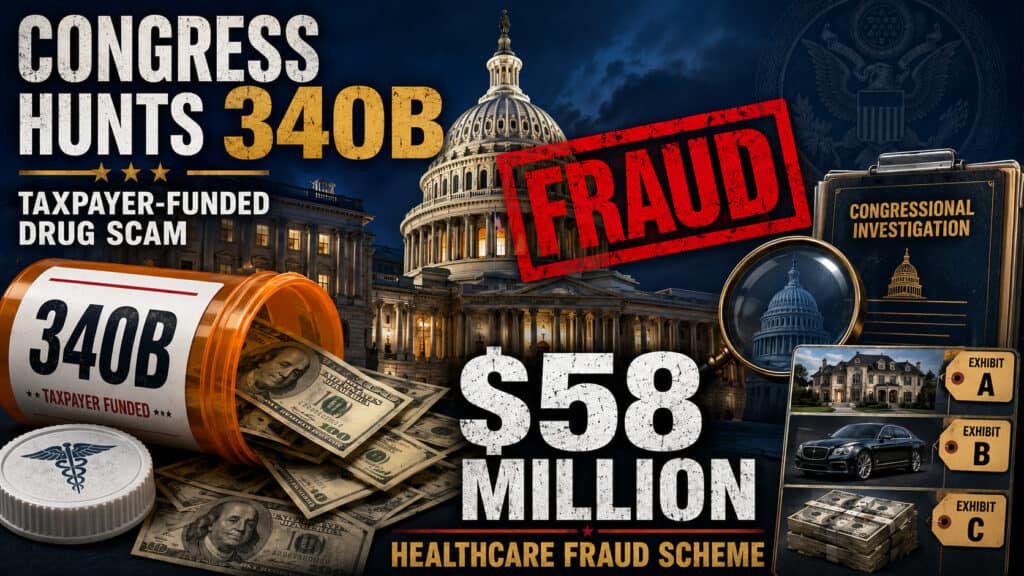
The Trump administration’s recent takedown of a Haitian scammer accused of stealing $58 million through the 340B drug pricing program has heightened scrutiny of healthcare fraud across Capitol Hill.
The Washington Reporter’s Matthew Foldi asked 13 House Republicans whether they support the administration’s crackdown following the case. Every lawmaker interviewed voiced support for the effort, with several arguing the investigation highlights broader problems involving waste, fraud and abuse throughout the 340B program.
Rep. Troy Downing (R., Mont.), a former Montana insurance commissioner, delivered the sharpest criticism of the 340B program itself.
“340B is crazy,” Downing told the Reporter’s editor-in-chief, Matthew Foldi. “It’s the largest drug program and growing. It was intended for the uninsured, lower income people. As we’ve seen uninsured numbers drop, 340B has grown. Something is going on there.”
Downing said 340B fraud extends well beyond a single case, pointing to billions of dollars in Medicare and Medicaid fraud and describing his own experience investigating insurance fraud in Montana. He also promoted his PARTNERS Act, legislation intended to give states greater authority to work with CMS on fraud investigations.
The remaining lawmakers focused more broadly on healthcare fraud and improper government spending.
Rep. Harriet Hageman (R., Wyo.) argued fraud exists nationwide because officials “turned a blind eye or were negligent,” adding that stronger oversight is needed.
Rep. Zach Nunn (R., Iowa) praised the administration’s efforts, calling healthcare fraud enforcement “one of the most impactful things we’re seeing” while highlighting legislation he is leading to help pursue overseas fraudsters.
Rep. Gabe Evans (R., Colo.) pointed to multiple examples of alleged Medicaid fraud in Colorado and said stronger federal guardrails are needed to protect taxpayer dollars.
Rep. John McGuire (R., Va.) said fraud is widespread and argued that recent high-profile cases are “the tip of the iceberg.”
Rep. Erin Houchin (R., Ind.) credited the administration with aggressively identifying waste, fraud and abuse, saying additional cases will likely continue to surface.
Rep. Mark Alford (R., Mo.) said Congress has already uncovered significant abuse in multiple federal programs and predicted investigators will find additional fraud as they continue digging.
Rep. Chuck Edwards (R., N.C.) said the federal government has experienced “great quantities of waste, fraud, and abuse” for years and welcomed the administration’s efforts to improve accountability.
Rep. Monica De La Cruz (R., Texas) said constituents appreciate that the administration is exposing fraudulent use of taxpayer dollars across healthcare and other government programs.
Rep. Derrick Van Orden (R., Wis.) described healthcare fraud as “massive,” arguing recent investigations demonstrate how much improper spending still remains to be uncovered.
Rep. Rudy Yakym (R., Ind.) said the Trump administration is the first to make fraud enforcement a priority, citing the creation of a dedicated Justice Department effort to pursue fraudsters.
Rep. Buddy Carter (R., Ga.), a pharmacist, applauded the administration’s work and called fraud “stealing” from programs intended to help vulnerable Americans. He also urged stronger safeguards to detect suspicious activity before schemes reach such a large scale.
Rep. Bob Latta (R., Ohio), who serves on the House Energy and Commerce Committee, said individuals stealing healthcare dollars should be prosecuted and that benefits should reach their intended recipients.
Taken together, the interviews suggest healthcare fraud is emerging as a growing oversight priority for House Republicans. While Downing directly questioned the continued expansion of the 340B program, every Republican interviewed expressed support for the administration’s efforts to investigate fraud and recover taxpayer dollars following the recent $58 million 340B case.