EXCLUSIVE: Sen. Mike Lee calls on Senate to pass NDO reform after unanimous House vote
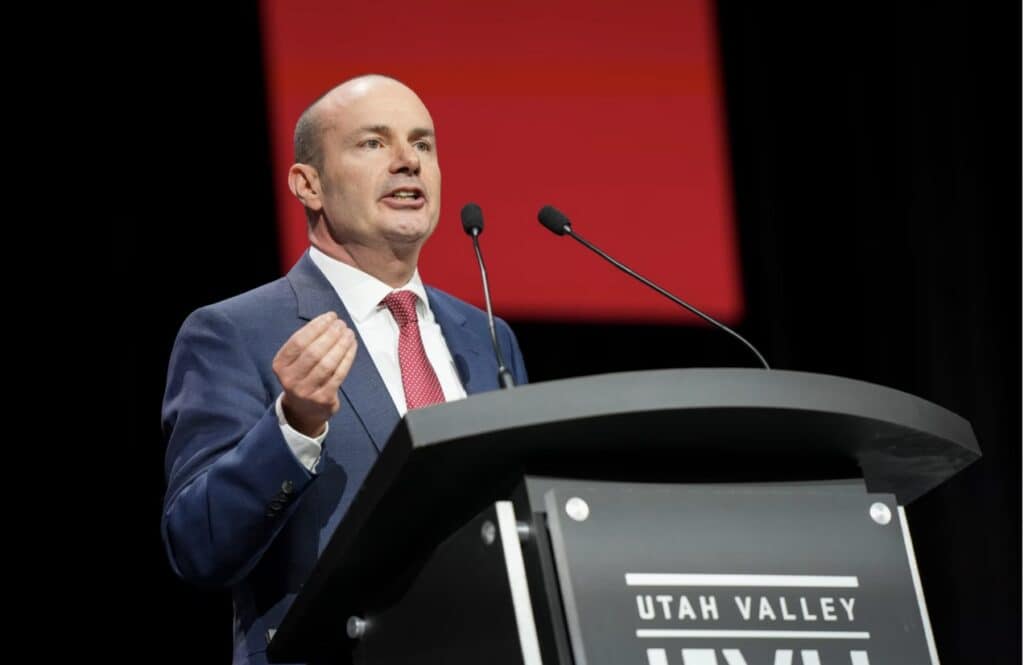
Sen. Mike Lee (R., Utah), who is likely to become the next chairman of the powerful Senate Judiciary Committee, is calling on the Senate to quickly pass legislation cracking down on secret government searches after the House unanimously approved the NDO Fairness Act.
In an exclusive statement to the Washington Reporter, Lee, the lead Senate sponsor of the legislation, said the Senate now needs to act to protect Americans from government surveillance hidden behind nondisclosure orders.
“The 4th Amendment protects private communications, but political government spying can too easily hide behind an NDO and escape accountability,” Lee told the Reporter. “I’m proud to have introduced the NDO Fairness Act in the Senate to reform this unacceptable situation. The House has done its job, now it is time to do ours, and protect the privacy of law-abiding Americans everywhere.”
Lee’s push comes as the Senate Judiciary Committee prepares for an expected Sept. 22 hearing with former special counsel Jack Smith over Arctic Frost, the investigation that secretly obtained records connected to hundreds of Republicans and conservative organizations. Chairman Chuck Grassley (R., Iowa) invited Smith to testify as part of the committee’s investigation into Arctic Frost.
The hearing could put new attention on the government’s use of nondisclosure orders. Judiciary Republicans have spent months investigating Arctic Frost, including how Smith’s team obtained congressional phone records and how judges approved NDOs preventing telecommunications companies from notifying the targets.
Lee could soon be in a position to lead that oversight himself.
The Utah Republican is next in line to lead the Judiciary Committee and said this summer that taking the gavel would be “hard to turn down” if Republicans retain the Senate majority. Lee currently chairs the Senate Energy and Natural Resources Committee and the Judiciary Subcommittee on Antitrust, Competition Policy and Consumer Rights.
The issue has taken on new urgency following revelations surrounding Smith’s Arctic Frost investigation.
As the Washington Reporter has previously reported, Smith’s investigation used 197 subpoenas accompanied by nondisclosure orders to obtain records connected to more than 400 Republican and conservative individuals and organizations.
The Senate Judiciary Committee says its oversight has uncovered records showing that more than a dozen members of Congress were among those targeted in Arctic Frost. The committee has released thousands of pages of records from the Justice Department and FBI as part of its investigation.
Those orders prevented companies receiving government demands from notifying the people whose records were being sought.
The NDO Fairness Act would make it more difficult for the government to keep those searches secret. It requires meaningful judicial review of nondisclosure orders, written findings explaining why secrecy is necessary and generally limits the orders to 90 days. It also gives service providers greater ability to challenge unlawful orders.
Lee introduced the Senate legislation in January with Sen. Chris Coons (D., Del.), giving the proposal bipartisan support.
The House unanimously passed its version of the legislation this week, increasing pressure on the Senate to act.
The House’s action has also drawn support from the technology industry. Microsoft Vice Chairman Brad Smith praised House leaders from both parties after passage and specifically pointed to Lee and Coons as the effort moved to the Senate.
“As consideration moves to the Senate, we look forward to working with Senators Lee and Coons and supporting their leadership and efforts to enact this bill into law,” Smith said.
Lee has increasingly made government surveillance and Fourth Amendment protections a focus in the Senate. Earlier this year, he also introduced bipartisan legislation aimed at restricting warrantless searches under Section 702 of the Foreign Intelligence Surveillance Act.
The push for Senate action now comes just weeks before Smith is expected to appear before Judiciary lawmakers to answer questions about Arctic Frost and the government’s secret collection of records from members of Congress and other Republican targets.