EXCLUSIVE: Rep. Fitzgerald hails unanimous passage of NDO Fairness Act to rein in secret government searches
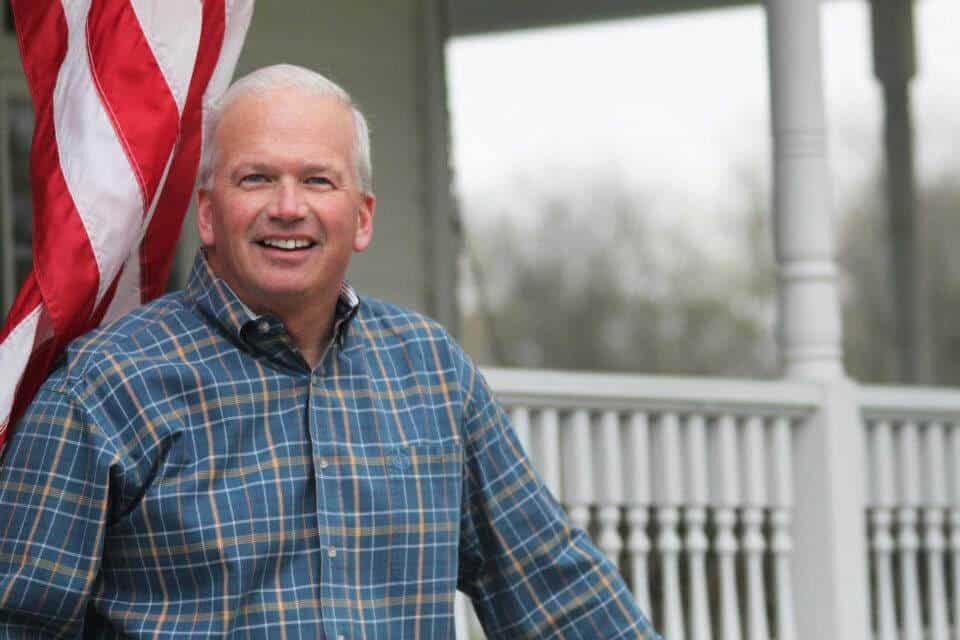
The House unanimously passed legislation Monday designed to rein in the government’s ability to secretly obtain Americans’ private electronic records, a major victory for a bipartisan reform effort that gained momentum following revelations about former special counsel Jack Smith’s Arctic Frost investigation.
The NDO Fairness Act, sponsored by Rep. Scott Fitzgerald (R., Wis.), passed the House by voice vote Monday.
“The government should not be able to conduct secret searches of Americans’ private information with zero accountability,” Fitzgerald told the Washington Reporter in an exclusive statement..
“The NDO Fairness Act ensures Americans’ Constitutional rights extend to digital storage. I thank my colleagues for coming together unanimously yesterday to reinforce these protections,” Fitzgerald added.
The legislation strengthens the standards prosecutors must meet when seeking nondisclosure orders, or NDOs, that prevent technology and communications companies from informing customers that the government has obtained their records.
It also limits NDOs to 90 days, requires judges to determine that the government’s request is supported by specific facts and requires notification after the secrecy period ends.
The bill has taken on new urgency following revelations about Smith’s Arctic Frost investigation and the government’s secret collection of phone and electronic records connected to Republican lawmakers and conservative organizations.
The Reporter has closely followed the push for NDO reform in the wake of Arctic Frost.
Smith’s investigation sought 197 subpoenas accompanied by NDOs targeting records connected to more than 400 Republicans and conservative organizations, including sitting members of Congress. The secrecy orders prevented service providers from informing those affected that the government had obtained their information.
Sen. Rick Scott (R., Fla.), who was himself caught up in the Arctic Frost surveillance, told the Reporter in April that he backed NDO reform.
“This weaponization of government is disgusting,” Scott said.
A Senate source told the Reporter at the time that NDO reform could become the “lasting legacy” of the Arctic Frost scandal because it had bipartisan support and could prevent a future Democratic administration from using the same authorities against Republicans.
Reps. Jeff Crank (R., Colo.) and Bob Latta (R., Ohio.) told the Reporter that Congress should act following the Arctic Frost revelations.
“You would think that the Constitution would have stopped that because we have separation of powers, but I do think that Congress ought to take action, and it should be bipartisan,” Crank said.
“We need to stop the executive branch’s overreach that we saw with this,” he added.
More recently, Sen. Darline Graham (R., S.C.) told the Reporter that she would continue pushing for reforms designed to prevent a repeat of Arctic Frost.
“Nobody should be above the law, and that includes the people entrusted with enforcing it,” Graham said. “Americans deserve answers, and Congress has a responsibility to make sure it can never happen again.”
The House vote represents the biggest legislative breakthrough yet for that effort.
The House Judiciary Committee had previously approved the NDO Fairness Act by voice vote. Monday, the full House followed suit, approving the bill without opposition.
Attention now turns to the Senate, where Sens. Mike Lee (R., Utah) and Chris Coons (D., Del.) have led the bipartisan NDO reform effort.
The Senate Judiciary Committee is holding a hearing with Jack Smith in September that will likely continue to build momentum for the bill to pass.