Over two dozen of America’s leading fiscal conservative organizations sent a letter to President Donald Trump thanking him for standing up to the European’s punitive digital regulatory regime and urging him to keep the pressure on the European Commission to end its investigations and regulatory attacks on American companies.
Grover Norquist and Americans for Tax Reform (ATR) took the lead on the missive to Trump, which noted that “Europe presents itself as welcoming American innovation and leadership, right up until American firms outperform their domestic champions.”
“At that point,” the conservatives cautioned, “the regulatory apparatus kicks into gear, not to protect consumers, but to kneecap the competition.” The letter to Trump was first obtained by the Washington Reporter. “Europe has become increasingly candid about this approach. EU policy experts, in response to U.S. engagement, recently claimed that the fact American companies are ‘feeling the pain’ of their enforcement actions means ‘the laws are actually working’ and is, in fact, ‘evidence’ for why ‘they should be doubling down.’ In other words, the pain is the point.”
The letter highlights the various strategies in the European playbook of so-called “digital sovereignty”: digital service taxes, Digital Markets Act, Digital Networks Act, a competition law known as GDPR, and more. In their own words, the European Union has designed this complex web of regulations and resulting investigations to kneecap U.S. competitors to their domestic champions. The compliance cost and lost revenue amount to $100 billion annually from U.S. companies, the coalition notes.
The Reporter previously reported on efforts by both Congress led by Rep. Darrell Issa (R., Calif.) and the administration to curb non-tariff barriers such as the Digital Markets Act, for example, which was highlighted in the coalition letter.
Earlier this year, Judiciary Committee Chairman Jim Jordan (R., Ohio) and Antitrust Subcommittee Chair Scott Fitzgerald demanded an explanation from the European Commission on their approach to the DMA.
The European Commission is currently wrapping up an investigation into two major U.S. companies — Microsoft and Amazon — on potentially dubious grounds that the companies have significant market power, despite not meeting the thresholds to be regulated as “gatekeepers” as laid out in their own reading of the DMA.
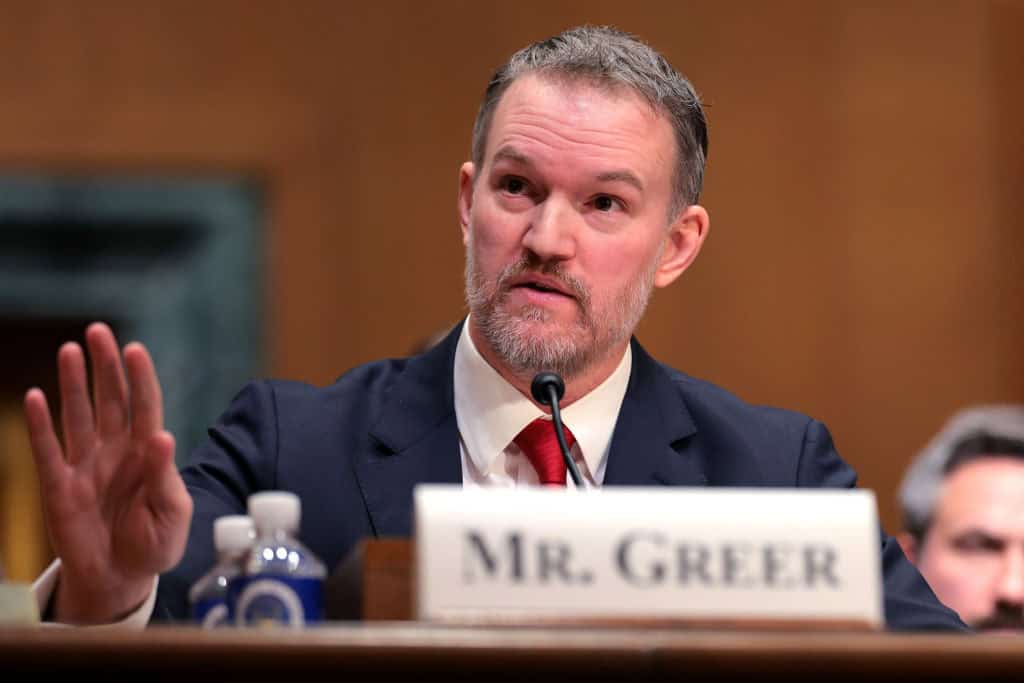
Jamieson Greer, the United States Trade Representative (USTR), has repeatedly highlighted the EU’s targeted attacks on U.S. economic engines. In December he warned that if the Europeans don’t course correct, “the United States will have no choice but to begin using every tool at its disposal to counter these unreasonable measures.”
He followed that warning with an investigation into unfair trade practices, to include the very targeted digital regime raised by the conservative movement. Greer further noted those investigations are soon nearing a result that will tee up President Trump for possible reciprocal action.
Experts have argued that one such target could be Deutsche Telekom, the German telecommunications company that operates in the U.S. as T-Mobile. The German giant recently signaled that it wants to buy T-Mobile entirely, a move that is sure to catch the attention of prominent administration officials. In another instance, the Taxpayer Protection Alliance (TPA), one of the letter’s signatories, laid out in a report how “foreign governments’ attempts to impose minimum investment requirements, local content quotas, and taxes on American streaming platforms as a condition of being allowed to operate in their countries.”
Brendan Carr, the Chair of the Federal Communications Commission (FCC) has, like Greer, signaled openness to taking reciprocal action, writing in March that “it’s called reciprocity. And it is revealing to see how strongly Europeans react when told that European businesses operating in the U.S. will be treated the same as American businesses operating in the E.U.”
Consumers’ Defense’s Sal Nuzzo explained to the Reporter that “the Trump administration has made reciprocity with other nations a central pillar of its trade policy and has demonstrated its willingness to act effectively in defense of American interests. That’s why Consumers’ Defense joined a coalition of more than 20 organizations urging President Trump to confront Europe’s discriminatory digital taxes, excessive regulations, and sham investigations targeting U.S. companies. These policies single out the very companies powering digital innovation and put American jobs and competitiveness at risk. If Europe won’t end its unfair treatment, the administration should respond in kind.”