EXCLUSIVE: Acting DOL Secretary Keith Sonderling touts push to lower home costs as Trump eyes Capital Gains relief
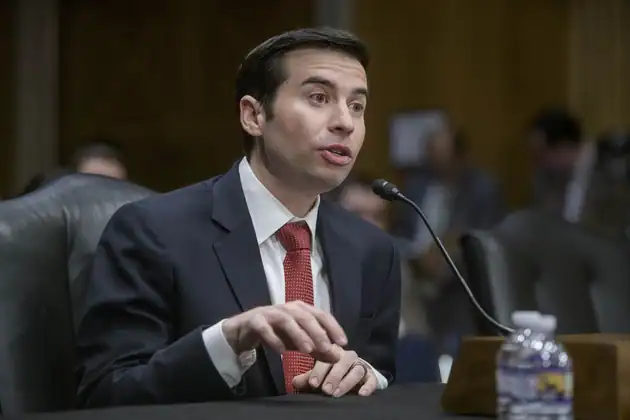
Acting Labor Secretary Keith Sonderling said the Trump administration is focused on getting younger Americans into affordable homes as President Donald Trump considers a widely-popular capital gains tax relief plan aimed at encouraging longtime homeowners to sell.
“A big part of that too is how do we get the next generation into affordable homes?” Sonderling told the Washington Reporter’s editor-in-chief Matthew Foldi in an interview at the Republican Jewish Coalition’s annual conference.
Sonderling has also worked with major private-sector employers and lenders on the affordability challenge. He recently met with executives from JPMorgan Chase, one of the nation’s largest mortgage lenders, to discuss the bank’s American Dream Initiative, an ambitious effort to expand homeownership, affordable housing and access to high-paying jobs across the country.
JPMorgan Chase is making housing affordability a major focus of the initiative. The bank announced in August that it plans to deploy more than $750 billion through 2035 to expand housing supply and homeownership, including financing 1 million affordable housing units and helping 500,000 customers purchase homes. That includes 200,000 first-time homebuyers.
The bank also plans to increase mortgage lending by more than 40 percent and hire 850 new Home Lending Advisors. JPMorgan Chase said the effort is designed to bring private capital and the bank’s lending expertise to one of the country’s most persistent affordability challenges.
The comments come as Trump is weighing changes to the capital gains tax treatment of home sales.
National Economic Council Director Kevin Hassett said last month that Trump was considering the issue. Former National Economic Council Director Larry Kudlow said he had personally discussed with Trump both indexing capital gains for inflation and increasing the exemption for home sales.
“I spoke to him, he liked the idea of the indexing, he liked the idea of a bigger exemption,” Kudlow said.
The issue is particularly relevant for longtime homeowners whose properties have appreciated substantially.
Under current law, individuals can generally exclude up to $250,000 in gains on the sale of a primary residence, while married couples filing jointly can exclude up to $500,000. Those thresholds were established in 1997 and have never been indexed for inflation, according to the Congressional Research Service.
Sonderling pointed specifically to older Americans who have owned their homes for years.
“A lot of seniors have houses that they’ve held on for a long time that they would like to pass down to the next generation, but because of policies, they haven’t been able to do that,” Sonderling said.
Republicans in Congress have already urged the Trump administration to act.
Reps. Mark Alford (R., Mo.), Tracey Mann (R., Kan.) and Republican Study Committee Chairman August Pfluger (R., Texas) led a letter to Treasury Secretary Scott Bessent in March calling on the administration to index capital gains for inflation.
The lawmakers argued that Americans can currently owe taxes on nominal appreciation caused by inflation rather than simply the real increase in the value of an asset. They said indexing capital gains could help “free up housing stock and expand homeownership.”
There is also bipartisan support in Congress for changing the specific capital gains exclusion for home sales.
Reps. Jimmy Panetta (D., Calif.) and Mike Kelly (R., Pa.) introduced the More Homes on the Market Act, which would increase the exclusion to $500,000 for individuals and $1 million for married couples and index those amounts for inflation going forward.
Sonderling focused on the Labor Department’s role in increasing the supply of skilled workers needed to build and renovate homes.
“From the Department of Labor, we want to make sure, you know, as people are looking to buy homes, that the homes have workers to be able to build and develop them,” Sonderling said.
Sonderling said the homebuilding industry offers “high-paying, high-skilled jobs” that are well suited for apprenticeship programs.
“Our role in housing is making sure that American workers have the skills to build and renovate houses, and that’s something we work very closely with Secretary Turner at HUD,” Sonderling said.
“We have a great partnership to really encourage people into the housing and construction industry across the board,” he added.
Sonderling said the administration wants to increase opportunities for younger Americans to own homes while ensuring the country has the workforce necessary to build, renovate and maintain them.
“We want skilled American workers in each one of those jobs,” Sonderling said.