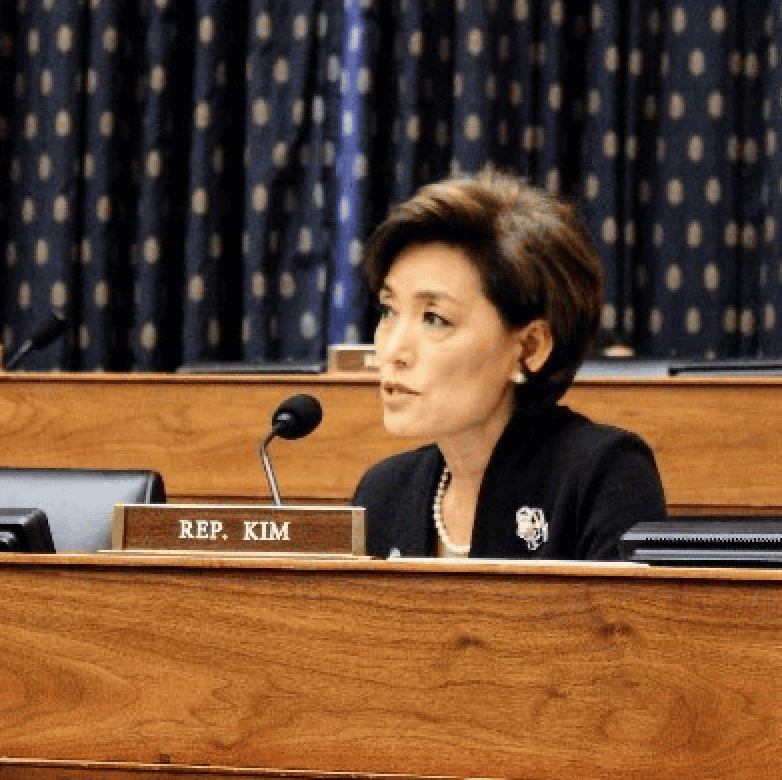
New bipartisan legislation from Reps. Young Kim (R., Calif.) and Sam Liccardo (D., Calif.) that would make it easier, faster, and cheaper for Americans to access and move their money is receiving praise from conservatives shortly after its release.
Kim’s bill, the Payments Access and Consumer Efficiency (PACE) Act, is a first-of its kind legislation that modernizes how payment companies access payment rails. If passed, it would make everyday payments faster, all without having to pass through multiple layers of fees.
Businessman Steve Forbes said that the legislation from Kim and Liccardo “is common sense and already popular among both Republicans and Democrats. Polling shows the American people overwhelmingly support making it faster and easier to make payments and remove middlemen.”
Joe Grogan, a former Assistant to President Donald Trump for Domestic Policy and founder of Public Policy Solutions explained that “when it comes to payments, our rules of the road may as well have been written in the time of the horse and buggy. Taking steps to modernize the way Americans can access and move money is common sense. Those standing in the way of empowering consumers with greater control over their money may find themselves on the wrong side of an 80-20 issue.”
Recent findings from Trump’s pollster, Tony Fabrizio, found that Grogan is right. According to a poll obtained by the Washington Reporter, the majority of Americans want policies to make it faster, easier, and cheaper to make and receive payments.
Fabrizio’s findings included that 83 percent of respondents said that paychecks shouldn’t take three days to clear, 78 percent said that financial transactions should be instant, and majorities said both that having legacy banks as the middleman increases fees for consumers and businesses and that increased competition from digital payment companies will help lower costs.
Todd Zywicki, a law professor at George Mason University, called the legislation “excellent news.”
“Unleashing competition and consumer choice in payments starts with breaking down banks’ privileged access to the payment rails and archaic state barriers to payments transmission,” Zywicki explained. “Modern technology and consumer preferences mean that you don’t need access to a bank account just to move money. Many of us already use money transmission layered on top of bank accounts, but simply moving money with no counterparty risk shouldn’t require a bank account.”
Ken Blackwell, a former Treasurer of Ohio, tied Kim’s legislation directly to the stated aims of Trump and others. “The American people, President Trump, and bipartisan members of Congress all support making it faster, cheaper, and easier to move money and make payments,” he noted. “Modern innovations require modern solutions, and this legislation is exactly what our digital economy demands. The PACE Act helps catch up our laws to the advancements made by our economic innovators…I applaud Rep. Young Kim for taking the lead on legislation that will help usher in the next phase of American economic competitiveness.”