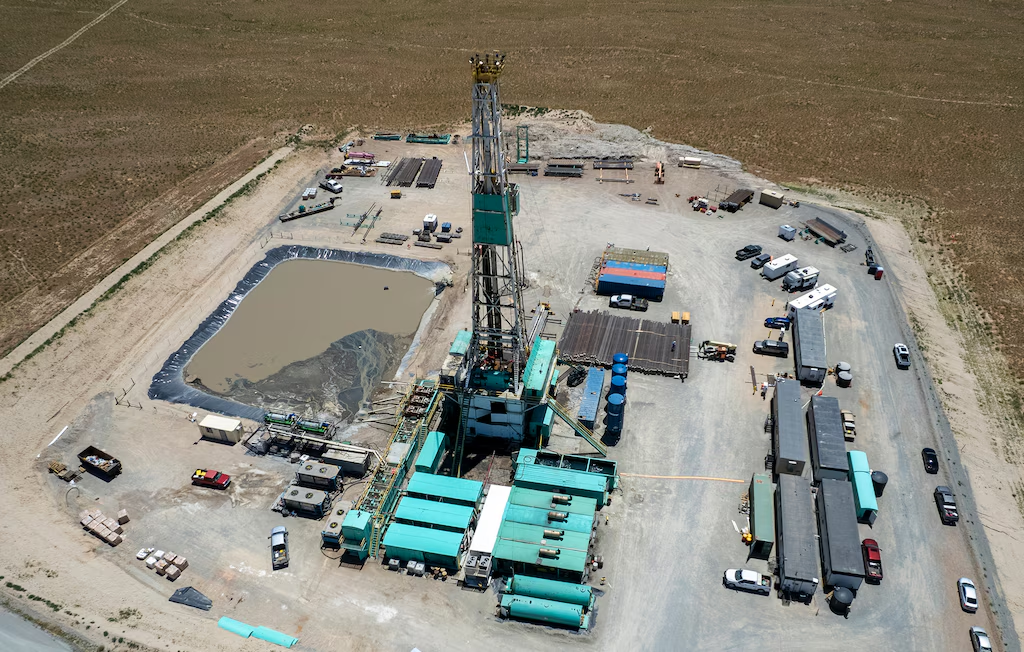
There is a lot more to Utah than what’s on the surface — literally. Underneath our feet, Utah is leading the charge on the development of immense untapped geothermal potential, and it’s coming at the perfect time. Like the rest of the country, Utah faces growing energy demands to fuel its growth, power domestic manufacturing and artificial intelligence, and guarantee reliability and security. How Utah is meeting that demand through all the resources at its disposal, especially with innovative new geothermal technologies, should be a blueprint for the nation as we seek to fully unleash our energy potential.
Geothermal is a reliable, 24/7, clean source of energy with one of the smallest land footprints of any technology. Thanks to American innovation in drilling over decades, the next generation of geothermal is utilizing hydraulic fracturing to harness the natural heat from the earth to generate electricity and deliver heat. With an estimated 5,000 gigawatts of untapped geothermal power capacity, the United States is poised to lead the world in this nascent sector, and Utah is at the forefront. By drilling into high-temperature geological formations, geothermal builds upon expertise and a workforce that already exists.
Utah’s 2nd Congressional District is already seeing economic benefits from breakthrough geothermal projects — from private companies like Fervo Energy. Fervo’s first project — Cape Station — is expected to deliver power this year, with a planned expansion to 500 megawatts (MW). For context, in 2024, Utah’s electric capacity was over 10,000 MW, meaning this one project could produce nearly 5 percent of Utah’s power. This site is expected to be the largest geothermal development in the world and has the potential to bring both power and jobs to the area. Fervo is also training local workers in skilled trades, partnering with Southern Utah University. Cape Station will potentially transform Beaver County and Southwest Utah, and it’s only just getting started.
Because of advancements in geothermal, communities across the country could enjoy this kind of transformation and economic development — but it will require policy changes at the federal level to be unleashed. Today, projects in the United States are buried in bureaucracy and red-tape, often leaving them stuck in limbo. While nascent technologies like advanced geothermal are still scaling, they have additional hurdles and need the federal government to move faster to deploy these technologies quickly. With the right federal policies, the United States can open the way for widespread geothermal development.
Earlier this Congress, Rep. Maloy introduced two legislative proposals to accelerate the deployment of geothermal technologies by modernizing federal permitting and taxation law. The Geothermal Energy Opportunity (GEO) Act sets clear deadlines for federal bureaucrats to process geothermal leases and permits, providing much needed certainty to these projects. The Geothermal Tax Parity Act extends existing oil and gas tax deductions and amortization benefits to geothermal energy, reducing investment risk and driving more capital to these projects. If the right policies — like these — were enacted, the nation would be closer to realizing the greater potential of this technology.
With Utah leading the way, it shows how the United States can fully utilize geothermal to help fulfill President Donald Trump’s energy dominance agenda. However, we must be smart and not allow burdensome bureaucracy and unnecessary red tape to limit our growth. The next step is building on the positive momentum in Congress and enacting permitting reform. By enacting smart federal policy to unleash geothermal energy, we can bolster our economy and create jobs nationwide. This is a solution to boost our domestic energy production, lower costs and embrace a true “all-of-the-above” energy approach. Utah can — and should — be a blueprint for the nation for the advancement of geothermal energy.
Rep. Celeste Maloy represents Utah’s 2nd District in Congress, and Heather Reams is the President and CEO of Citizens for Responsible Energy Solutions (CRES).