SCOOP: How the Kennedy Center used visual arts to bear witness to the horrors of October 7th
At a time when arts centers across America are boycotting Jewish and Israeli artists, the Kennedy Center is opening its arms to them both. Here's what that looks like.

While the two year anniversary of the October 7th terrorist attacks has come and gone, the Kennedy Center — under the leadership of President Donald Trump and Ambassador Richard Grenell — has continued its work to remind visitors of all stripes of the horrors of that day.
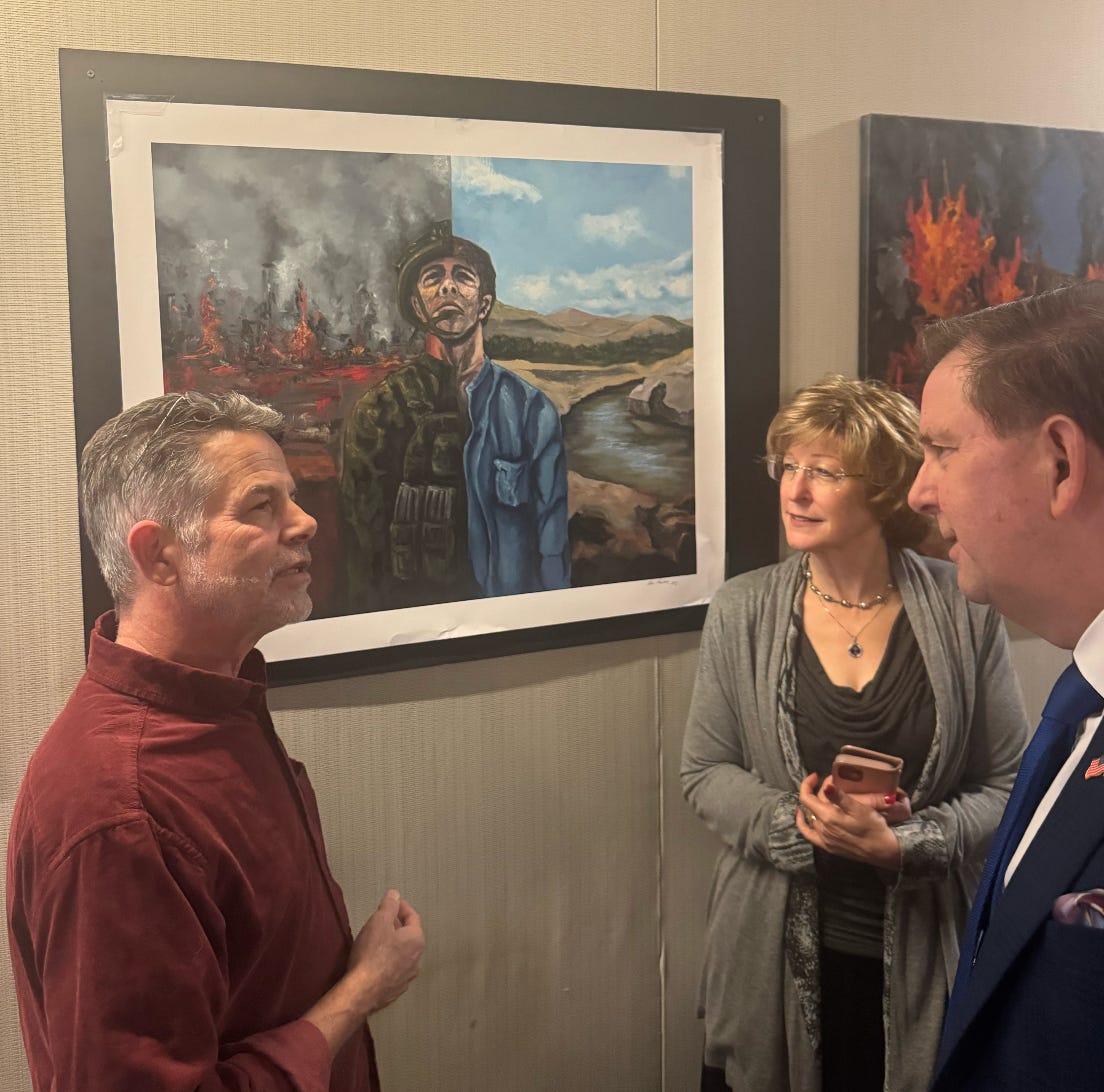
For about a month, the Kennedy Center hosted an exhibit entitled Edut עֵדוּת: The Visual Testimony of October 7, in the center’s Israeli Lounge, sponsored in part by Shari Redstone’s Redstone Family Foundation. The exhibit featured art from Israeli-American artist Marc Provisor, whose son was at the Nova Music Festival on October 7th. While Provisor’s son escaped, several of his friends, including Avinatan Or were taken hostage by Palestinian terrorists for over two years.
“Everything I paint is a self-portrait,” Provisor said. “The works that you see here are based on what I personally saw,” Provisor explained of his pieces. “I hail from the security world in Israel. I started painting, actually, in 1983 during the Lebanon War, when I was serving in the IDF. For me, it was a way to process that war. I would come home and paint some of the images that I saw and it helped me work it out, because I would come home and then go back, and then come home and so on.”
Provisor’s art that was on display was informed by what he himself witnessed on that day, as he rushed to southern Israel to look for his son. Provisor was supposed to retire in October 2023, he explained. But on the morning of October 7th, as reports filtered in to him, his “first call was to my son,” he said, “saying, ‘where are you?’” Only to find out that his son was in the thick of the terrorists’ attack.
“His first response was, ‘Abba, don’t worry, it’s just rockets. We’re all right.’” Soon, his son “says to me, ‘they’re coming out of the trees. They’re shooting, I gotta go.’ And the line goes dead, frozen. I basically ran down to my studio in Shilo, where I live, grabbed the gear that I had left and took off towards the south. Thank God, before I had to take a turn off of Road Six, I get a call that he’s out of the zone.”
While several of the paintings were gruesome in their detail, Provisor said that none should be “view[ed] as sad.”
“View these as strength,” he explained. “Because despite what we went through, despite all these horrors, and this is my third war, never have I experienced the strength of a people that happened in Israel, the unity, the pure pride of our country, an awakening.”
“Despite how hard these may seem,” he continued, “view them as strength, because that’s what Israel is, and that’s what our people is. When we work together, when we come together, the Lion of Judah looks like a kitty compared to what Israel is.”
“I paint what I see,” Provisor explained of his art. “It’s not all dark. There are plenty of light paintings and beauty. My life, in the sense, has become beauty and chaos, and that’s what I present. It’s my passion. It’s what I do.”
One painting that particularly caught attendees’ eyes was what Provisor called a “split picture of a soldier,” caught between war and peace.
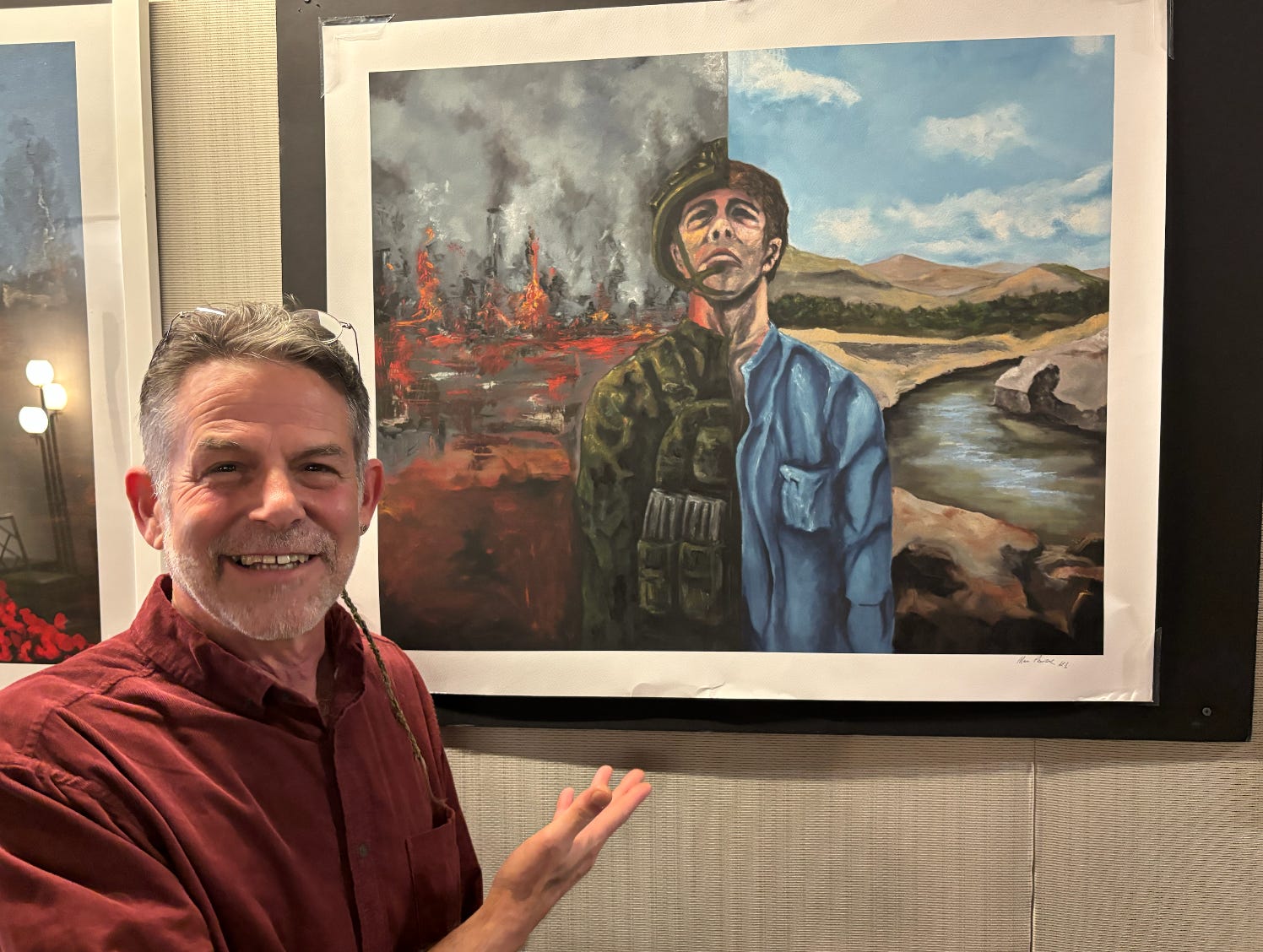
“Most people do not know what war is about,” Provisor said. “It makes no sense. Your brain turns different. You turn different, and then you come home, and you’re supposed to be normal, and then you go back [to war].”
This is something that Provisor said people across the military and first responder fields all experience.
“This [split feeling] reflects all over the world, in operational security, whether also our police, our first responders and so on,” he said. “This is what they go through. This is that transformation and they have to live in that dark world and go between the dark and the light, which is one of the reasons why I painted where you can see it’s divided.”
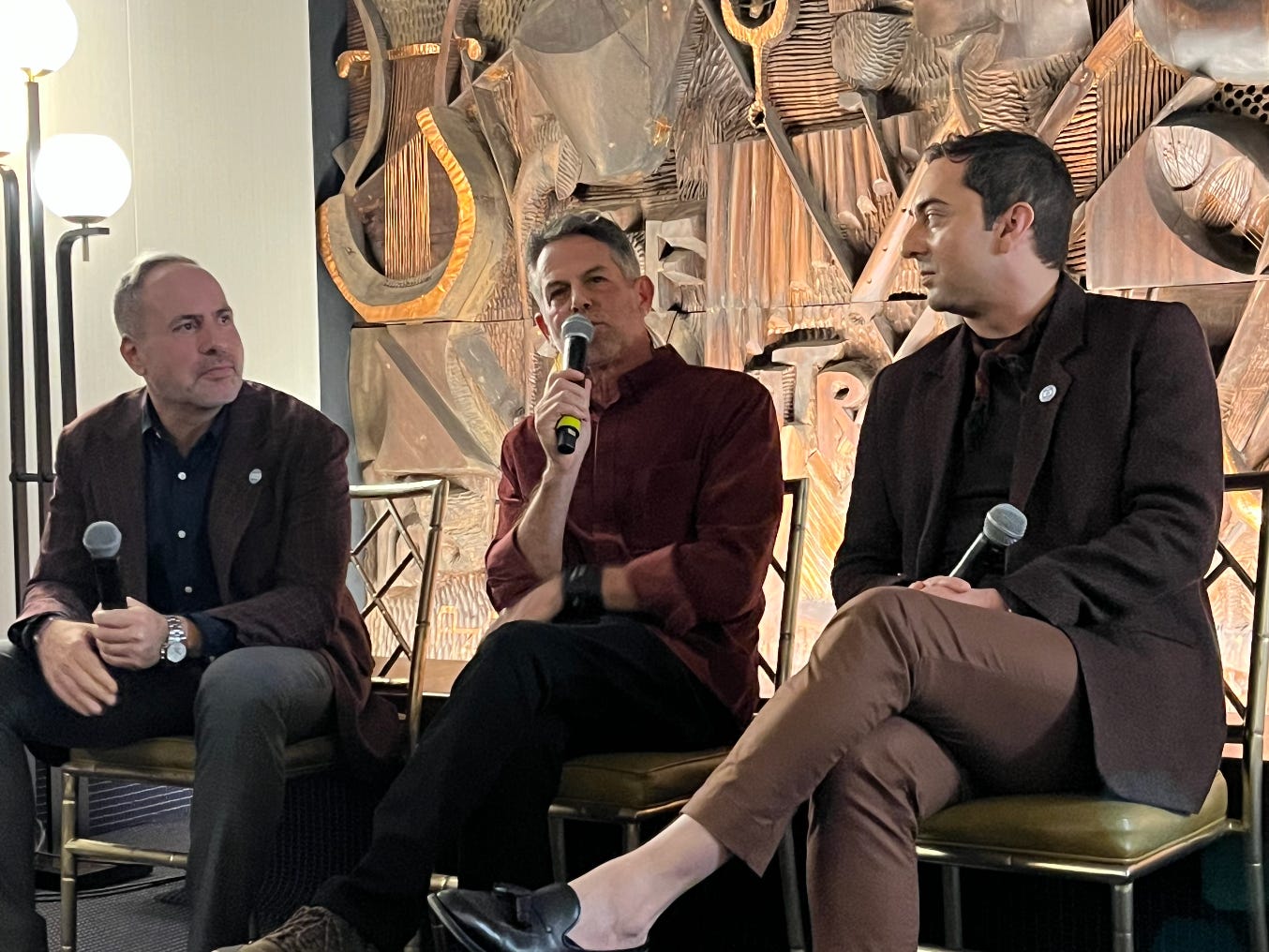
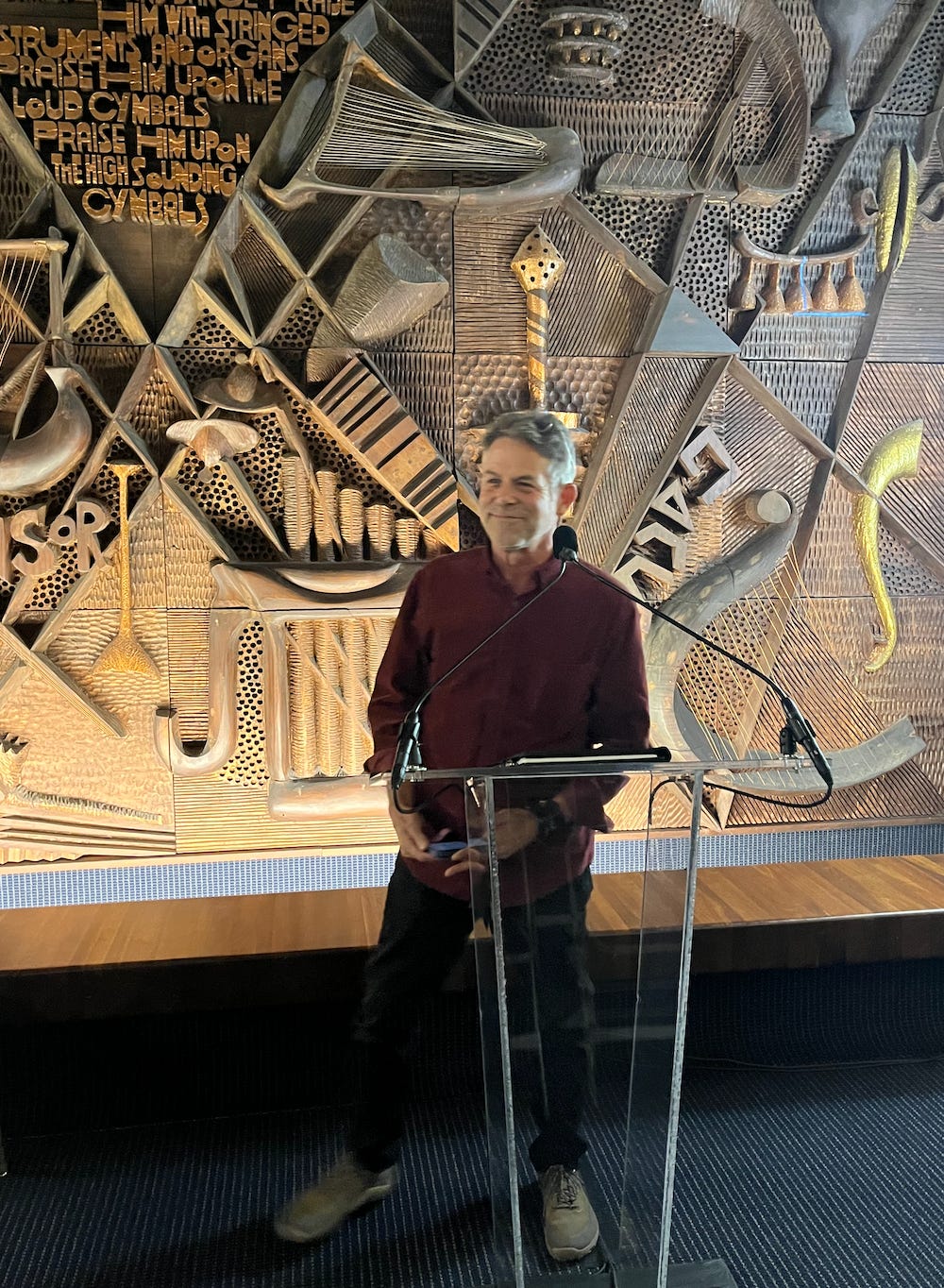
Provisor was joined during his discussion by Josef Palermo, the Curator of Visual Arts & Special Programming at the Kennedy Center and Scott Lorinsky, the Board Chair of Art World For Israel. Lorinsky sponsored Tuesday evening’s “Artist Talk” and told those gathered that he wants many in his community to “get a backbone” in the face of boycotts targeting Israeli art and artists. But he said the problems with boycotts go much deeper.
“We have Jews in the art world that are suffering,” he said. “We have Christian Zionists in the art world who are suffering. And we have Israelis who, because of the passport that they carry, are suffering.” His group aims to support all of those groups, especially in the wake of the “cowardice” he’s seen from so many in the arts world.
He explained where that cowardice comes from: “You typically have boards of directors; that are reasonable people, and you have curators and junior staffers. And now, after 2020, a lot of junior staffers moved up very quickly in the ranks that are out, loud and proud, anti-Zionist. BDS is a core belief to them. And you can’t really reason with them.”
“We Zionists are here and here to stay,” Lorinsky added. “We believe that arts and culture are too important to cede to the dark forces of progressive anti-Semitism and anti-Jewish bias that have taken root in the art world…When Jews are excluded, art and culture suffer.”
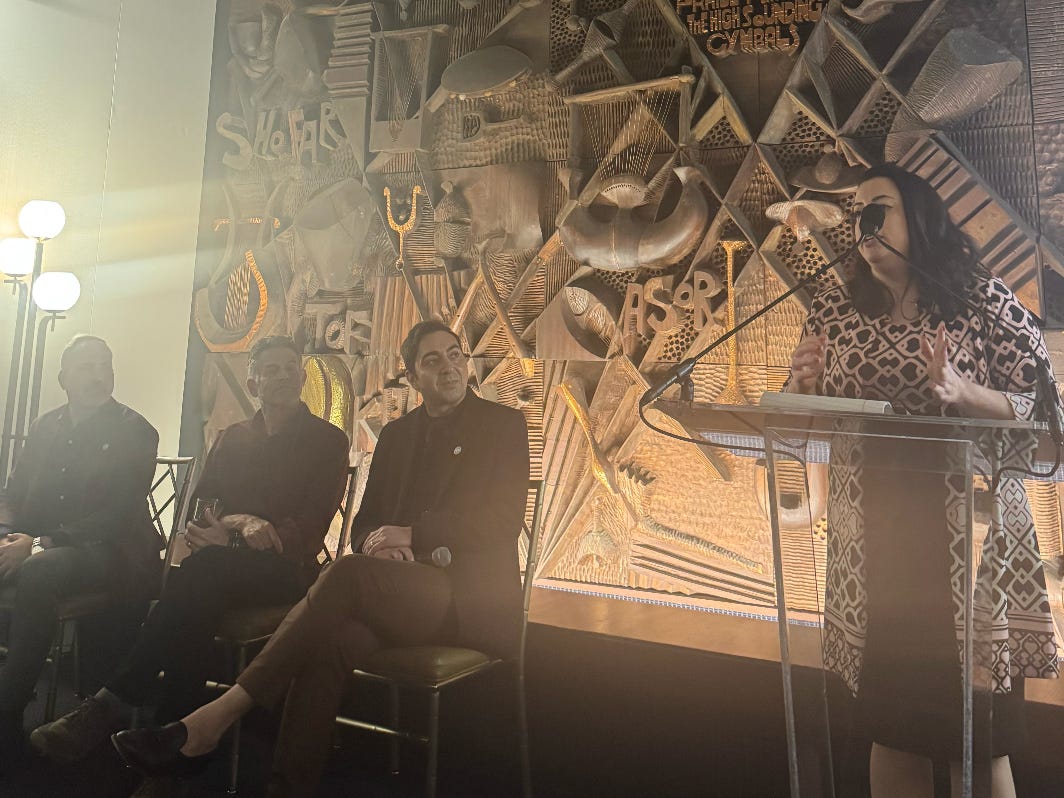
The event concluded with remarks from Efrat Hochstetler from the Israeli embassy; she called Provisor an “amazing Israeli artist that we can be proud of.” However, Hochstetler lamented, in the wake of the October 7th terrorist attacks, art fans around America have regularly been deprived of seeing art from Israelis.
“It’s so tragic when there’s amazing art and culture out there and it doesn’t get to see the light of day, because people are blocked off to it,” Hochstetler said. “Regardless of [whether you’re from] Israel or where you come from, or what religion you are, if you’re prevented from showcasing your art, that’s just tragic. There’s no other word for it. And I see the artists who come to us and are requesting to be featured and and nobody’s taking them, whether it’s film or dance or music, they’re getting doors shut in their face…not many venues have accepted us in the last two years.”
But the Kennedy Center is not one of those venues that have shut Israeli artists out. As Palermo noted, the center hosted the only public commemorations of October 7th anywhere in the nation’s capital city.
Bonnie Glick, who helped to bring Provisor’s art to the Kennedy Center, told the Reporter after the exhibition’s successful conclusion that “the effort undertaken by the Kennedy Center and championed by its president, Ambassador Richard Grenell, to counter antisemitism through the arts is a much-needed mission.
“The Kennedy Center stands as the sole performing arts institution in the country that is willing to address the scourge of antisemitism in America and the efforts in the cultural community to boycott Israel and Israeli artists,” Glick added. “I sincerely hope that other institutions will follow Ambassador Grenell’s example.Jews cannot be erased from American culture because they have been artists, composers, actors, musicians, playwrights, dancers, lyricists, comedians, orators, and philanthropists,” Glick concluded. “And Jewish contributions will continue to keep our arts in America thriving; I am thrilled that the Kennedy Center stands squarely in support of America’s Jewish legacy and its bright Jewish future.”