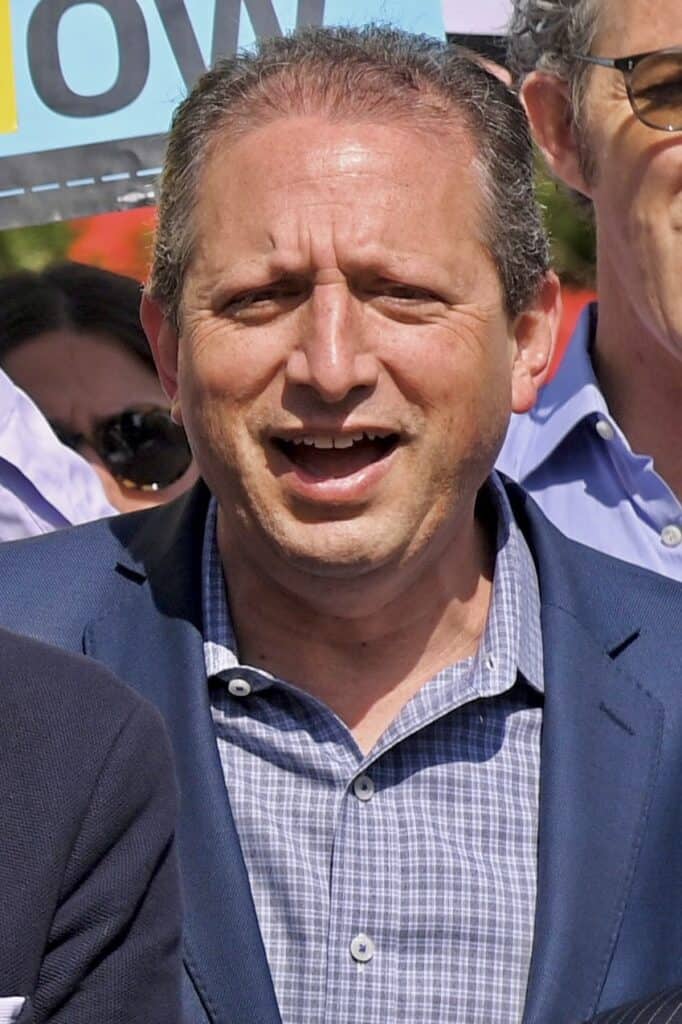
New York City’s outgoing comptroller Brad Lander, who is reportedly planning to primary Rep. Dan Goldman (D., N.Y.) from the left, is using one of his final acts in office to reshape how the city’s $270 billion pension system treats environmental, social, and governance (ESG) investing, highlighting State Street as a preferred partner of New York’s liberal values.
Lander’s moves, which could endear him to a progressive voter base that he would need to oust the wealthy Goldman, could simultaneously spark a nationwide “ESG war,” his critics told the Washington Reporter.
Conservatives told the Reporter that it is a mistake for State Street to go all in on liberal policies, instead of providing returns to its investors.
According to ESG today, Lander urged the New York pension fund to “rebid” its holdings to stop investing in companies that are insufficiently committed to fighting global warming. He recommended instead moving that money to State Street — the bank that Lander believes is fully committed to progressive activism.
A Republican Senate source told the Reporter that “if New York city tries to pull funds away from firms that are depoliticizing to only put money in woke firms like State Street, that will be a drastic escalation of the ESG wars at a time when the left is out of power.”
“Conservatives will respond,” the source continued.“State Street’s CEO should look forward to testifying before Congress and state legislative oversight hearings. State Street should look forward to being booted out of every red state retirement fund. And if State Street has anything to do with the Thrift Savings Plan, that will end quickly.”
Sen. Tommy Tuberville (R., Ala.) described State Street as a firm that “needs your money, but only if you are woke,” in a post criticizing State Street’s approach to DEI.
The New York Post reported that State Street is “still using DEI to curry favor with leftist state officials” despite Wall Street pressure on diversity, equity, and inclusion programs, arguing that the firm’s public moderation on ESG has not changed how it markets itself to Democratic officeholders.
In Washington, Sen. Ted Cruz (R., Texas) has moved to limit the role of ESG and DEI in federal retirement plans. His “Stop ESG Act” would prohibit asset managers for the Thrift Savings Plan from using shares held in federal worker accounts to advance ESG or DEI priorities through proxy voting.
Republican officials at the state level have already targeted large asset managers over ESG. Cruz’s Texas, under comptroller Glenn Hegar, created a formal “list of financial companies that boycott energy companies” that is tied to divestment requirements for state entities, and its anti-ESG framework has been cited as a model for other red states debating similar measures.
State Street’s leadership has also taken positions that put it at odds with President Donald Trump’s administration. At a November conference in Hong Kong, its CEO, Ron O’Hanley questioned whether the United States is a good long term market for investors given Trump’s leadership. He also attacked Trump’s immigration policy as “anti-growth” for its hardline stance against illegal immigration.