Secretary Doug Burgum explained how Interior is “scraping everywhere we can to find the dimes and the nickels” to keep National Parks running due to historic obstruction from Chuck Schumer.
Interior Secretary Doug Burgum spent decades as a successful businessman in the private sector before continuing North Dakota’s upward trajectory as its governor. Now, he is at the forefront of the Trump administration’s “AI arms race” and push for American energy independence.
As Secretary of the Interior, Burgum also oversees hundreds of National Parks — which he told the Washington Reporter in an interview are being decimated by the Schumer Shutdown.
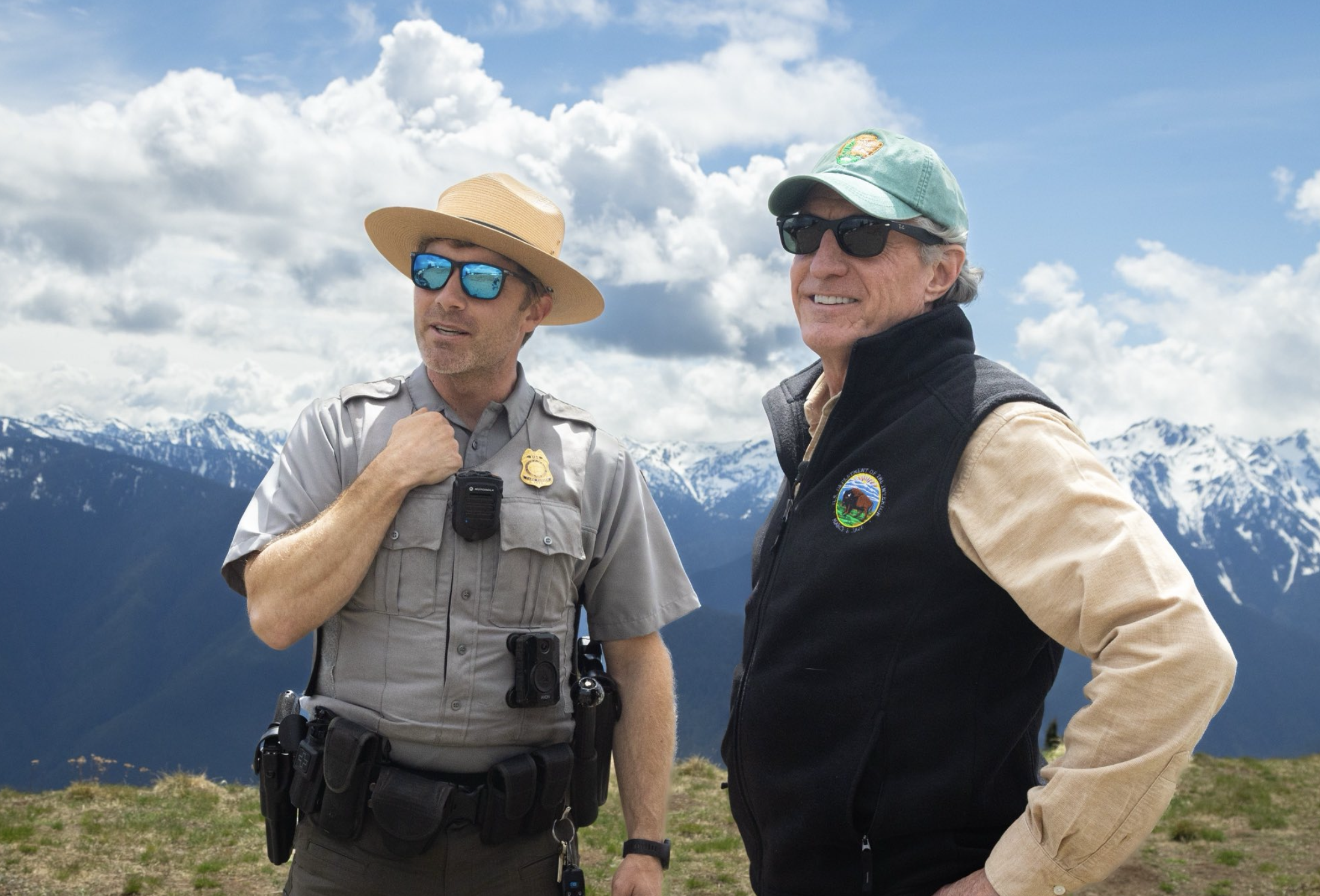
Right now, parks across America are shuttered, and Burgum explained how his department is “scraping everywhere we can to find the dimes and the nickels which add up to millions of dollars a day and tens of millions a week to try to keep the parks operating.”
“When the government is shut down, we cannot use appropriated funds, so then we have to try to find dollars in other accounts, like recreation fee funds, which could include the gate people you see at a park; they make you pay an entrance fee,” Burgum said, explaining that those dollars don’t come from the same buckets of money that Schumer and Senate Democrats are withholding. “That’s not an appropriated dollar, but those are the dollars that go towards things like deferred maintenance within the parks, which are obviously essential, because we’re always underfunded on deferred maintenance.”
Burgum explained how Schumer and Senate Democrats are inflicting a “double whammy” on economies across the country, “in terms of less revenue and more expenses, but the people who really get hurt when the government shuts down in these parks are the entrance communities. The entrance communities live on tourism, and if people are not able to come and enjoy the parks, particularly peak leaf season, for example, that’s devastating.” Burgum singled out parks like that “the Great Smoky Mountains, Shenandoah, some of the big parks out west, Acadia up in Maine” that are poised to feel particular pain.
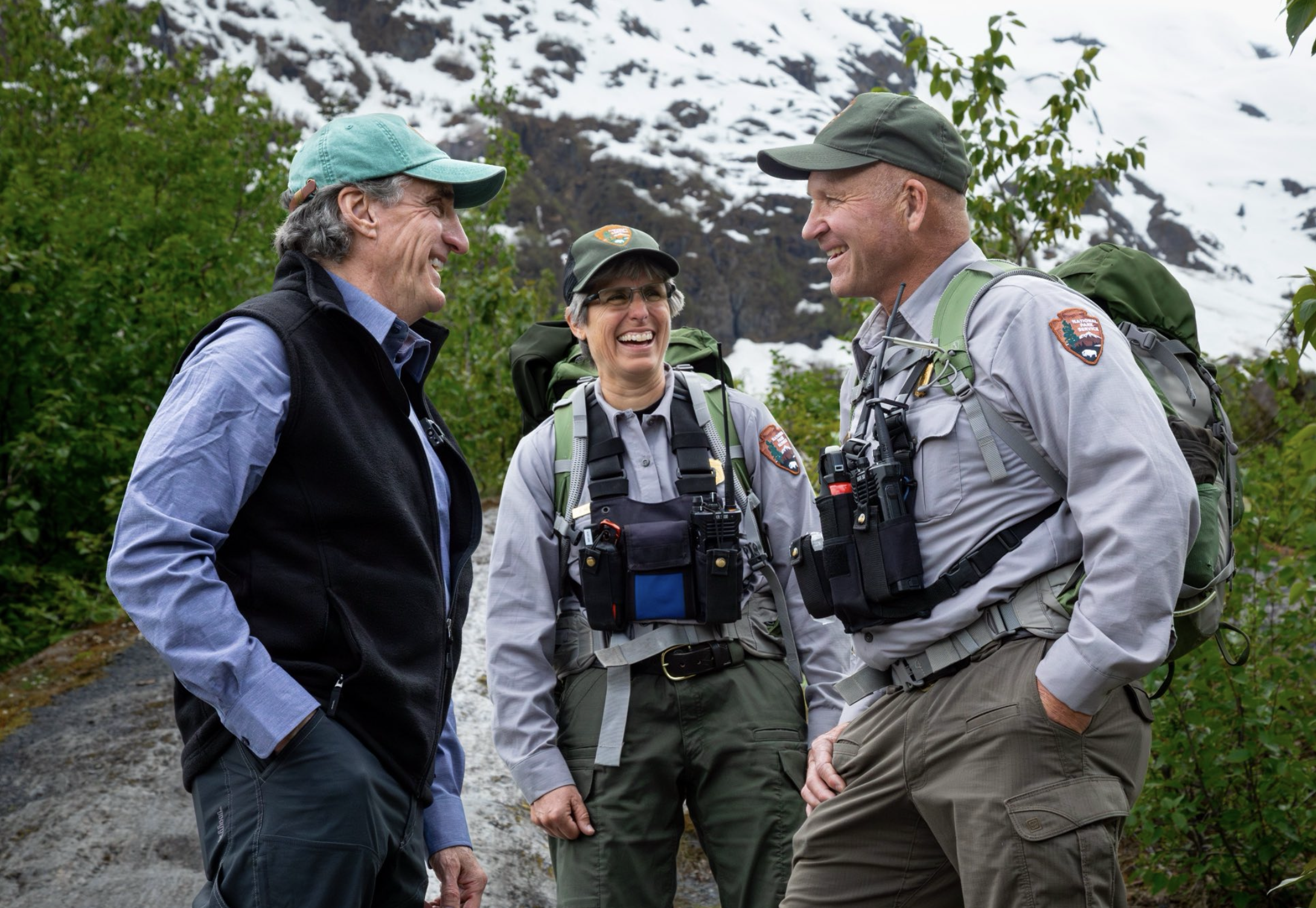
While most people associate the Department of Interior with America’s sprawling National Parks scene, Burgum handles so much more. The shutdown is also directly impacting America’s permitting system, and Burgum is hearing it firsthand from energy producers who are dealing with furloughed permitters.
“We’ve got workers that are waiting,” he said. “We’ve got capital that we want to spend. We have projects that would move America forward, and we’re hung up because the government is shut down. It goes well beyond National Parks; it goes into the permitting side on federal lands for energy projects and natural resources projects that are critical to our national security and our prosperity.”
The shutdown is also preventing Burgum from hearing firsthand from communities across America’s Last Frontier in Alaska, a state that he noted is almost incomprehensibly large. His now-canceled trip “was going to be everywhere from down on the Aleutians, where we’re trying to build life saving infrastructure to connect Alaska Native communities, think tribal communities, to airports…all the way up to the North Slope, where we’ve got enormous opportunities to improve lives, improve the economy, improve national security with smart sustainable energy projects.”
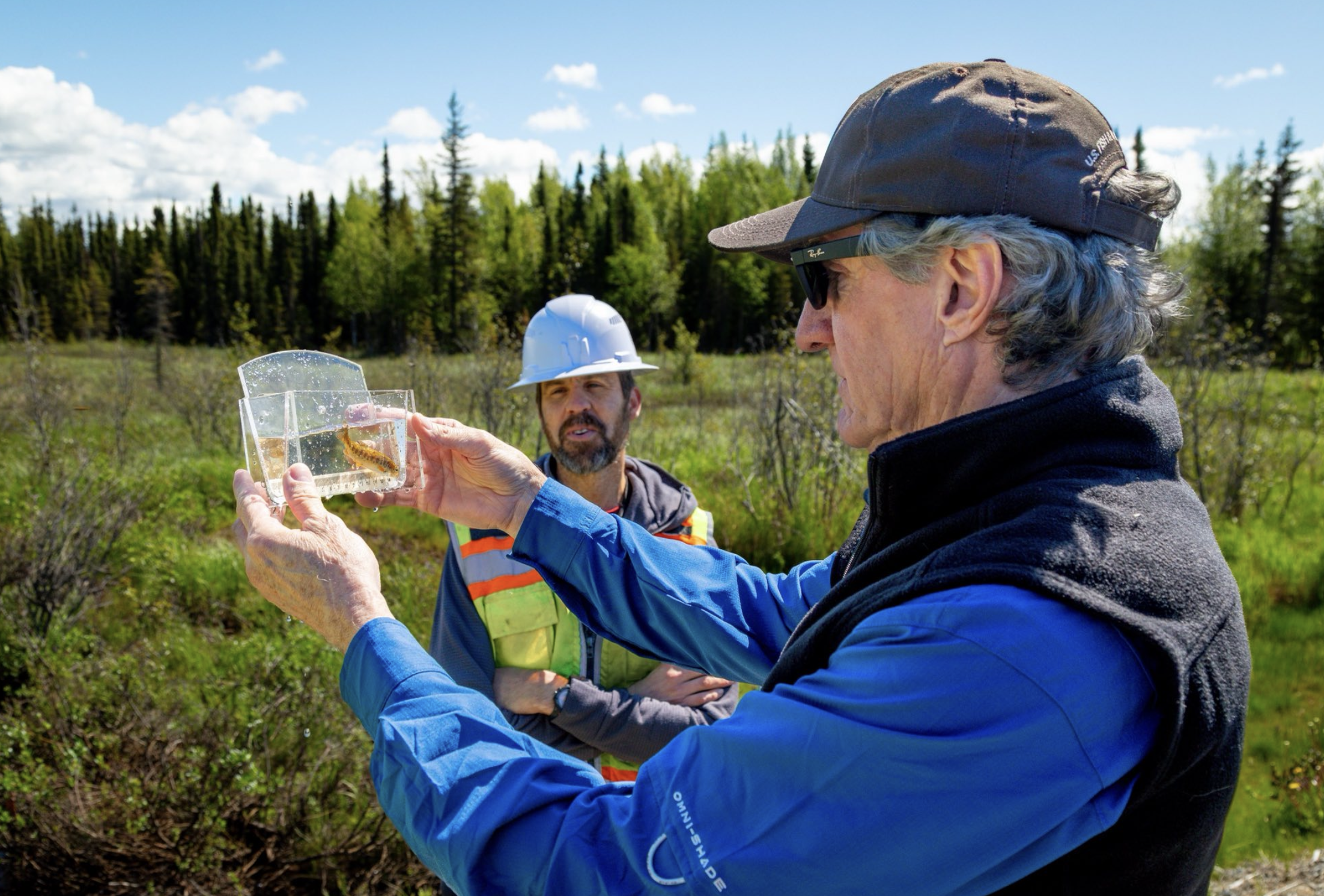
Nevertheless, he said, “we did have an Alaska day [in Washington, D.C.]. We had the two senators and the one Alaska congressman here in this office, and the Governor from Alaska flew down here. We did a broadcast that was available across Alaska announcing a bunch of the things that we’re moving ahead on; these are across Fish and Wildlife, they’re across tribal lands, it’s infrastructure, it’s energy, it’s a number of things. So we can get the news out that we’re doing it, but it’s not the same as me actually being there and meeting with those Alaska Native villages, some of which were recently just ravaged by a typhoon.”
Burgum explained that he wants “an Alaska policy that focuses on Alaskans, as opposed to focusing on D.C. lobbyists. And part of that is to get to hear those voices. You’ve got to just get there and get on the ground and listen to people. It’s what I did as governor.”
During Burgum’s confirmation hearing, America’s Indian tribes were some of his biggest advocates during the process, as the Reporter extensively covered at the time. Now, he’s trying to help those communities out, despite historic obstruction from Senate Democrats.
Native American tribes “get affected two ways [by the shutdown], because there’s a federal health system called the Indian Health Service, which runs out of Health and Human Services, which gets funded through annual appropriations, as opposed to just an ongoing funding like Medicare or Medicaid. So there’s a challenge there that HHS is dealing with.”
But from Burgum’s standpoint, he explained that “few people understand that the Bureau of Indian Education is in Interior. It’s not in the Department of Education. So there’s 125,000 K-12 students that are tribal, that attend these schools. And just like with the parks, we’re fighting to keep the doors open, fighting to keep teachers paid, fighting to keep all those things going forward, but all of that again, you’re borrowing money…We’re managing 20 percent of the federal land, and are trying to manage 20 percent of all public lands in America without a budget. It has an impact on lots of communities.”
Burgum reflected that to him, the shutdown “makes no sense.” Its impacts “hurt our economy, hurt our small businesses, hurt our families that are trying to do things like plan a vacation to go to a National Park, whether it’s a family or a kid’s school tour, or whether it’s retirees that are traveling in the fall.”
“Only if you’re within the Beltway or within this little pocket in New York City where you think would it somehow make political sense that by harming America, that it might be good for your political party,” he said. The shutdown also is a matter of national security, he added. “China’s not shut down this month. We are in a battle with China on a number of things, including the AI arms race, and their government is up and running and functioning.”
Schumer is harming America’s competitive edge with China because he is wasting an unrecoverable resource: time.
“You can’t get it back,” Burgum said. “Every day that someone doesn’t have a permit, they can’t begin deploying capital, every day that someone doesn’t have an answer on something that gets them to the point where they can start deploying capital is a day wasted…It’s like trying to block a river with a just a bunch of trash. Eventually, physics and economics are going to win, just like gravity eventually wins on all things, and we can’t stop it.”
“Time is the scarcest commodity that we have in our lives and in business,” Burgum — a legendarily successful businessman in his own right — explained. “It’s always the scarcest thing, and it’s irreplaceable. Once that day is gone, it’s gone. Once an airline takes off, if it’s got empty seats, you can’t sell those seats after the plane has left. Once a day has gone by where we’re shut down, we can’t go back and collect the revenue from all the people that might have come to the park, or wished to have come to the park, or wished to have spent money at a restaurant or a hotel near a park. That’s just all gone. It just evaporates. So people need to understand that the damage from the Schumer Shutdown is significant, and then it’s irrecoverable. You can’t get that revenue back.”
Burgum did also have a note for both blue states in America and European Union states about embracing the “green dream” policies that he said have decimated countries like Germany and that will set states like California and New York back during the coming “AI revolution.”
“If the EU wants to continue basically destroying their own economies and their own companies, they can do that, but they don’t have permission to do that globally,” Burgum said of potential EU regulatory growth. “You don’t have to look any further than Germany. Germany has spent $500 billion, one half a trillion dollars, chasing the green dream…Look at where Germany is today; it was once the industrial powerhouse of all of Europe. They were where the manufacturing occurred. They produce 20 percent less electricity at three times the cost for the citizens there. So that’s what they got for a half a trillion dollar investment: tripling the price of electricity for their citizens, and it’s less reliable. Now, let’s say I’m a manufacturer. Am I going to put a manufacturing plant in Germany? No.”
“And with the AI arms race,” he continued, “we’re going to have a bifurcation of states in our country that have pursued the sort of the German Green dream all in, and these are states like the state of New York or California, they’re going to miss out on a whole wave of of capital investment that’s coming right now as part of the AI revolution…What state you are in right now matters. You could be paying three times as much for your electricity in place like New York versus a state like my home state of North Dakota, based on the policies that are being adopted at the state level. With the Trump administration, we’re trying to help unwind those so that everybody in the country, all 50 states, have access to reliable, affordable electricity, all 50 states would have access to the capital that’s going to flow and chase this AI revolution. But right now, we’ve still got some of the states that are stuck in EU mode.”
While it is unclear when the Schumer Shutdown will end, Burgum told the Reporter which National Parks he has his mind set on next: the Gateway to the Arctic in Alaska and Isle Royale near his home state of North Dakota.
Below is a transcript of our interview with Interior Secretary Doug Burgum, lightly edited for clarity.
Washington Reporter:
How is the Schumer Shutdown harming America’s National Parks?
Secretary Doug Burgum:
We’re scraping everywhere we can to find the dimes and the nickels which add up to millions of dollars a day and tens of millions a week to try to keep the parks operating. When the government is shut down, we cannot use appropriated funds, so then we have to try to find dollars in other accounts, like recreation fee funds, which could include the gate people you see at a park; they make you pay an entrance fee. That’s not an appropriated dollar, but those are the dollars that go towards things like deferred maintenance within the parks, which are obviously essential, because we’re always underfunded on deferred maintenance. Even though we’ve been able to scrape to figure out a way to keep things open, we’re basically falling behind continually. And of course, if you go to one of our parks today, the park might be open, but there won’t be anybody in the little booth collecting your entrance fee because they’ve been furloughed, so we are losing revenue, and we’re taking the special funds that we had for deferred maintenance and using those to keep basic operations open. So it’s a double whammy in terms of less revenue and more expenses, but the people who really get hurt when the government shuts down in these parks are the entrance communities. The entrance communities live on tourism, and if people are not able to come and enjoy the parks, particularly peak leaf season, for example, that’s devastating. If you’re an entrance community by the Great Smoky Mountains, Shenandoah, some of the big parks out west, Acadia, up in Maine, this is the season when everybody wants to come to these parks. And those entrance communities are all suffering. If they keep this thing going, it’s hundreds of millions of dollars, and eventually it’s going to end up being billions of dollars of lost revenue to the economy. These 454 sites, whether it’s the Gettysburg historic site or one of our 63 flagship national parks, all of those are places that you see that if you have less visitation, you have less economic activity, and it adds up on a macro scale.
Washington Reporter:
Put your private sector hat on, which you spent most of your life wearing. Is that not driving you crazy? The Schumer Shutdown is straight up costing the National Parks money in the lost revenue.
Secretary Doug Burgum:
Well, it makes no sense to me that the Democrats would want to shut down the government and then hurt our economy, hurt our small businesses, hurt our families that are trying to do things like plan a vacation to go to a National Park, whether it’s a family or a kid’s school tour, or whether it’s retirees that are traveling in the fall. That makes no sense to me. Only if you’re within the Beltway or within this little pocket in New York City where you think would it somehow make political sense that by harming America, that it might be good for your political party. I don’t get it. By the way, I’ve shared with you before, but China’s not shut down this month. We are in a battle with China on a number of things, including the AI arms race, and their government is up and running and functioning. Just over the weekend, I was getting calls from people in the natural resources industries, and they’re like, ‘hey, we’re trying to get a permit. The person that’s working on it is furloughed.’ We’ve got workers that are waiting. We’ve got capital that we want to spend. We have projects that would move America forward, and we’re hung up because the government is shut down. It goes well beyond National Parks; it goes into the permitting side on federal lands for energy projects and natural resources projects that are critical to our national security and our prosperity.
Washington Reporter:
You also have had to cancel a lot of your own visits to National Parks across America from coast to coast. Other than you not being able to see these National Parks, why is it bad for the American people, for you as the Interior Secretary, to not be able to visit these places? As you mentioned, a lot of them are in the height of their tourism season right now.
Secretary Doug Burgum:
When we take a trip for Interior, it’s not just for the parks. Yes, we’ll stop at parks, and we’ll listen to what the challenges are for the parks, and where the capital requests might be coming from. But for example, a recent trip was going to have me in Alaska for five days. Alaska is the size of California, plus Arizona, plus New Mexico, plus Texas. So when we say we’re going to Alaska, it’s like we’re going to go visit California, Arizona, New Mexico and Texas in a week. So when you get there, you’re doing a lot of travel after you’ve arrived in Alaska. But it was going to be everywhere from down on the Aleutians, where we’re trying to build life saving infrastructure to connect Alaska Native communities, think tribal communities, to airports. These are some projects that have been been going on for 40 years, and no one’s been able to figure out a way to get that done, all the way up to the North Slope, where we’ve got enormous opportunities to improve lives, improve the economy, improve national security with smart sustainable energy projects. That whole trip got canceled. Even still, we did have an Alaska day. We had the two senators and the one Alaska congressman here in this office, and the Governor from Alaska flew down here. We did a broadcast that was available across Alaska announcing a bunch of the things that we’re moving ahead on; these are across Fish and Wildlife, they’re across tribal lands, it’s infrastructure, it’s energy, it’s a number of things. So we can get the news out that we’re doing it, but it’s not the same as me actually being there and meeting with those Alaska Native villages, some of which were recently just ravaged by a typhoon. President Trump has acknowledged and declared it an emergency. He has sent additional funds. But when you’re responsible for the relationships with those tribes, it’s great to get on the ground. And then, whether it’s seeing the results of a devastating storm, or whether it’s meeting with people who are begging for infrastructure, and talking to the people that live there, all of that is important. We’re trying to have an Alaska policy that focuses on Alaskans, as opposed to focusing on D.C. lobbyists. And part of that is to get to hear those voices. You’ve got to just get there and get on the ground and listen to people. It’s what I did as governor. It’s what I can do now. Alaska is my fifth trip to to go visit public lands and meet with the people that are impacted by those policies on public lands that’s been canceled since the shutdown started.
Washington Reporter:
I was covering your confirmation hearing, and some of the biggest groups that were advocating for your confirmation as Interior Secretary were Native American tribes, both in North Dakota and from across the country. And it strikes me that that is a community that is being completely neglected. How else with Alaska, and even outside of Alaska, and perhaps even in North Dakota, are those communities being impacted by the past month that we’ve seen of the shutdown?
Secretary Doug Burgum:
Well, they get affected two ways, because there’s a federal health system called the Indian Health Service, which runs out of Health and Human Services, which gets funded through annual appropriations, as opposed to just an ongoing funding like Medicare or Medicaid. So there’s a challenge there that HHS is dealing with. Few people understand that the Bureau of Indian Education is in Interior. It’s not in the Department of Education. So there’s 125,000 K-12 students that are tribal, that attend these schools. And just like with the parks, we’re fighting to keep the doors open, fighting to keep teachers paid, fighting to keep all those things going forward, but all of that again, you’re borrowing money. You’re stealing money from Peter to pay Paul, that is kind of what’s happening here, to try to keep all these funding things open. There’s also the wide ranging impact on on wildlife, on the environment, on energy projects, on schools, on tourism, on small businesses, on entrance communities. We’re managing 20 percent of the federal land, and are trying to manage 20 percent of all public lands in America without a budget. It has an impact on lots of communities.
Washington Reporter:
During your presidential campaign and during your time as governor, you talked about how energy security is national security. I think that ties in a lot with what you’re working on here. One of the bills we’re covering is from Senator Bill Hagerty, and it is about Europe’s corporate due diligence directive that’s requiring American energy companies to meet EU environmental regulations. Is that a specific bill you’ve seen? And if not, how do philosophically and practically view the attempts by the EU regulators to change the American industry?
Secretary Doug Burgum:
I have not read Senator Hagerty’s bill, but I fully, 100 percent, endorse and support the concept. If the EU wants to continue basically destroying their own economies and their own companies, they can do that, but they don’t have permission to do that globally. The EU policies that have been driven by climate extremism views that have put net zero at the highest possible order, like that’s more important than people’s lives, and that it’s more important than affordability, it’s more important than inflation, it’s more important than energy security, it’s more important than even ending a war, that’s crazy. If it’s the number one thing for everything, you can end up with a lot of really ridiculous outcomes. You don’t have to look any further than Germany. Germany has spent $500 billion, one half a trillion dollars, chasing the green dream. And in the process, they have shut down all their nuclear; they shut down all their base load coal plants. And then after they shut them down, then they said, ‘we should actually demolish them so that no one will ever turn them on again. We are not going to build LNG import facilities, because we don’t think that’s a good idea. But we are going to buy gas from Russia through the pipeline that they’ve so kindly provided us.’ And so they’ve developed an enormous dependency on Russian gas. Then Russia invades Ukraine, and the price of gas goes up. They’ve got all this intermittent electricity that’s based on whether the sun is shining, or the wind is blowing. Look at where Germany is today; it was once the industrial powerhouse of all of Europe. They were where the manufacturing occurred. They produce 20 percent less electricity at three times the cost for the citizens there. So that’s what they got for a half a trillion dollar investment: tripling the price of electricity for their citizens, and it’s less reliable. Now, let’s say I’m a manufacturer. Am I going to put a manufacturing plant in Germany? No. If I’m Mercedes or Siemens, I’m looking for other countries to do capital investments in. So then you destroy the future jobs and the future of the country, because people are going to go where there’s affordable, reliable sources of power for heating and for electricity. And with the AI arms race, we’re going to have a bifurcation of states in our country that have pursued the sort of the German Green dream all in, and these are states like the state of New York or California, they’re going to miss out on a whole wave of of capital investment that’s coming right now as part of the AI revolution. I’ll give you a prediction and an alert for November of 2026, the midterms. The alert is no citizen whose electric bill just tripled is going to give a hoot about somebody’s concern about a potential forecast model that shows that in 2100, 75 years from now, there might be one degree of temperature change. No, they’re worried about how they’re going to pay their electric bill at the end of this month, and that’s what’s going to drive the election next year. Affordability of energy prices is one of the things, and it’s going to vary by what state you’re in. What state you are in right now matters. You could be paying three times as much for your electricity in place like New York versus a state like my home state of North Dakota, based on the policies that are being adopted at the state level. With the Trump administration, we’re trying to help unwind those so that everybody in the country, all 50 states, have access to reliable, affordable electricity, all 50 states would have access to the capital that’s going to flow and chase this AI revolution. But right now, we’ve still got some of the states that are stuck in EU mode.
Washington Reporter:
You’re totally right to note that China’s not shut down. Russia is not shut down. Iran is a little bit shut down because we bombed them. But whether it’s with AI, or with coal, which is another thing that’s been a priority of yours here, can you expand a little bit more on how, even though the shutdown will eventually end, the time that is being wasted here is something that you can’t necessarily get back?
Secretary Doug Burgum:
Well, you can’t get it back. Every day that someone doesn’t have a permit, they can’t begin deploying capital, every day that someone doesn’t have an answer on something that gets them to the point where they can start deploying capital is a day wasted. So we’re basically choking. It’s like trying to block a river with a just a bunch of trash. Eventually, physics and economics are going to win, just like gravity eventually wins on all things, and we can’t stop it. But right now, this government shutdown is like an artificial block in the flow of capital, and it just starts building up behind it. But when that dam bursts, we get the government back going again, things start flowing, you don’t get the days back. You don’t get that time back. Time is the scarcest commodity that we have in our lives and in business. It’s always the scarcest thing, and it’s irreplaceable. Once that day is gone, it’s gone. Once an airline takes off, if it’s got empty seats, you can’t sell those seats after the plane has left. Once a day has gone by where we’re shut down, we can’t go back and collect the revenue from all the people that might have come to the park, or wished to have come to the park, or wished to have spent money at a restaurant or a hotel near a park. That’s just all gone. It just evaporates. So people need to understand that the damage from the Schumer Shutdown is significant, and then it’s irrecoverable. You can’t get that revenue back.
Washington Reporter:
When the shutdown is over, which National Park are you most excited to get to?
Secretary Doug Burgum:
I’m fortunate that during my private sector life, I had a chance with kids to get to a lot of the parks, but there are some in Alaska, including one called Gateway to the Arctic, that I want to visit. It only has 14,000 visitors a year. It’s the least visited park. So I’m looking forward to getting to that one, and then there’s another one which is not that far from home, but Isle Royale, which is an island in Lake Superior that’s got wolves, moose, it’s got fantastic, gorgeous hiking and camping. You have to take a boat to get out to that park. Some of the great National Parks team members get to actually live on that island for six months a year. In the wintertime, it’s all frozen. There are certain times a year when Lake Superior freezes, which means it is very dangerous to be out on the ice, but I think it’s possible that you could get out to that island over the ice in the right conditions a few times a year, but it’s shut down during the wintertime, but that’s another one that is quite remote and not that well visited, but I understand is actually quite spectacular.
Washington Reporter:
You say the word and I’d love to visit any of these with you; thanks so much for your time, Secretary Burgum.