

INTERVIEW: Labor Secretary Lori Chavez-DeRemer talks oyster farming and Americans' retirement in Maryland
America's Labor Secretary spoke with the Washington Reporter about the Trump agenda and retirement savings from an oyster farm in Cambridge, Maryland

CAMBRIDGE, Md. —
Secretary of Labor Lori Chavez-DeRemer visited the Horn Point Oyster Hatchery as part of her 50-state tour — and in an interview with the Washington Reporter, she explained why it’s important to directly visit American workers in the field and elaborated on her plans to help Americans expand what counts in their retirement accounts.
Chavez-DeRemer, a former Mayor of Happy Valley, Oregon, explained why that experience is paying off in droves in her current role.
“I say this all the time,” she told the Reporter: “as a former mayor, you really cannot understand what’s happening on the ground and how it affects the local economy, the every day, average worker, the American, unless you can talk to them.”
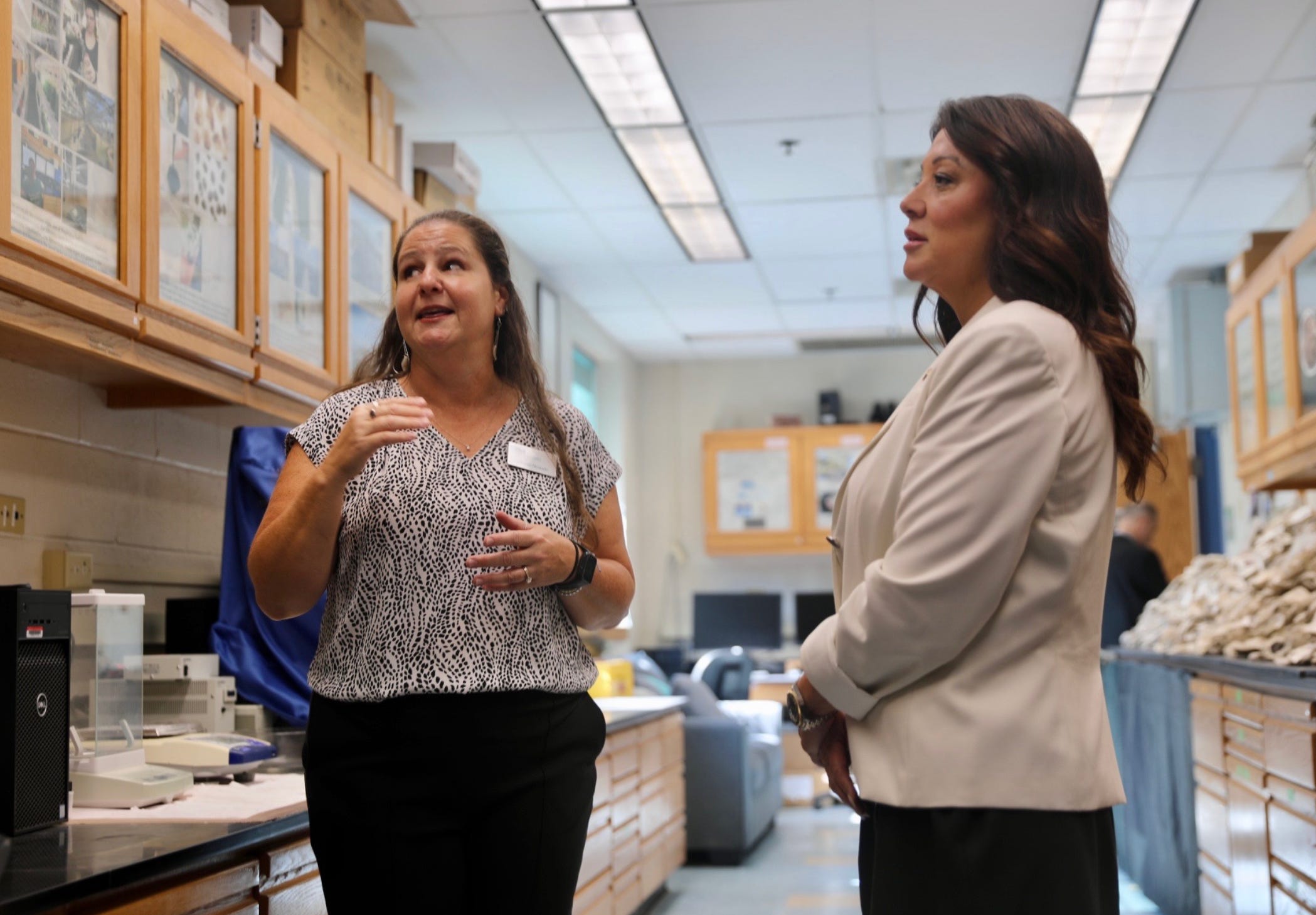
“I wouldn’t know about this laboratory unless I’m here on site to hear these reports, to understand more about it,” she said. “The lovely woman who gave me the tour? She started off as an intern here. 29 years later, here she is talking about why the oyster industry is so important, and now her daughter is very interested.”
Chavez-DeRemer said that a critical part of the Department of Labor is “making sure that [the workforce has] that growing economy and that we’re training in the right areas to do those best practices.”
“No matter where I travel in the state,” she said, “if somebody’s doing something well, I instruct my agency head to say, ‘let’s not replicate. Let’s not duplicate. Let’s make sure that we’re taking best practices and telling that story.’ And maybe there’s something we can learn and share with our other states as well.”
Chavez-DeRemer said that she is on track to visit all 50 states by the end of the year — although her Maryland visit marked her first trip to an oyster farm. “It doesn’t do any good to go talk to all 50 states in the four year process,” she said. “We needed to get the answers now so that I can tell the president what’s working and what isn’t working.”
When Chavez-DeRemer isn’t busy traveling the country, from Alaska to Florida, she is also working on expanding how Americans can invest in their retirement savings.
Chavez-DeRemer recently announced major progress on a transformational rule that will allow Americans to save part of their retirements in alternative assets like crypto, while also including safe harbor protections to ensure retirement accounts are secured for seniors; her former colleagues in Congress — namely Reps. Tim Walberg (R., Mich.), Burgess Owens (R., Utah), and Ryan Mackenzie (R., Pa.) — recently told the Reporter that her moves could be transformational.
“Most people don’t know that [Employee Retirement Income Security Act of 1974], through retirement investments savings, comes through the Department of Labor when we’re talking about savings,” she explained. “Think about the workforce as a whole: the Department of Labor touches so many areas of the workforce, from early education through the entire workforce lifetime, and then through retirement.”
“We want to make sure that we’re protecting Americans’ hard earned dollars that they put in almost their entire career,” she said. “That comes through the Department of Labor. One of the executive orders that you’re mentioning was making sure that we’re having the modernization and the streamlining of investments so that all Americans have the opportunity to invest their dollars with their fiduciary.”
“However It isn’t the federal government’s job to put their thumb on the scale,” Chavez-DeRemer cautioned. “It is between the investor and their fiduciary. And so that’s what we’re seeing in this executive order. That combination of those rules will start to come out. We gave an opinion letter that we want that flexibility for investments in 401(k)s and retirements, so that every day, average Americans can grow their retirement as they see fit.”
Chavez-DeRemer’s nationwide tour is a testament to how President Donald Trump has empowered his Cabinet secretaries to be effective. “The president has given the secretaries the latitude to go out and do our jobs, and my job as the Secretary of Labor is to understand the workforce, take the information that I’m receiving on all of these visits and take it right back to the president myself,” she said.
“I talk to the other secretaries, but my chief of staff is talking to all the other chiefs of staff,” she said. “My deputy chiefs are talking to them and all the agency heads. We’re working together. I have a memorandum of understanding with SBA Administrator Kelly Loeffler sharing data points, understanding how we can get dollars and grant dollars out to our small businesses.”
Chavez-DeRemer said that she also has an MOU with “Secretary [Linda] McMahon at the Department of Education, as we’re taking on more of the grant dollars from the Department of Education to scale the workforce and then deliver to small businesses across this country.”
While Chavez-DeRemer was in a state that Trump lost handily, she still made the case that the Trump administration will help Americans in states and areas that didn’t vote for the 47th president.
“Two out of every three new jobs is created by a small business owner,” she said. “Right here in Maryland, this [oyster] industry is important. It’s important to the ancillary jobs that it will affect. So the more we grow this economy, the better off and more prosperity we’ll have. “
“With the American Family Tax Cut that just passed in Congress, all of that’s going to matter too,” she added. “And for Maryland, we’re talking anywhere up to $12,000 more for a family of four over the next 12 months. That is a lot of money in their pockets…We’re going to protect 116,000 jobs right here in Maryland with that One Big, Beautiful Bill.”
Elsewhere during her tour, Chavez-DeRemer also spoke about how her international travel is helping businesses in places like Maryland. During her tour, she heard about how there are not “a lot of the oyster shells for these baby oysters to attach to.”
So, Chavez-DeRemer floated the idea of 3D printing oyster shells to allow for increased oyster growth. “I was in Japan for the World’s Fair, this just a few months ago, and they were 3D printing coral and reintroducing that back into the ocean and would reintegrate and grow new coral,” she said. “How can we best fortify the industry and some of this Research and Development and innovation comes in laboratories just like this.”
As Chavez-DeRemer was preparing to depart Cambridge, she told the Reporter that her time in Maryland was “absolutely” the best trip she’s done so far — quite an endorsement for Maryland oyster farmers from the former Oregon lawmaker; to that end, one of her staffers — Emily Fehsenfeld — is both from Cambridge and helped facilitate her boss’s latest tour stop.
Below is a transcript of our interview with Secretary of Labor Lori Chavez-DeRemer, lightly edited for clarity.
Washington Reporter:
Secretary Chavez-DeRemer, you’ve got 14 more states ago on your 50 state trip. What from this trip in particular do you want to take to the other 14 states that you have left?
Secretary Lori Chavez-DeRemer:
What’s important is to recognize is that every state’s different, and every corner of the state is different as well. Throughout the west, it’s very different than out east, which is why it was important to go to all 50 states. I say this all the time: as a former mayor, you really cannot understand what’s happening on the ground and how it affects the local economy, the every day, average worker, the American, unless you can talk to them. I wouldn’t know about this laboratory unless I’m here on site to hear these reports, to understand more about it. The lovely woman who gave me the tour? She started off as an intern here. 29 years later, here she is talking about why the oyster industry is so important, and now her daughter is very interested. Is her son interested? No. ‘No Mom, I don’t want to do that,’ but it does take the next generation to understand what’s important. So when you ask what will I take to the next 14 states? I want to make sure that I’m listening and answering the call of the workforce. In essence, that’s what the Department of Labor does: making sure that they have that growing economy and that we’re training in the right areas to do those best practices; no matter where I travel in the state, if somebody’s doing something well, I instruct my agency head to say, ‘let’s not replicate. Let’s not duplicate. Let’s make sure that we’re taking best practices and telling that story.’ And maybe there’s something we can learn and share with our other states as well. We’re going to finish the next 14 states, hopefully by the first week of December, and that was my goal — talk to all 50 states in the first six months. It doesn’t do any good to go talk to all 50 states in the four year process. We needed to get the answers now so that I can tell the president what’s working and what isn’t working.
Washington Reporter:
We all live in Maryland. Is it safe to say that this was the best state that you visited?
Secretary Lori Chavez-DeRemer:
Absolutely. Look look at today; it’s an absolutely beautiful day. Maryland is a lovely state.
Washington Reporter:
More broadly with the work that you’re doing, you just rolled out a policy that can transform how Americans can invest in their retirement accounts to follow with the Trump executive order; your former colleagues on the Ed and Workforce Committee told us that they’re very excited about this. Can you talk about why that also is a priority in the Department of Labor? I think that wouldn’t necessarily come to people’s minds when they think about the work that minds when they think about the work that you do retirement savings, but that’s been a priority of yours this week alone.
Secretary Lori Chavez-DeRemer:
Well, most people don’t know that ERISA, through retirement investments savings, comes through the Department of Labor when we’re talking about savings. But think about the workforce as a whole. The Department of Labor touches so many areas of the workforce, from early education through the entire workforce lifetime, and then through retirement. We want to make sure that we’re protecting Americans’ hard earned dollars that they put in almost their entire career. That comes through the Department of Labor. One of the executive orders that you’re mentioning was making sure that we’re having the modernization and the streamlining of investments so that all Americans have the opportunity to invest their dollars with their fiduciary. It isn’t the federal government’s job to put their thumb on the scale. It is between the investor and their fiduciary. And so that’s what we’re seeing in this executive order. That combination of those rules will start to come out. We gave an opinion letter that we want that flexibility for investments in 401(k)s and retirements, so that every day, average Americans can grow their retirement as they see fit.
Washington Reporter:
Secretary, thank you as always.