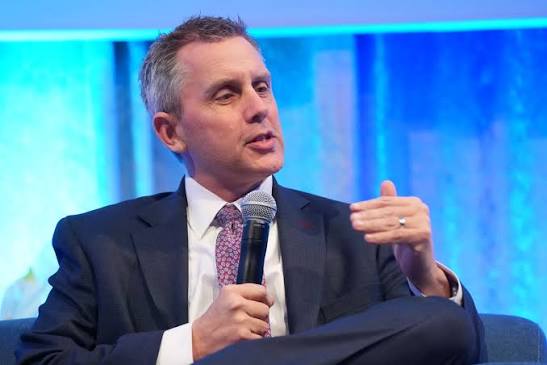
“The thing with shutdowns is you don’t feel them right away,” Armstrong explained in an interview with the Washington Reporter.
Gov. Kelly Armstrong (R., N.D.) left Washington, D.C. behind for the streets of Bismarck, where he currently follows in the footsteps of giants who have led the Roughrider State for decades.
And while America’s heartland isn’t on the radar of Sen. Chuck Schumer (D., N.Y.) or Rep. Hakeem Jeffries (D., N.Y.), Armstrong explained that their shutdown “impacts every North Dakotan.”
“The thing with shutdowns is you don’t feel them right away,” Armstrong explained in an interview with the Washington Reporter. “I’ll start with the most important thing…we have two military bases. We have the Air Force Base in Minot. We have the Air Force Base in Grand Forks. We have the only base with two legs of the triad. We’re proud of our military service here, and that’s before you talk about Customs and Border Patrol and FBI and BIA and our relationships with all of these federal employees who are charged with keeping our country safe and with keeping our communities safe.”
“Soon,” Armstrong said, “they’re not going to get paid, so we’re going to give them a loan to make sure that’s not a problem. We’re lucky we have a state bank, and we’re going to utilize that to make sure that people in uniform recognize that we actually care more about what they do than New York Democratic primary politics.”
While Armstrong noted that 33,000 of his constituents “will take a massive hit on” Affordable Care Act subsidies, he noted that what Democrats are doing is a “terrible tactic.” He thinks that the Schumer Shutdown will end when Democrats use “the same exit strategy they used 13 times under Biden, and you should make them take it again [by passing the CR]. And then sit down and figure out the ACA credit.”
Despite the efforts by Democrats to demagogue on rural health care in particular, Armstrong noted that the Trump administration works overtime to get him what he needs.
“They’re helping us as we get through this, because the timeline is truncated, as it should be, and at the same time that we’re dealing with the Democrats demagoguing rural health care, I have an administration that we can get on the phone in 30 seconds with if we have a question about how to apply for this in this particular space,” he explained. “We’re going to put together a proposal that it provided this funding actually lasts for five years, will dynamically change rural health care in North Dakota for the better.”
It’s not just healthcare where Armstrong is able to work with the Trump administration. Other areas include energy policy, permitting reform, and AI.
One of the most obvious areas of collaboration is in energy production, particularly coal. The Trump administration’s Environmental Protection Agency and Departments of Interior and Energy announced what Rep. Julie Fedorcak (R., N.D.) compared to the Super Bowl for energy producers.
That will send North Dakota’s stock to the proverbial moon. “We have over a century’s worth of coal that we can provide energy for,” Armstrong said. “And we’re at the middle of a country that is starving for more energy and we have the ability to provide it, and it’s just really, really enlightening to have an administration that is basing energy policy on science and not on emotion.”
Armstrong also fact checked the charges from climate activists who were running much of the Biden administration’s energy policy.
“The frustrating thing for me is that you could shut down every coal plant in North Dakota, [and] all you’re going to do is make energy more expensive and less reliable,” he noted. “You’re not going to reduce carbon one iota. I mean, if we shut down every coal plant in North Dakota we don’t reduce the carbon emissions worldwide because we don’t hold China accountable. We don’t hold Russia accountable. We don’t hold anybody else accountable, as they’re putting a new coal plant on in Northern Africa once a month, and they don’t have things like the EPA or shareholders who actually care about good stewardship and good environment.”
“They’ve had two coal days in D.C.,” Armstrong said. “They had one at the White House and one at Interior. Do you know what kind of shot in that arm that is to my communities out here that just want to keep the lights on for people?”
One of Armstrong’s biggest assets when it comes to working on energy production is the role his predecessor has. Doug Burgum went from Bismarck to the Department of Interior. One of Burgum’s many catchphrases is that we used to say that knowledge is power, but because of AI, power is now becoming knowledge.
North Dakota, Armstrong said, doesn’t “have a ton of federal land, so a lot of this is developed on private property or state property, which means the federal engagement is actually not super significant. It was one of the advantages of the Bakken compared to Powder River or Permian and all of that in that we had created state policy that incentivized companies to risk their capital here.”
Another priority of many in Congress is permitting reform, and Armstrong noted that North Dakota “produce[s] a lot of things we don’t consume here.”
“By doing NEPA reform and doing all of that, we’re going to allow North Dakota producers to get their products to market at a cheaper and more effective rate,” he said. “That’s great for us. That’s great for the country…When we get out of this shutdown, we have a real opportunity for governors from both sides of the aisle to press Congress and press this administration on long term statutory changes that will make it easier for us to get stuff in the ground.”
While Armstrong is done with D.C. for now, he’s used his six years in Congress to show America’s 49 other governors that he “speak[s] Congress.” Those skills are proving invaluable for him now.
But Armstrong is also fluent in speaking North Dakotan, and that involves a healthy dose of respect for President Theodore Roosevelt, who has inspired North Dakota’s impending cryptocurrency — which will be called a Roughrider Stablecoin — and whose guns stare at him from his office in the Governor’s Mansion.
But North Dakota has much more to offer than simply the giant library dedicated to Roosevelt that will open next year. Armstrong, whose birthday often coincides with opening day of pheasant hunting season, made the pitch for an unusual way to spend an October birthday.
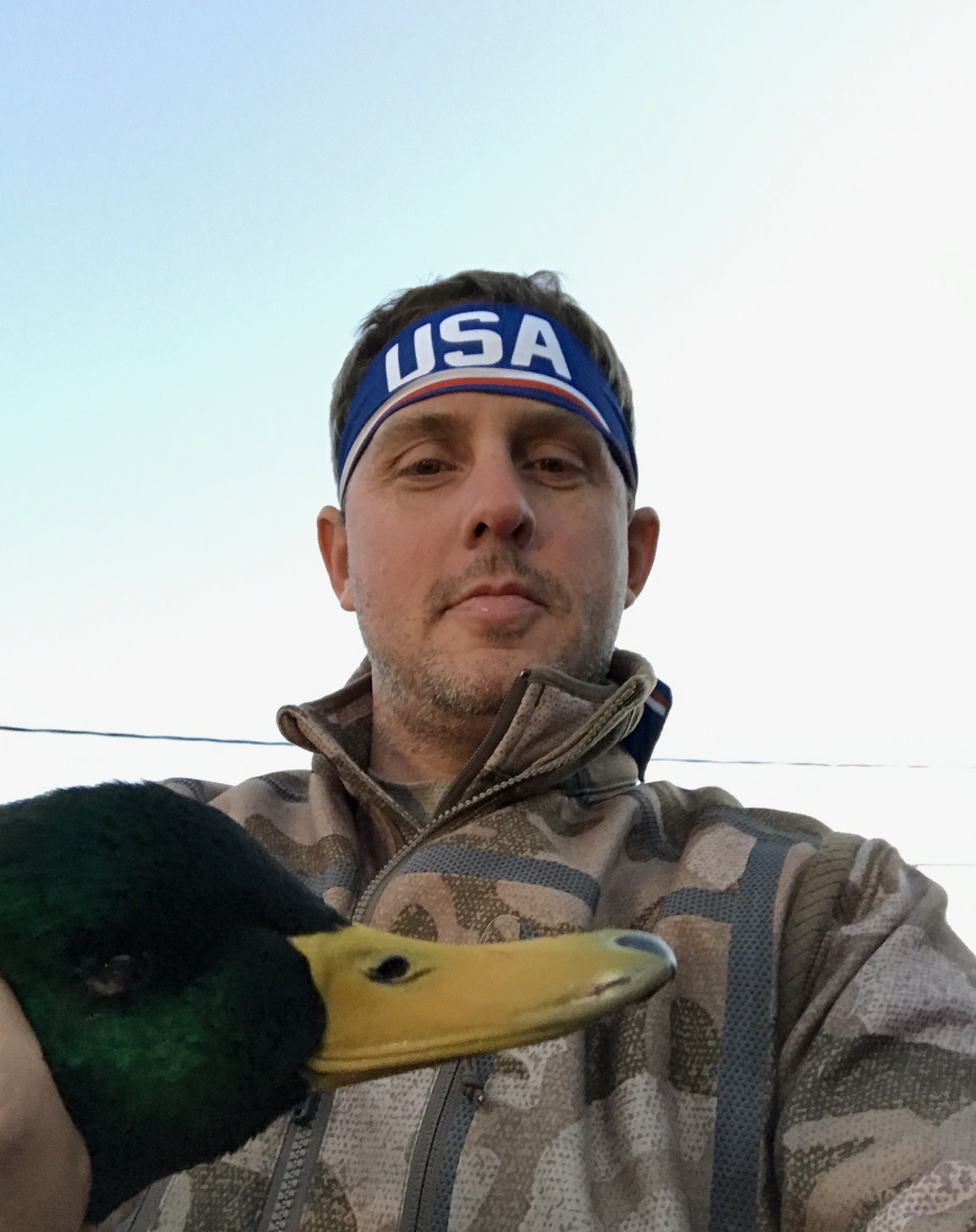
“The most North Dakota way to celebrate your birthday when it’s on October 8th is with your friends and family, shooting roosters,” he said.
It’s unclear if Armstrong’s birthday twins like Chevy Chase, Bruno Mars, or Matt Damon have ever partaken in that sort of birthday festivity.
Below is a transcript of our interview with Gov. Kelly Armstrong, lightly edited for clarity.
Washington Reporter:
Governor Armstrong, give us a view from America’s Heartland about the Schumer Shutdown; how is this impacting North Dakotans?
Gov. Kelly Armstrong:
It impacts every North Dakotan. The thing with shutdowns is you don’t feel them right away. Everything still has a pay period. I’ll start with the most important thing, because this is what we did. We have two military bases. We have the Air Force Base in Minot. We have the Air Force Base in Grand Forks. We have the only base with two legs of the triad. We’re proud of our military service here, and that’s before you talk about Customs and Border Patrol and FBI and BIA and our relationships with all of these federal employees who are charged with keeping our country safe and with keeping our communities safe. Soon, they’re not going to get paid, so we’re going to give them a loan to make sure that’s not a problem. We’re lucky we have a state bank, and we’re going to utilize that to make sure that people in uniform recognize that we actually care more about what they do than New York Democratic primary politics.
Washington Reporter:
What advice do you have to your now-former colleagues here in both parties about how they can or should get this resolved so that troops in North Dakota and around the country don’t actually need you to take the measures that you just laid out?
Gov. Kelly Armstrong:
This is why we did the program. How do you usually get out of a shutdown? If you go back and look at them, unfortunately, we’ve been in far too many of them How do you usually get out of a shutdown? You pass a clean CR. Well, that’s what the House did. They can try and turn this into a healthcare debate. We tried that on Obamacare. It didn’t work for us. We tried to turn a shutdown into an Obamacare debate. It didn’t work for us. The ACA credit extension is a valid conversation. It doesn’t matter if you agreed with it when it was implemented. We have 33,000 North Dakotans who will take a massive hit on that, which is why I am so frustrated as somebody who spent six years in D.C. This is a terrible tactic. If that is your issue, if you have truncated deadlines to deal with it, if you know that there are a lot of Republicans, myself included, who think the policy needs a massive revamp, but you also know it’s a particular political liability, you nevertheless have the Democrats in the Senate conflating an issue and negotiating it, which is the worst way possible to effectuate an outcome. That’s really frustrating. And my answer to them would be they voted for 13 clean CRs under President Biden. They know this is the responsible thing to do. Do you know how hard it is to get Republicans in the House of Representatives to vote for a CR? Yet they did it. They’ll have the same exit strategy they used 13 times under Biden, and you should make them take it again. And then sit down and figure out the ACA credit.
Washington Reporter:
I’m sure you have far more rural hospitals and rural health care issues in North Dakota than Hakeem Jeffries has in Brooklyn, yet we’re nevertheless seeing Democrats try and talk about that as an issue that they are holding the government hostage over.
Gov. Kelly Armstrong:
We’re also at the same spot where we have to apply for the $200 million a year in rural health care money that passed in the reconciliation bill. And we are working with Secretary Kennedy and Dr. Oz, and just to tell you how different the dysfunction from the Democratic side in the Senate and the House is compared to this administration, we are putting together a proposal in North Dakota that won’t prop up failing systems. They don’t want us to do the same tired things through rural health care policy. We’re working with an administration that is innovative. They’re flexible, they’re listening to our concerns. They’re helping us as we get through this, because the timeline is truncated, as it should be, and at the same time that we’re dealing with the Democrats demagoguing rural health care, I have an administration that we can get on the phone in 30 seconds with if we have a question about how to apply for this in this particular space, and we’re going to put together a proposal that it provided this funding actually lasts for five years, will dynamically change rural health care in North Dakota for the better.
Washington Reporter:
Another area that this administration is well-positioned to be working with you on is with all things Department of Interior, and the Department of Interior, as I’m sure you saw, just announced its plans to drastically increase coal production in America, and your Congresswoman, Julie Fedorchak, compared this to the Super Bowl for American energy independence. We were sad to not see you there. But can you talk about why this is important, both for North Dakota and for the rest of the country?
Gov. Kelly Armstrong:
Of course. It gets to be 47 degrees below zero in February here, and we have over a century’s worth of coal that we can provide energy for. And we’re at the middle of a country that is starving for more energy and we have the ability to provide it, and it’s just really, really enlightening to have an administration that is basing energy policy on science and not on emotion. The frustrating thing for me is that you could shut down every coal plant in North Dakota. All you’re going to do is make energy more expensive and less reliable. You’re not going to reduce carbon one iota. I mean, if we shut down every coal plant in North Dakota we don’t reduce the carbon emissions worldwide because we don’t hold China accountable. We don’t hold Russia accountable. We don’t hold anybody else accountable, as they’re putting a new coal plant on in Northern Africa once a month, and they don’t have things like the EPA or shareholders who actually care about good stewardship and good environment. We have the energy, we have the natural resources The world needs it. It is so great to have Secretary Burgum, Congresswoman Fedorchak who, by the way, understands this stuff as well as any member of Congress, Senator Cramer, who was on the Public Service Commission, Senator Hoeven, who was the governor out here. But more importantly, we spend a lot of time talking about oil and natural gas. They’ve had two coal days in D.C. They had one at the White House and one at Interior. Do you know what kind of shot in that arm that is to my communities out here that just want to keep the lights on for people?
Washington Reporter:
It’s probably a big shot in the arm. This is a bit of an audible question, but I was thinking about this with your mention of John Hoeven and now-Secretary Burgum. What is it with governors from North Dakota who continue to punch far above their weight despite representing a small state? Tell me about what you’ve learned as governor about the your predecessors in this office, and are there ones who you look to from the more distant past, who you think ‘this is someone I want to model my day to day as governor after’?
Gov. Kelly Armstrong.
To me is it started with Governor Ed Schafer in 1992. North Dakota used to be the old Democratic Nonpartisan League Party and all of that. But so you started with Governor Schafer, then you went to Governor Hoeven, and then you went to Governor Dalrymple, and then you went to Governor Burgum. And I’ll tell you, the best part of this job is when you follow those guys, you can really operationalize things, because we have a Republican majority in the Senate and their relationship with the White House and their understanding of D.C. and North Dakota is tremendous. Julie Fedorchak was a Public Service Commissioner. Kevin Cramer was a Public Service Commissioner, Governor Burgum and obviously, Governor Hoeven, they all had served statewide here. I think the unique piece with me, compared to them, is that I also served six years in D.C. So I understand what is going on internally, in the House, in the Senate and in Interior. It’s the one unique thing compared to all of them — that I had been there for six years. So I understand what they have to do to accomplish things as well. It’s way easier for me to do something out here than it is for any of them to do things out there. Secretary Burgum as an agency head obviously can move a little quicker, but every time he does something of substance, he’s going to get sued on it. Our relationship really benefits from the fact that I don’t ask for unreasonable asks out there. And I’m not saying they did. I think more often than not, it was timeline sensitive. Let’s be real: don’t ask me for something on Tuesday that you need on Thursday, because that’s just not how that broken town works. So the fact that they have all served in statewide positions in North Dakota, and the fact that I served in D.C. for six years makes this relationship really, really easy on a new governor.
Washington Reporter:
Now you are working very closely with your direct predecessor as governor, Doug Burgum, and one of the things that I’ve noticed that he’s fond of saying is that we used to say that knowledge is power, but because of AI, power is now becoming knowledge. That’s an interesting turn of phrase. How do you see, from your vantage point, this administration making it easier for states like yours to do to fuel what this, what the Trump administration accurately cause the AI arms race?
Gov. Kelly Armstrong:
This is one of the misnomers that D.C. gets wrong. Producing states have tremendous control over production. Coal is a little bit of an outlier because there is so much federal regulation to utilities and all of that, but we’re in charge of growing corn, we’re in charge of producing a barrel of oil, and we’re in charge of producing MCF gas in North Dakota. We don’t have a ton of federal land, so a lot of this is developed on private property or state property, which means the federal engagement is actually not super significant. It was one of the advantages of the Bakken compared to Powder River or Permian and all of that in that we had created state policy that incentivized companies to risk their capital here. I think the big difference for us is they understand we’ve got to get this stuff to market. Any linear infrastructure of any substances all has a federal regulatory requirement. So you can go from anyone, from Secretary Wright to Secretary Burgum to Administration Zeldin, and not the least of which is President Trump in the White House and recognizing that we have these things we produce here that the world needs, and they’re going to help us get it to market quicker and more efficiently.
Washington Reporter:
One of the other priorities that we’re seeing from D.C. is there’s going to be a new push for permitting reform. How does that impact you and your day job as governor of North Dakota?
Gov. Kelly Armstrong:
Well, first of all, we’re the geographic center of North America, and we produce a lot of things we don’t consume here. So it doesn’t matter if it’s a bridge, a rail line, a highway, a pipeline, a transmission line, we have to get our products to market. You don’t have to stop linear infrastructure everywhere. You just have to stop it in one spot. So by doing NEPA reform and doing all of that, we’re going to allow North Dakota producers to get their products to market at a cheaper and more effective rate. That’s great for us. That’s great for the country. Secondly, and this is one of the benefits to being in Congress, my fellow governors have recognized that I still speak Congress. And this is really a bipartisan issue. There’s not a governor in the country that doesn’t want more control and autonomy when it comes to building their infrastructure. Doesn’t matter if you’re a Democratic governor in New Mexico or Republican governor in Utah, or a Democratic governor in Pennsylvania or Republican governor in North Dakota. When we get out of this shutdown, we have a real opportunity for governors from both sides of the aisle to press Congress and press this administration on long term statutory changes that will make it easier for us to get stuff in the ground. I got to testify on Surface Transportation in the Senate a couple months ago, and at the same time, Administrator Zeldin will tell you this too. He says, ‘I can do all of these great things at EPA,’ but as a former member of Congress, he recognizes, until you make the statutory change, these are 12 to 20 year infrastructure projects, which means you’re going to have three or four presidential elections in between. It’s really hard to raise capital for a project if the change in the administration means a change in the regulatory regime. That might mean your project is no longer viable. We need Congress to codify this stuff that gives states more autonomy about how to get infrastructure in the ground. And I think we have a unique opportunity to do that. Everybody thinks President Trump is so polarizing, and in a lot of areas he is; that is part of how he communicates, how he administers, but the one thing he really understands is how to build things. Look at Democrats for a second. It’s been really nice to see them give him the credit he deserves on this peace deal between Israel and Hamas, because nobody else could have gotten that done. But I think there’s another space where that can happen, and I think that’s a NEPA reform and permitting reform.
Washington Reporter:
We’ll talk ahead of next year quite a lot about your Teddy Roosevelt library plans here, but going on the Teddy Roosevelt theme, you just launched your own stable coin, which is in homage to Teddy Roosevelt. How did that come about, and why was that important for you to do?
Gov. Kelly Armstrong:
So we didn’t launch it. We did a soft launch. We’re going to time it, provided we are comfortable with where we’re at on it, for the 250th birthday of America and of the opening of the Teddy Roosevelt presidential library in Medora, North Dakota. North Dakota is the only state in the country that has a state bank. We have a unique opportunity in a space that is coming, no matter what. If I’m blessed enough to serve in this office for eight years, I know two things: I know that AI will be a part of government, and I know the next generation of North Dakotans will be engaged in digital banking. Those two things are absolute, whether we participate in that process or not. North Dakota is in the unique position to put forward a way in which to do this with some velocity and with an incredible amount of prudence working with our community banks to make sure that we are educating our bankers, the general public, our elected officials, on what blockchain technology is, why it’s important to the future of banking, and how we can show a road map for how to do it responsibly as a government agency, and we’re excited about it. We’re going to be thoughtful about it. We’re a state of 800,000 people. We’re never going to have the huge $25, $30, $50 billion investment in some of this stuff. But what we can do is develop a program that can be a model for the rest of the country, and I think we will do that.
Washington Reporter:
How does that fit in with the broader Trump administration’s embrace of crypto? You have David Sacks who was in the administration. You had Bo Hines, who was a dedicated crypto guy in the administration. They’ve made stablecoin more broadly an important part of what you could call U.S. dollar diplomacy.
Gov. Kelly Armstrong:
President Trump’s two superpowers as a politician are one, he actually enjoys being around his voters, and I don’t think we talk about that enough. I think his other superpower is being able to see what’s coming faster than everybody else. You talk about politically, where we’re no longer necessarily the party of a large international business, but we’re the party of small businesses and small business workers. Now, the more populous, small business part of what it means to be a Republican, is important to think about. The perfect example in policy is in digital currency and blockchain technology. These guys know it’s coming. They know it’s going to be here. It’s hard to pass anything bipartisan through Congress, let alone something brand new like the GENIUS Act, but they did it. The reason that passes is because everybody — every reasonable Democrat and every reasonable Republican — knows that this is coming, whether we do it or not. We would much rather be participating in a framework created by the United States than by some adversarial countries that are taking all the capital because we haven’t created an infrastructure where they want to invest it here, and so at a smaller level, from the state side, that’s what we’re doing. It combines with the Trump administration in that we’re innovative, but we’re also thoughtful about it. We’re working forward, but we’re not doing it in a way that allows the regulators and the bureaucrats slow everything down for 25 years. Because, quite frankly, whether you’re in North Dakota or whether you’re the President of the United States, if you take that approach, the capital will go overseas, and it’ll be established, and it’ll be established again by people who don’t have a Securities and Exchange Commission, who don’t have banking regulation. And that is something that actually will put Americans at risk if they’re utilizing it, which they’re going to.
Washington Reporter:
You were just talking about sane Democrats, but I want to shift to insane Democrats. Obviously, you’re not in D.C. in Congress anymore, but some Democrats are already looking to initiate impeachment proceedings against Trump. What would be your top line takeaway from being Trump’s de facto defense lawyer in his first two impeachment trials be?
Gov. Kelly Armstrong:
Well, one is policy. Keep doing what you’re doing. There’s not a politician alive who doesn’t look at the president and say ‘I would never say something like that. I would never do it like that. I would never do that.’ I’ve said it publicly before. The problem is that’s not the same answer for everybody, so keep doing what you’re doing, and two, recognize that if the Democrats win in the midterms, they’re going to start impeachment on day one. So go win the midterms in the House. And also just recognize that that’s the cost of doing business. So just do what you’re doing now. Go full steam ahead. I’ve always said in policy, one of my biggest fights on my side of the aisle is that I’m an incrementalist. I think the first step is the hardest. So if you can get the first step done, then the second step is easier. I think D.C., after spending six years there, needed a lot of change, and I don’t think incremental change was what the country was asking for. And I don’t think incremental change is what is going to solve most of D.C.’s ills. I think they are disruptors. It doesn’t mean as a governor of a rural state, I always like it. I can’t sell soybeans right now. That’s a real problem for my ag economy. But I want this president to continue to disrupt business as usual in D.C., because I spent six years out there and business as usual wasn’t working for the American people.
Washington Reporter:
One of the big disruptors, especially when it comes to foreign policy in American history, is a guy we were already talking about: President Teddy Roosevelt. As you think about former presidents, are you legally required to say that he’s your favorite, given the massive investment that North Dakota is making in his legacy?
Gov. Kelly Armstrong:
I am not legally required to, but I am looking at a picture of Teddy Roosevelt’s safari tent in my office, and I am looking at three of Teddy Roosevelt lever actions. One’s a .405 Winchester. One’s a .45-70, and one’s a .30-30 Winchester, and this is a dirty secret with North Dakota. If you spend more than two days here, we claim you forever. And we are very proud to claim Teddy. I’m a hunter. I hunt in Africa. I hunt in North Dakota. We have the only National Park named after a president. And style is different, but there aren’t many people in politics who are larger than life, and who really, truly dynamically changed how we view things. Teddy Roosevelt is absolutely one of those people. He created our modern conservation model. He created the Boone and Crockett Club. He had a tremendous amount of political failures as he was coming through and doing this, not least of which are personal failures that he overcame. And the guy had just an unbelievable zest for life and zest for doing things. If we had more politicians at every level like that, our country would be in a lot better space.
Washington Reporter:
Teddy Roosevelt also famously was one of the first recipients of the Nobel Peace Prize, and he received it for brokering one peace deal ending one conflict. Trump obviously has brokered seven times that in just a couple of months. And the Nobel Prize Committee, of course, snubbed him, giving it to a worthy individual from Venezuela who most people around the world haven’t heard of. What are your thoughts on that award, and not necessarily who received it, but who, very notably, didn’t receive it?
Gov. Kelly Armstrong:
As somebody who has been to Israel twice and who has seen the dynamics of politics about Israel change on both sides of the aisle in the last 18 months, not for the better, by the way, and as somebody who really, really cares deeply about our strategic partnerships and the reasons why we care about that area of the world, I think President Trump, absolutely deserved it. I think the people who get to make the decisions as to who gets the Nobel Peace Prize, probably abhor everything about the president, and that’s really unfortunate, because this is a singular event. You had Morning Joe complimenting him. I watched it because my friend Mike Flood was going to be on; he’s another guy from one of those rectangular Midwestern states. But when you are getting Joe and Mika to actually admit this, and their guests to admit that Trump is the singular person who could have made this happen? I don’t know how you have that award not go to him. It’s tough to not say ‘this is one of those generational things that only one person could have gotten done.’ And I think that’s what we’re looking at with that peace deal.
Washington Reporter:
You may be a little bit more diplomatic in this than I would be, but do you think that if Teddy Roosevelt as a Republican president were alive today and he brokered a peace between Japan and Russia, that the Nobel Prize Committee would be willing to give him the Nobel Peace Prize? Do you think it’s a unique disdain they have for Trump?
Gov. Kelly Armstrong:
I don’t think they like conservatives in the United States to begin with. When you talk about Republicans and conservatives in the United States, our European counterparts have what I call ivory tower liberalism, where if you just talk about things long enough, if you make sure everybody’s feelings are okay, then you’ll make everything better. So no, I don’t think he would get it now, but I think when you when you put President Trump into that mix, you take a volume that’s normally at seven and move it up to 100. I don’t think our European counterparts, by and large, particularly Western European counterparts, like Republicans all that much. I took a codel to COP in Dubai, and I can tell you that the ideology around some of that stuff is antithetical to everything that anyone with a modicum of common sense believes.
Washington Reporter:
I want to end with some North Dakota fun facts. I’ve been hearing for years about Bonzer’s. Tell me about this place.
Gov. Kelly Armstrong:
Well, it is the single best bar in the United States, and I will die on that hill. It is run by my friend Matt Bonzer, who is the son of my friends John and Cindy Bonzer, and it’s one of those neighborhood joints that I spent every waking minute of free time in college at. I didn’t shop for who had better drink special. Keep in mind, my family has owned sports bars my entire adult life, and I would go to Bonzer’s 100 times out of 100 before I would go to my own bar, and at my own bar, I could drink for free. My college roommate bartended there; it was our group of friends’ version of Cheers. And the only way that works is if you have good people running a business; it’s been passed on to their son, and I can’t think of very many places in the world I would rather be than at Bonzer’s in Grand Forks, North Dakota.
Washington Reporter:
Fnally, it was recently your birthday. Happy 21st birthday, and you may have just answered it with Bonzer’s, but what is the most North Dakota way to spend a birthday?
Gov. Kelly Armstrong:
Pheasant hunting. My birthday actually fell in the middle of the week. I had these fights with my family growing up, my birthday almost always fell somewhere around the opening day of pheasant season. And so when you have a six year old and an eight year old kid, your wife is like, ‘what are we doing for your birthday?’ I say ‘well, I will be pheasant hunting.’ She’s like, ‘well, your kids want to celebrate your birthday with you.’ I’m like, ‘well, good for them. It’s my birthday.’ The most North Dakota way to celebrate your birthday when it’s on October 8th is with your friends and family, shooting roosters.
Washington Reporter:
That’s amazing. Governor Armstrong, thanks as always for chatting.