

EXCLUSIVE: Despite distrust of the pharmaceutical industry, seniors express concerns over proposed ad restrictions, poll shows
A new poll obtained exclusively by the Washington Reporter sends some warning signs about the Trump administration’s plans to regulate certain ads.

Back in September, Health and Human Services Secretary Robert F. Kennedy, Jr. announced a historic crackdown on pharmaceutical ads. Secretary Kennedy shared his personal belief that these ads contribute to overmedication and a chronic disease epidemic. Food and Drug Administration (FDA) Commissioner Marty Makary followed up making clear their strategy was to make drug ads “no longer feasible.”
AMAC Action, the advocacy arm of the Association of Mature American Citizens (AMAC), conducted polling of Americans over the age of 55, obtained exclusively by the Washington Reporter, to see how seniors feel about limits to pharmaceutical advertising.
Though Americans 55 and over who were polled had a negative opinion of drug companies, the large majority (73 percent) did not support the government dictating the ads they saw. And while 27 percent had asked their doctor about a drug they saw on TV, most (70 percent) expressed confidence their doctor wouldn’t prescribe it if it wouldn’t help or posed a risk, which undercuts the assertion some have made that ads are driving overuse of drugs.
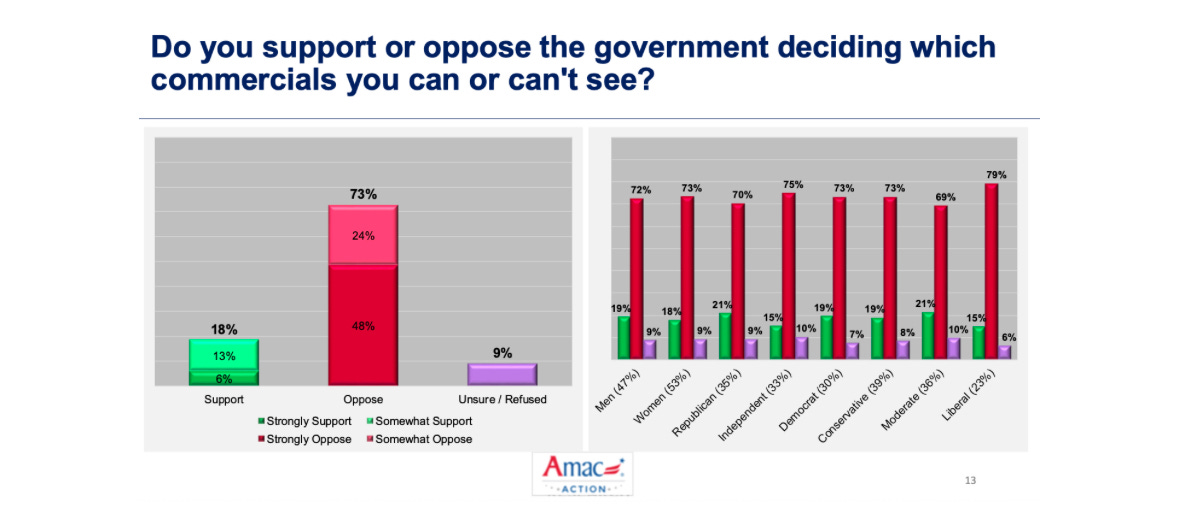
“Our polling of seniors 55 and up reveals that while most are not fans of Big Pharma, they see utility in commercials featuring new drugs,” Andy Mangione, the Senior Vice President at AMAC Action, explained. “Seniors want to make healthcare decisions based on all the available information and trust their doctors to prescribe medicines that are right for them. They are rightly skeptical when the government attempts to control that information or make decisions for them.”
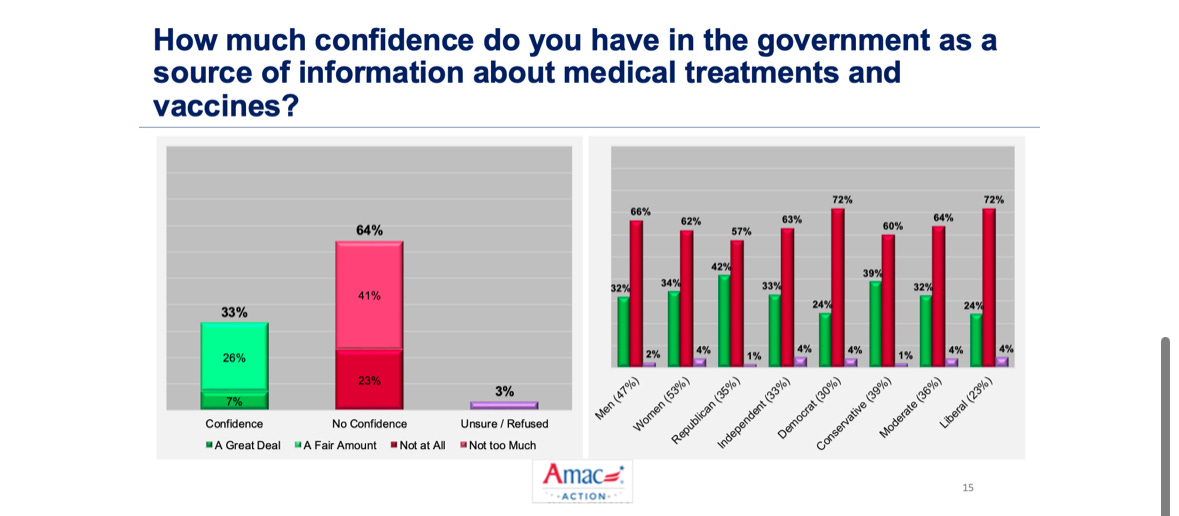
The polling also highlighted that in the wake of the pandemic, seniors remain skeptical of government overreach and involvement in their healthcare decisions. 64 percent said they had little confidence in the government as a source of information on medical treatments and vaccines, and 65 percent preferred to have all information available regarding a drug, rather than just being reliant on their doctor.
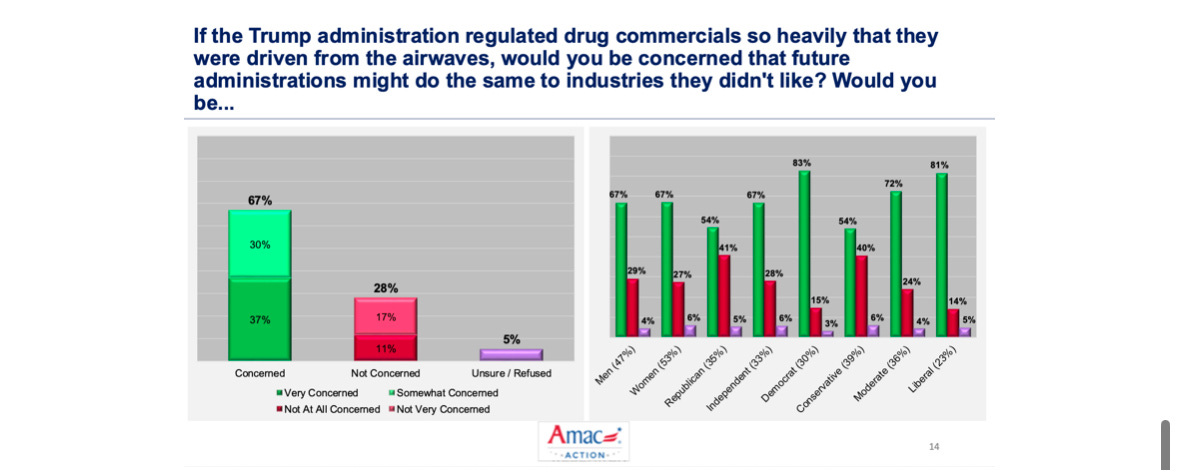
As some experts have raised concerns that heavy-handed regulation of pharmaceutical ads could open the door to a future Democrat administration cracking down on ads for gas-powered cars, air travel, or anything energy related, 67 percent of those polled were concerned that overregulation of commercials could be misused for other purposes in the future.
And when presented with research highlighting that drug advertising had a positive impact on raising awareness about mental health issues, 62 percent were more likely to support them.
AMAC members have been vocal in their agreement with the administration on drug ads. But this polling indicates that more broadly, seniors are skeptical of efforts to put an end to pharmaceutical commercials and empower government bureaucrats to control the healthcare information they receive, despite their antipathy toward Big Pharma.
As the administration considers next steps on the issue, legal experts are already warning that aggressive steps will likely run into major challenges in court.