For decades, the American dinner table has stood as a testament to the efficiencies—and the hidden costs—of globalization. We have enjoyed year-round access to fresh produce, but we have done so by outsourcing the very foundation of our survival. Today, nearly 70% of our fresh winter-time vegetables are imported from Mexico and Canada. As the CEO of Agricultural Scientific, I believe the time has come to treat food security as national security. Under the banner of America First, we must re-shore our food supply chain using the proven, high-tech greenhouse innovations perfected by the Dutch.
The risks of our current off-shored model are no longer theoretical. They represent a direct threat to our food supply chains and the Make America Healthy Again movement. We cannot build a healthy nation without a secure, transparent, and clean food supply. Right now, the fragility of the Mexican corridor is being laid bare by waves of violence that choke the arteries of North American commerce. Trucking delays at the border, road blockages inland, and the constant specter of supply disruption have turned fresh produce logistics into a gamble no responsible nation should accept.
Even more alarming is the increasing entrenchment of criminal cartels in what experts now call “narco-agriculture.” Cartels have tightened their grip on Mexican tomato production, using the industry to launder capital and control territory. When American families buy produce at the grocery store, they should not be inadvertently funding criminal enterprises. A supply chain plagued by extortion is not merely inconvenient—it is a strategic liability that compromises the safety and quality of what our children eat.
Perhaps the most bitter irony is that American taxpayers are currently subsidizing this foreign dependence. Through the Supplemental Nutrition Assistance Program, the U.S. government effectively purchases Mexican and Canadian tomatoes instead of prioritizing domestic produce. It is nonsensical for federal benefits to support foreign economies and cartel-linked supply chains while American farmers struggle to compete. To truly Make America Healthy Again, we must reform SNAP to prioritize domestic production, ensuring that tax dollars fund nutrient-dense food grown by American hands on American soil.
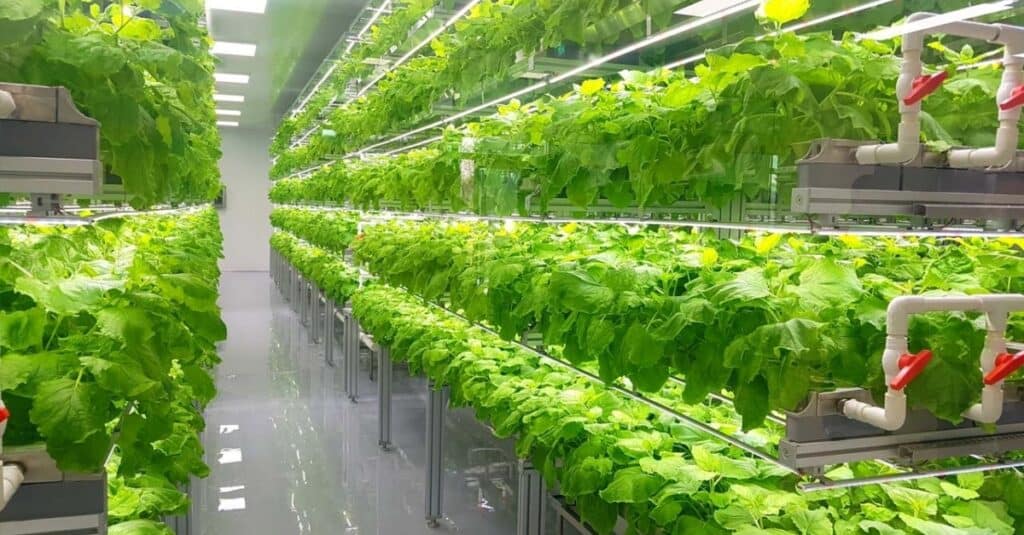
Fortunately, the solution is already at our fingertips: Controlled Environment Agriculture. By adopting Dutch-style greenhouse technology, we can grow premium, pesticide-free produce right here at home. These are not the greenhouses of your grandfather’s generation. They are advanced manufacturing hubs for nutrition. Utilizing hydroponic systems and climate-controlled glass structures, these facilities produce yields up to 30 times higher than traditional open-field farming while using 90% less water. This is already happening in the American Southeast, where my company is investing hundreds of millions of dollars to transform the region into a global epicenter for agricultural technology. Our 1,000-acre Agriculture Technology Campus in South Carolina represents a $350 million bet on American self-reliance—a single facility capable of helping feed over 50 million people.
But scaling this vision demands that the federal government treat agriculture with the same urgency it reserves for high-tech defense. A strong America First opportunity for Secretary Brooke Rollins at the USDA and Secretary Howard Lutnick at the Department of Commerce is to replicate the aggressive re-shoring deals they have successfully executed with Intel and MP Materials. If we can provide equity-backed federal support for semiconductors and rare earth minerals, we must extend the same commitment to the food that sustains our citizens. The logic is simple: you cannot defend a nation you cannot feed.
We must also modernize our tools. The USDA Business and Industry loan program—long the lifeblood of rural development—has not seen a significant budget increase in over 20 years and has never been indexed for inflation. In an era of rising costs, a stagnant budget is not fiscal discipline. It is a retreat from our commitment to rural America.
Re-shoring our food supply chain is the ultimate America First policy. It revitalizes the heartland, creates high-tech manufacturing jobs, and ensures that a healthy America starts with American-grown food. By applying the Lutnick model of industrial re-shoring to agriculture, we can guarantee that the next generation is fed by American farmers, secured by American innovation, and empowered by a food system we actually control.
The American plate should be filled by American hands. It is time to bring our food supply home.
Zeb Portanova, CEO of Agricultural Scientific