Op-Ed: Tom Campbell: President Trump and the future of AI
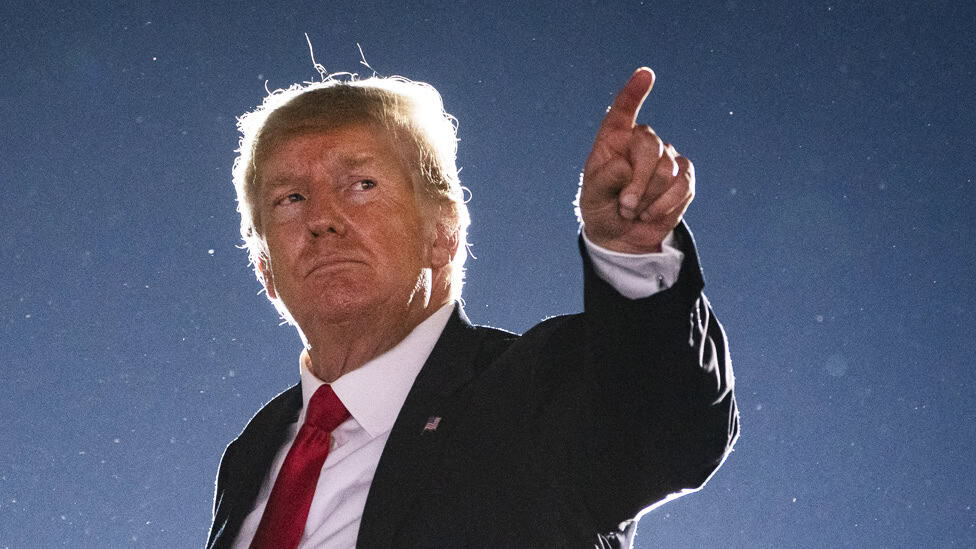
Last week, President Trump postponed an Executive Order that called on companies developing Artificial Intelligence to submit their models, voluntarily, for prior federal government approval.
The voluntary nature of that Executive Order could be doubted, as compliance might well have been a condition of winning federal government contracts in the AI space. Given Trump’s AI pause, now’s a good time for the White House to pull back and rethink the proper role of government in this industry that will have such a profound impact on the American economy.
Individual states, the Congress, and the White House have already begun to regulate that impact. A single national approach is likely.
The Trump Administration empowered the Office of Science and Technology Policy (”OSTP”) to announce a National Policy Framework for Artificial Intelligence. In March, that office recommended that “Congress should preempt state AI laws that impose undue burdens to ensure a minimally burdensome national standard consistent with these recommendations, not fifty discordant ones.”
This directive responded to the reality that several states had leapt ahead in the field of AI regulation. For example, preventing the use of personal information to generate different prices to different customers for the same goods has already been the concern of several states’ laws. The concern behind the just-pulled Executive Order was that some AI models could defeat cyber-security protections at many small businesses and government units. These are valid concerns. However, the danger of over-regulation, which motivated the President’s withholding of his Executive Order, is large.
Over our country’s history, every major technological change has been accompanied by political efforts to protect those who benefit from the existing model that the new technology challenges. In previous eras, these efforts became the laws preserving jobs that technology had made redundant. In the 1900’s, the railroad workers’ unions bargained to retain jobs that were needed on steam-driven trains, long after diesel and electric trains had replaced them. Congress is still being lobbied (even in the federal highway bill currently pending in the House Transportation and Infrastructure committee) to maintain railroad jobs that more efficient European trains have shed long ago.
We can expect state and Congressional efforts to regulate AI in similar fashion. The Trump White House needs to determine the correct course, and beat back the current proposals being pushed by the progressive left.
What’s the administration up against? The Artificial Intelligence Data Center Moratorium Act, authored by Senator Bernie Sanders and Congresswoman Alexandria Ocasio-Cortez, would halt new data centers due to the stress that AI places on energy and water resources. Many similar bills are pending in state legislatures and city councils.
Another example is sudden White House hopeful California Congressman Ro Khanna’s bill to retrain the workers displaced by AI, funded by a tax on billionaires and on AI usage.
Although the proposed Executive Order was voluntary, the Trump Administration may be inclined similarly to command rather than incentivize and to regulate rather than to trust individual solutions to the legitimate problems that AI poses. Once we go beyond protecting against AI-enabled attacks on cyber-security systems, any government review system threatens the danger of inhibiting positive uses of AI. One such path that the Trump Administration might be tempted to follow concerns how companies set the prices for their products in any market.
The Federal Trade Commission, which enforces the federal antitrust laws along with the Justice Department, might be inclined to partner with OSTP in mandating a single federal rule regarding the use of AI in companies’ pricing decisions.
It is already against federal law for competitors to agree on the price they charge in the same market. Attempts at outright price fixing are caught from time to time. In 1982, the President of American Airlines proposed to the President of Braniff Airlines that Braniff raise its fares for flights out of Dallas-Fort Worth by 20%, saying on a recorded phone call, “I’ll raise mine the next morning.” That kind of phone call is unlikely to happen again.
However, today’s threat would be if American Airlines’ management were to ask an AI program what prices would make the most profit on flights of a particular route. The program would search for and find all recent fares each airline has posted for that route, research the price responses other airlines made to changes in those fares, predict how they would respond to a price increase in real time, monitor what actually happens, and recommend further action. Every other airline would do the same thing, acting not out of an agreement, but simply its own best interest.
Federal courts have already ruled that the antitrust laws are broken by competitors agreeing to each submit confidential information to an AI model and to agree to abide by the pricing recommendations of the algorithm.
Agreement, however, is hardly necessary with AI. Even across different AI models, using only publicly available information about price movements among competitors, the optimal strategy for each competitor in an industry would be readily apparent.
Economics foretells the outcome: the firms would make maximum profit by operating as a cartel. Business school textbooks already advise a company selling a bulk item (like cardboard, coal, or lysine) to announce price increases in advance, to see which other firms in the same market do the same, and to retract the proposed price increase if others don’t follow. AI adds precision and predictability to this process and can extend it beyond the instances of fungible commodities. To OSTP and the FTC, the attractiveness of outlawing access to AI for this kind of use might be irresistible.
Yet this example poses a serious risk of over-regulation. When the federal government orders American entrepreneurs not to use AI in deciding an important aspect of their business, it condemns them to inferior strategic planning.
That will be particularly harmful where the industry is international, and America’s overseas competitors are more free to use AI. The federal courts have, so far, found this kind of conduct illegal under the antitrust laws only if there is proof of an agreement among competitors to participate. Without an agreement, even if AI advises a cartel solution to every participant in an industry, an individual company would still be free to cut price and expand output.
That is why the line should be drawn not at the use of AI but at agreements to abide by the outcome. If OSTP or the FTC is inclined to regulate in this area at all, it should be to apply that rule uniformly, pre-empting the states from overly condemning use of AI. Better yet, the federal government should limit constraints on AI to cyber-crime prevention and protecting our national security.
Tom Campbell teaches antitrust law and microeconomics at Chapman University. He was director of the Federal Trade Commission’s antitrust enforcement arm, the Bureau of Competition, in the Reagan Administration; and taught advanced antitrust at Stanford Law School, where he was a tenured professor, and at the University of California, Berkeley, where he was dean of the Haas School of Business. He was also a US Congressman from Silicon Valley. Mr. Campbell serves as antitrust advisor to Netchoice, a trade association focused on promoting free expression and free enterprise, that includes several members active in AI. These views are his own.