When a rural hospital closes, it rarely makes national headlines, but it quietly reshapes the future of an entire community. Emergency rooms go dark. Expectant mothers are forced to drive hours for care. Seniors delay treatment until manageable conditions become life-threatening. Jobs disappear. And once a hospital closes, it almost never reopens.
In a state like Alabama, where rural and small urban communities form the backbone of the economy, this is not an abstract policy debate. It is an urgent challenge.
The good news is that Alabama is better positioned than almost any state to meet this moment, thanks to President Donald J. Trump’s One Big Beautiful Bill (OBBB).
For years, Washington preached fiscal responsibility. Alabama listened.
The state one of the most fiscally disciplined Medicaid programs in the nation. It declined to expand Medicaid eligibility under the Affordable Care Act, balanced its budgets, and protected taxpayers from runaway entitlement spending. Medicaid has remained focused on the truly vulnerable — the poor, the elderly, and those with serious medical needs — without growing into an open-ended entitlement.
President Donald J. Trump’s One Big Beautiful Bill was designed precisely for states like Alabama. The law restores fiscal discipline, cracks down on waste, fraud, and abuse, and returns flexibility to states that manage Medicaid responsibly. It recognizes that one-size-fits-all federal formulas often penalize states that do the right thing.
Now, states like Alabama must fully use the tools the One Big Beautiful Bill provides.
Alabama offers a clear case study in why those tools matter. Under Governor Kay Ivey’s leadership, Alabama has demonstrated conservative governance in practice, not just rhetoric. Medicaid has been preserved for the truly needy — low-income families, the elderly, and the vulnerable — without raising taxes on working families. Yet despite this record, Alabama hospitals face some of the lowest reimbursement rates in the country — placing rural and small urban facilities under severe financial strain.
This is not the result of mismanagement in Montgomery. It is the result of outdated federal reimbursement policy.
At the center of the problem is the federal hospital wage index, administered by the Centers for Medicare & Medicaid Services (CMS). Intended to adjust payments based on regional labor costs, the index has instead locked in structural disadvantages fir low-wage states.
Alabama currently has the lowest hospital wage index in the continental United States. That means lower Medicare and Medicaid reimbursements, even as hospitals face rising labor shortages and equipment costs, and federal compliance burdens. Providers are penalized simply for operating efficiently in a lower-cost state.
The result is predictable: Costs rise, reimbursements lag, and rural hospitals — already operating on razor-thin margins — are pushed closer to closure.
Recognizing this imbalance, Alabama’s congressional delegation has stepped up. In December 2025, Sens. Tommy Tuberville (R., Ala.) and Katie Britt (R., Ala.), joined by the rest of the state’s delegation, sent a formal letter to CMS Administrator Dr. Mehmet Oz, urging the agency to use its existing regulatory authority to modernize the wage index and allow fairer treatment for Southeastern states.
Their message aligned perfectly with the spirit of the One Big Beautiful Bill: Fiscally responsible states should be empowered, not disadvantaged. According to estimates cited by Alabama lawmakers, targeted wage-index reforms could return hundreds of millions of dollars to Alabama hospitals without cutting payments to higher-wage regions.
Alabama’s delegation has also supported bipartisan effort such as the Rural Obstetrics Readiness Act and the Rural Hospital Closure Relief Act, to strengthen maternal care capacity and protect vulnerable facilities. These are important steps, but reimbursement fairness remains a foundation.
The One Big Beautiful Bill provides a clear path forward.
Through lawful adjustment to Medicaid Upper Payment Limit methodologies and wage-index application, Alabama can reclaim federal tax dollars already paid by its citizens and reinvest them in sustaining access to care without expanding government, raising taxes, or surrendering state control.
This is what responsible governance looks like.
Alabama didn’t chase federal handouts. It did not inflate its Medicaid roles. It didn’t gamble with taxpayer money. President Trump’s One Big Beautiful Bill rewards exactly that kind of leadership. Now Washington must finish the job by ensuring Alabama can fully use the tools the law provides.
Alabama did everything right. With the One Big Beautiful Bill, the opportunity is finally there to make that count.
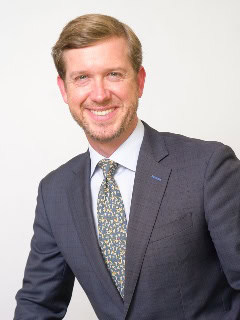
Stefan Grow is a fellow at Defend Forgotten America and General Counsel for Florida’s Medicaid program. He previously served as Chief of Staff at the Florida Agency for Health Care Administration.