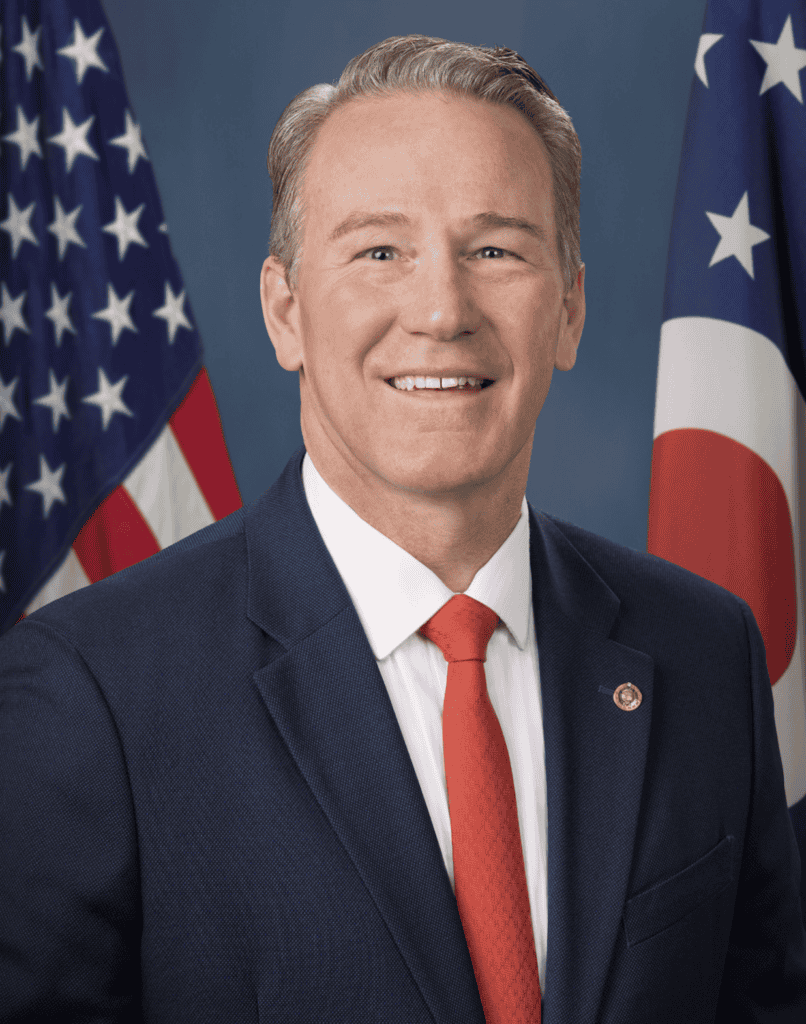
Before joining the U.S. Senate, Ohioans trusted me to serve as their chief elections officer, electing me two times as Ohio Secretary of State. In that role, I oversaw four major election cycles: the presidential elections of 2012 and 2016 and the midterms in 2014 and 2018, not to mention the countless local races and statewide ballot questions in between.
My mission was simple: to make it easy to vote and hard to cheat.
As Secretary of State, I championed voter roll maintenance — making sure individuals are not registered in multiple places, which can open the door for someone to accidentally or nefariously cast an illegal ballot. As I worked to bring our state into compliance with federal and state law, there was criticism, and I was sued.
The case, Husted vs. A. Philip Randolph Institute, spanned years, and ultimately went to the U.S. Supreme Court. We won. Ohio won. And that decision is now legal precedent for voter roll maintenance across the country. Ohio became the gold standard.
It is because of this experience, as the only current Republican U.S. Senator to have served as a Secretary of State, that I can point to Ohio as a state that runs fair and secure elections. Since my time as Secretary of State, Ohio has taken even more steps to ensure our elections remain secure, including requiring photo ID at the polls.
This should not be controversial. Americans show their ID every day — when entering government buildings, at the grocery store, to stay at a hotel, to start a job, or to rent a car. And with photo ID requirements in place, Ohio’s 2024 presidential election saw one of the highest turnout rates of the last four presidential cycles.
It is because of this success that I have worked in the U.S. Senate to champion simple photo ID requirements at the polls across the country. Voter fraud is something that has undermined confidence in our elections, and commonsense measures like photo ID help restore that trust.
Photo ID is not a new idea. In fact, 36 states, including Ohio, already have some form of voter ID law in place. States like Wisconsin and New Hampshire require photo ID, and these laws have stood the test of elections across the country. They work.
This is not just about policy — it is about public trust. More than 80 percent of Americans support requiring a photo ID to vote.
It is not just the American people who support photo ID. I have heard my Senate Democratic colleagues express support as well. Senate Minority Leader Chuck Schumer (D., N.Y.) even said that “our objection, as Democrats, is not to a photo ID. You’d have to define it clearly and properly and easily, but not to a photo ID when you show up to vote.”
I listen to my colleagues on the other side of the aisle to find common ground to make progress on issues where we all agree. After hearing Democrats’ support, I brought this issue to the Senate floor — a clean, simple amendment that would require Americans to show a driver’s license, state ID, passport, military or veterans ID, or a tribal ID to vote in an election.
It turns out their actions didn’t back their words. Every single Senate Democrat voted against the amendment with a vote of 53-47. But this is not over. Americans deserve confidence in their elections, supported by integrity measures like photo ID.
It is time to set a nationwide standard for election integrity. I look forward to continuing to work with my colleagues in the Senate to bring what Ohio has achieved to the rest of the country: making it easy to vote and hard to cheat.
Sen. Jon Husted represents Ohio in the United States Senate.