The Trojan Horse is not just a story from ancient mythology. It is a warning about what can happen when a gift arrives at your doorstep and no one bothers to ask what is hidden inside.
As a Member of Congress and Chairman of the Congressional Peru Caucus, I believe we must sound the alarm about what is happening at the Port of Chancay.
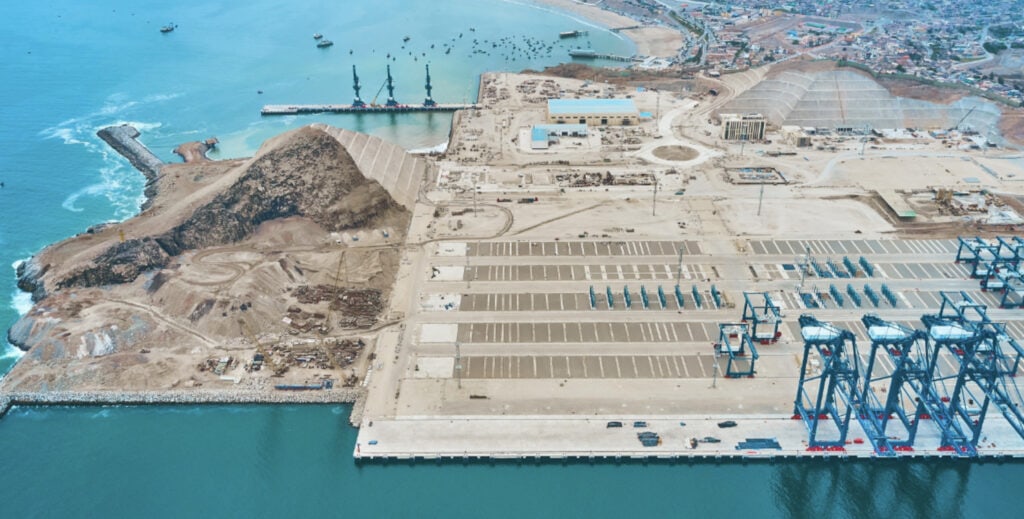
Roughly 4,000 miles south of the United States along the Pacific coast, Peru is now home to one of Communist China’s most ambitious projects in the Western Hemisphere: a massive deep-water port majority-owned and operated by a Chinese state-owned company.
Beijing sells Chancay as a multibillion-dollar investment in Peru’s future. But behind the promises of trade and development is the same playbook the Chinese Communist Party has used around the world: massive state-backed investment, long-term control over strategic infrastructure, unfair economic competition, pressure on local institutions, and growing dependence on Beijing. Chancay is not simply a port. It should be a wake-up call for our entire hemisphere.
Beijing’s Military Presence Is Looming
Let us be clear about the danger. If we ignore what is happening today, we could wake up tomorrow to find that Communist China has established the foundation for a military foothold in the Western Hemisphere.
Chancay was built as a deep-water port capable of receiving some of the world’s largest vessels. The complex includes extensive infrastructure, control facilities, multipurpose buildings, and a tunnel system connecting the port to surrounding transportation networks.
These capabilities may have commercial purposes today. But infrastructure can be dual use.
In a future conflict in the Pacific, access to a strategically located deep-water facility along the Pacific coast of South America could provide enormous logistical advantages to Beijing. Chinese naval vessels operating in our hemisphere would fundamentally alter the security environment of the Americas and bring the military reach of our greatest strategic competitor closer to the United States.
We cannot afford to dismiss that possibility. The warning signs are already there. In 2024, Peru changed its laws amid a dispute over COSCO’s claim to exclusive operation of the port. Since then, legal battles have continued over the authority of Peruvian regulators, including OSITRAN, to oversee Chancay.
That raises a basic question: Why should any foreign state-owned company operating strategic
infrastructure be afraid of transparency and independent oversight? Peru is a sovereign nation. Peruvian law should govern infrastructure on Peruvian soil. Period.
Beijing’s Bait and Switch Initiative
The Chinese Communist Party calls its global infrastructure program the Belt and Road Initiative. At this point, they might as well call it the Bait and Switch Initiative.
The formula is increasingly familiar. Beijing arrives promising investment, infrastructure, jobs, and prosperity. Then comes dependence, political pressure, market distortion, and Chinese control over strategic assets.
Chancay does not exist in isolation.
Chinese companies have acquired enormous influence over Peru’s critical infrastructure, including major portions of Lima’s electricity distribution system. Chinese-backed businesses are expanding across strategic sectors. Meanwhile, Chinese distant-water fishing fleets have repeatedly raised serious concerns throughout the Pacific coast of South America about illegal fishing, depleted fish stocks, environmental damage, and the livelihoods of local fishermen.
This is not partnership when one side increasingly controls the infrastructure, the electricity, the trade routes, and access to natural resources. A gift that empties your nets and takes control of your strategic assets is not a gift. It is extraction and control packaged as development.
Peru and the Americas Face a Choice
The countries of our hemisphere must decide what kind of future they want. Do they want economic relationships with a Communist dictatorship that uses state-owned companies to advance Beijing’s strategic interests and challenges local institutions when the rules become inconvenient?
Or do they want partnerships built on transparency, the rule of law, private enterprise, and mutual respect? The United States must also recognize that we cannot compete with Communist China in Latin America and the Caribbean by simply telling our neighbors what not to do. We must show up. American companies must have the tools and support necessary to compete for major infrastructure projects. The United States must expand trade and investment across our hemisphere. We must strengthen relationships with democratic allies like Peru and offer a better alternative to Beijing’s state-directed model.
When American companies invest abroad, they bring more than capital. They bring innovation, jobs, technology, higher standards, and opportunities for lasting economic growth. And when our neighbors face disasters or instability, the United States has repeatedly demonstrated that we stand with the people of this hemisphere.
Geography matters. Shared values matter. And trusted partnerships matter. Peru is an important friend and strategic partner of the United States. That is precisely why Washington should take Chancay seriously and work with our Peruvian partners to ensure their sovereignty, economic independence, and strategic infrastructure are protected.
The Western Hemisphere should never become a playground for the Chinese Communist Party.
The story of Troy has survived for thousands of years because its lesson remains relevant: when someone delivers an enormous gift to your doorstep, look carefully before bringing it inside. At Chancay, the Trojan Dragon is already through the gates. Now the Americas must decide what to do about it.
Rep. Carlos Gimenez represents Florida’s 28th District in Congress.