Maryland Gov. Wes Moore’s (D) administration missed an opportunity to help bring healthcare resources to rural Marylanders by failing to prioritize Maryland’s application for a piece of the $50 billion funding under the federal Rural Health Transformation Program (RHTP). Our rural communities stand to lose millions in federal funding as a result.
Created as part of the 2025 Working Families Tax Cuts Act, the RHTP is a $50 billion federal grant program to be awarded to states to address the access to healthcare and infrastructure crisis occurring in rural communities across the U.S. This grant program equally distributes $25 billion to all states, but also authorizes states to submit applications for a portion of the remaining $25 billion to pay for specific health and nutrition needs of rural communities.
The Trump administration has made a major commitment to strengthening rural health care by delivering $168,180,838 to Maryland through the RHTP. This funding will improve access to care and strengthen rural health care where Marylanders need it most. However, Maryland’s rural communities won’t see the full benefit they should.
The Moore administration failed rural Maryland by choosing not to pursue a Supplemental Nutrition Assistance Program (SNAP) nutritious food waiver, costing our communities millions of dollars that should have been invested in health care. Maryland had a chance to do better, and state leaders simply didn’t take it, leaving rural communities, families, seniors, and veterans to pay the price.
The Eastern Shore of Maryland is a federally designated health professional shortage area. From difficulties finding providers due to the lack of healthcare workers to lack of broadband access for telehealth services, my constituents have faced the brunt of the healthcare crisis our nation faces.
Rural area residents with chronic diseases and conditions statistically have higher infant mortality rates, shorter life expectancies, and poorer health outcomes including complications from diabetes and high blood pressure.
Eastern Shore veterans who can now seek health services from private providers rather than the Veterans Affairs Administration find it increasingly more difficult to locate such physicians because of physician shortages.
The senior citizen population continues to grow, and those at or below the poverty line are especially vulnerable due to lack of access to long-term care facilities to serve them.
As a physician, a representative of a rural district, and the sole member of the Maryland congressional delegation to support the passage of RHTP, addressing rural healthcare needs for Marylanders has remained a top priority of mine throughout my time serving in Congress. I applaud the Trump administration’s commitment to address this crisis.
Nothing is more important than improving healthcare access, and I made it clear to the Moore administration that I was more than willing to work with them to make sure rural communities, including my district, in Maryland received as much of those additional funds as possible.
Incredibly, the Moore administration’s failure to prioritize Maryland’s application for that additional pool of funds will result in our rural communities missing out on millions of dollars. Let me explain why.
The RHTP funding program instructs states to incorporate five strategic goals in their applications in order to receive that additional funding from 2026 to 2030. Maryland’s application mentioned its intent to meet only three of these goals; workforce development, tech innovation, and make rural America healthy again.
Clearly, these three goals are important in improving the lives of my constituents who are adversely impacted by years of poor healthcare policies at both the state and federal levels — but the poor manner in which Maryland drafted its application is alarming.
According to the Centers for Medicare and Medicaid Services (CMS), which oversees the implementation of the RHTP program, states applying for additional funds were highly encouraged to collaborate with members of their own congressional delegation to coordinate, strategically plan, and help provide assistance to learn about specific needs in their rural districts which the state could include in its final application.
Surprisingly, no one from the Moore administration ever called to ask me for my input or feedback, or to review the application prior to submission. That’s especially significant, since I represent seven out of the nine rural counties (as designated by the federal Health Resources & Services Administration) in Maryland.
In addition to the Moore administration failing to coordinate with the sole physician in our Congressional delegation, and the only member of the Maryland delegation who voted for the creation of RHTP, it intentionally omitted from Maryland’s application a simple fix to address the obesity and chronic disease epidemic in rural communities: implementing a state SNAP waiver to restrict SNAP use to nutritious food.
I have been a longtime advocate and leading member in the House of Representatives to highlight the fact that nutrition plays a major role in how we manage health. To my dismay, Americans who rely on SNAP for food assistance have been able to purchase unlimited amounts of junk food, such as sweetened beverages and ultra-processed foods, with little to no nutritional value. Consumption of these foods has scientifically been proven to lead to negative health outcomes by increasing the odds of developing chronic diseases.
While the occasional soda and bag of chips may not negatively impact one’s health, daily and frequent consumption of non nutritious and ultra-processed foods has been linked to obesity, high blood pressure, and diabetes. According to recent studies, 30 percent to 40 percent of people on SNAP are obese and have at least one diagnosed chronic disease.
As a result of the alarming statistics for increased chronic disease in our country, the United States Department of Agriculture (USDA) and the Department of Health and Human Services (HHS) have encouraged states to implement SNAP waivers to restrict recipients from purchasing non-nutritious foods or face reduced funding. Currently, 18 states have either submitted SNAP waiver applications for consideration or been approved by USDA. But not Maryland!
SNAP waivers are not, and should not, be a partisan issue. Both blue and red states have submitted applications because following the science is not political. In fact, CMS highly encouraged states in their RHTP applications to include a SNAP waiver — which would increase the amount of funds a state receives in their additional allocation. Not including a waiver therefore cost Maryland millions of dollars in funding that will go to other states that recognize the value of restricting unhealthy food in the SNAP program.
However, and unsurprisingly, the Moore administration is playing politics instead of following the science. Instead of promoting nutrition with a reasonable, common sense, and noncontroversial SNAP waiver, the administration excluded the SNAP waiver from its proposal for additional funding — instead proposing the creation of “cold-storage facilities” that supposedly will help end the chronic disease epidemic in rural Maryland.
Governor Moore’s administration ignored this critical opportunity to bring additional healthcare funds into Maryland’s rural communities. As the chair of the House Appropriation Agriculture, FDA, and Rural Development Subcommittee, I remain steadfast in my commitment to helping Maryland’s rural communities, and I encourage Governor Moore to work with me and the Trump administration to address the healthcare needs of rural Marylanders instead of playing partisan games.
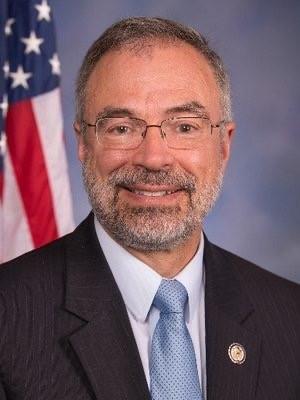
Rep. Andy Harris represents Maryland’s 1st District in Congress.