Op-Ed: Mike Fragoso: John Cornyn is a successful fighter for legal conservatism
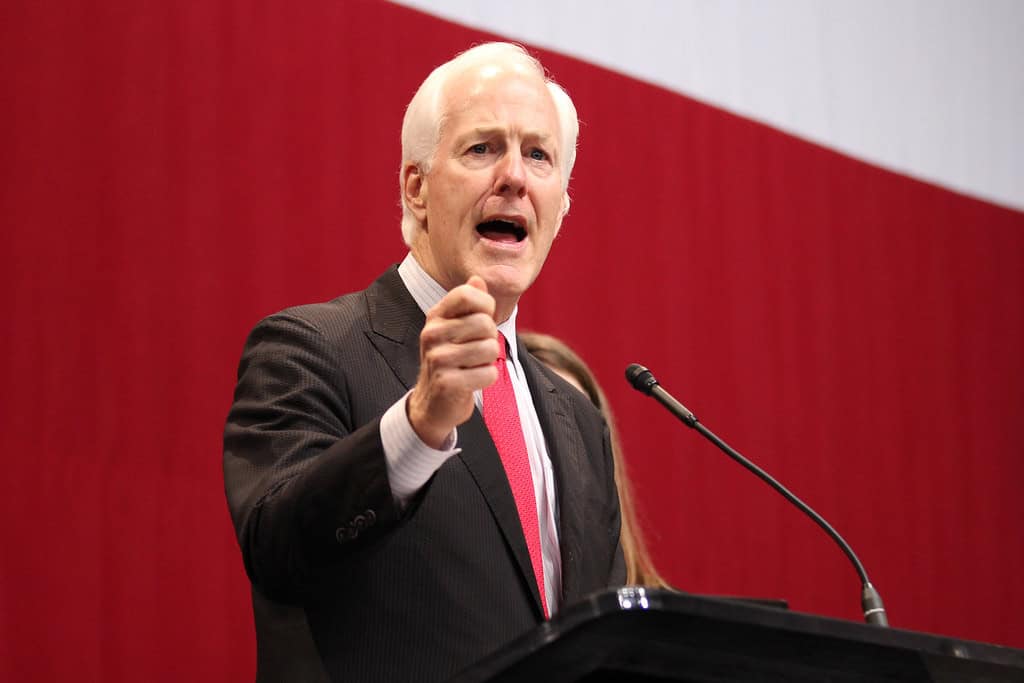
Senator Cornyn has worked tirelessly in the Senate to advance the project of legal conservatism. Over the last decade I have worked closely with him on this project. Whether Senate Republicans were advancing constitutionalist judicial nominees, fighting Biden nominees, or working to enact judicial policies that help judicial conservatism, Senator Cornyn was not only our most reliable fighter but—more importantly—perhaps the most effective.
During the first Trump administration Senator Cornyn was a fierce advocate for our judges. Yes, he worked effectively with Senator Cruz to put great judges on the courts in Texas—filling vacancies his savvy kept open during the Biden years—but his influence went far beyond that. Senator Cornyn was the Republican Whip for the first two years of that administration, which meant he was responsible for ensuring that we had the votes to confirm President Trump’s judges. At certain points in that Congress, with Senator McCain absent for cancer treatment, it was effectively a 50-49 Senate. It was Senator Cornyn who threaded that needle, including for Texas’ superb Judge Andrew Oldham, who was confirmed 50-49.
In the darkest days of the Brett Kavanaugh confirmation, Senator Cornyn was a rock. Whenever my White House counterpart and I had a particularly difficult problem to work through, we’d go straight to the Cornyn office to confer with his staff and to get his advice. Then during the Amy Barrett confirmation, it was Senator Cornyn who—on the spot—came up with that hearing’s most iconic moment, asking then-Judge Barrett to hold up her committee notebook to show that she was acing her hearing with no notes. It was an image that helped convince wavering moderates of her brilliance.
For all the recent talk of filibusters, under Joe Biden, Senator Cornyn helped lead an actual talking filibuster in the Judiciary Committee to stop the radical liberal Vanita Gupta from taking the number three spot at the Department of Justice. While Chairman Durbin wound up breaking committee rules to get Gupta reported out, Senator Cornyn pursued Gupta doggedly for weeks before and after. The left wanted Gupta to be on the Supreme Court. Senator Cornyn’s efforts put an end to that fantasy.
Senator Cornyn’s influence went beyond nominations into the complex and murky world of judicial policy where he always stood ready to advance judicial conservatism. When the Dobbs decision leaked and the conservative justices came under unprecedented security threats, the Supreme Court notified Congress that they didn’t have the ability to protect the families of justices at their homes. I alerted Senator Cornyn to the problem and he got to work, within weeks passing bipartisan legislation to solve the problem. (Democrats were livid that he had successfully coaxed them into protecting the justices who were on the verge of overturning Roe v. Wade.) Just weeks later, the police arrested a would-be assassin at Justice Kavanaugh’s home.
The federal judiciary has its own “deep state,” and Democrats constantly try to manipulate it to make life harder for conservative litigants. Senator Cornyn, though, has always been ready to stop them. In an example that would have been devastating for Texas in particular, the Judicial Conference of the United States announced a new policy to eliminate “single-judge divisions.” (Texas has many such judicial divisions which have been critically important in the state’s efforts to fight back against Barack Obama and Joe Biden.) Upon learning about it, Senator Cornyn led a letter of 19 senators to the judicial bureaucracy telling them to rescind the policy. He also joined Senators McConnell and Tillis in sending letters to the chief judges of the affected districts urging them to follow the law, which allows one-judge divisions, and not the diktats of judicial bureaucrats. The chief judges of Texas all listened to him. Thanks in large part to Senator Cornyn’s efforts, the policy was rescinded within days and Texas litigants can still go to their local courts for justice.
In fact just last month the judicial bureaucracy informed the Chief Justice that it was rescinding a proposed appellate rule that would require donor disclosures for amicus briefs, another terrible idea pushed by the likes of Sheldon Whitehouse. Conservative organizations frequently file amicus briefs in important cases and the left has been trying to stop them for years by requiring them to disclose their donors who can then be subjected to harassment. It’s a bad idea that consistently advanced within the judicial bureaucracy for years until, in the fall of 2024, Senator Cornyn joined Senators McConnell and Thune in warning the judiciary that they were on the verge of taking an unconstitutional action by violating donor privacy. Senator Cornyn insisted that the higher-ranking judges reviewing the policy knew this to be true and should find the courage to act on this knowledge.
It seems they listened because it was the reviewing judges who reached the same conclusion. As explained in a letter to the Chief Justice, “We have recently been made aware of concerns on the part of the Executive Committee of the Judicial Conference that [t]his provision could interfere with the privacy of those [affected] organizations and of their members.” It’s another policy designed to hurt conservatives that Senator Cornyn killed through his effective advocacy.
A lot of this work has been behind the scenes and Senator Cornyn doesn’t run around taking credit for it. But he deserves credit for shaping the most conservative judiciary in generations.
More importantly Senator Cornyn was a key player in sophisticated policy fights that required gravitas and savvy, both of which he always provided in spades. In the end, while his opponent has become an expert in the judicial system as a defendant, Senator Cornyn has mastered its intricacies to help the people of Texas.