Representing the United States of America in five Olympic Games taught me something simple: you can’t train everyone the same way and expect everyone to succeed.
A skeleton athlete who hurls themselves headfirst down an icy tube needs something very different from a swimmer, a gymnast, or a marathon runner. We may wear the same flag on our uniforms and compete toward the same national goal, but no single training program can produce excellence across every sport and for every athlete. What we share are standards: safety, integrity, accountability, the responsibility that comes with representing our country, and clear measurements of success. The pathway to meeting those standards must account for the individual and the sport. A national commitment does not require a national prescription.
I have been thinking about this lesson while studying the proposed rule changes to the Head Start Program. Long before children understand achievement, they’re learning how to play with others, learn lessons about trust, explore their surroundings, and visualize themselves in the world. We often don’t realize the impact of these life lessons and earlier experiences until later, and success will not look exactly the same for every child.
For more than sixty years, the Head Start program has held a national promise that no child’s circumstances at birth should determine the limits of their future. However, like our Olympic athletes, we can’t pretend that every family, child, or community needs the same pathway to discover their potential.
In 2024, the Biden administration recognized a real problem: Head Start programs were struggling to recruit and retain teachers, causing classrooms to close as families waited for care. The previous administration imposed new federal compensation mandates in an attempt to help retain quality teachers, but that created another problem: once fully implemented, those mandates were projected to add $2.1 billion in annual costs without unprecedented additional congressional funding.
Programs still had to meet increasingly stringent federal regulations, leaving many with an impossible choice: find money they do not have or reduce the number of children they could help. Between 2021 and 2024, the program faced the highest reduction rate in access to children in its history, and overall enrollment is still 90 percent, and the average waitlist is 23 percent the size of a program’s total funded enrollment. The Biden administration projected that as many as 106,000 Head Start slots could be lost by 2031 to meet the federal requirements.
A problem was accurately identified, but mandating a national solution created a trade-off between workforce and access. The question isn’t whether Head Start teachers deserve to be paid well. The question is whether Washington can or should decide what every community and family needs to solve the problem.
Maybe the current rules are working for some communities; maybe they’re not. That’s what makes the Trump administration’s proposed Head Start rule great: Reducing Federal Burden for Head Start Programs. The proposed rule removes some federal prescriptions while giving decision-making power to the local Head Start programs and communities actually serving families. Programs can continue doing what has worked, or try new tactics within the federal framework. Head Start recipients would continue to receive billions in federal investment while gaining flexibility over how those resources are used. Many worry this means the government is retreating. Instead, it is changing what government does by protecting a national standard and the freedom of communities to determine how to get there.
Washington can invest and protect the foundation — the floor for kids to stand on — while giving communities more freedom to determine how to achieve outcomes for the families they serve. Greater local freedom doesn’t mean abandoning national standards.
In the Olympics, you don’t just tell every Sport, “Do whatever you want.”
Eligibility, safety, anti-doping, competition standards, objective performance measurements, and financial accountability still matter. The same is true for Head Start. Different pathways to excellence work when we still measure whether we are moving toward the same goal.
Those protections don’t disappear with the proposed rule change. Congress strengthened the Head Start Act in 2007 with research-based measures of success and accountability. The law establishes national standards designed to protect what children receive, helps identify where programs may be falling short, and protects against changes that would reduce the quality, scope, or core services that form the established foundation of Head Start. The baseline remains; communities gain greater freedom over the pathway to reaching it.
That freedom leaves room for local Head Start centers to examine what their children and families actually need, measure where their systems fall short, and build beyond the federal baseline. New York is investing billions toward universal childcare, including a partnership with New York City to expand free care for two-year-olds. Alabama has chosen a different approach, with a voluntary, state-led pre-K model that fits the schools, churches, and community organizations already serving its families.
Neither approach has to become the federal standard. A national commitment can leave room for communities to respond and tailor solutions to their own unique needs.
Greater freedom brings greater responsibility. Head Start programs must use their autonomy to serve families effectively, states can build beyond the federal baseline where their communities need more, and families have a voice in determining those needs and priorities.
Five Olympic Games taught me autonomy and accountability are not opposite. Together, they create the conditions for excellence. We can share a goal without sharing the same path to reach it. Families determine their needs, and together, we have a responsibility to give every child the foundation they need to reach for gold.
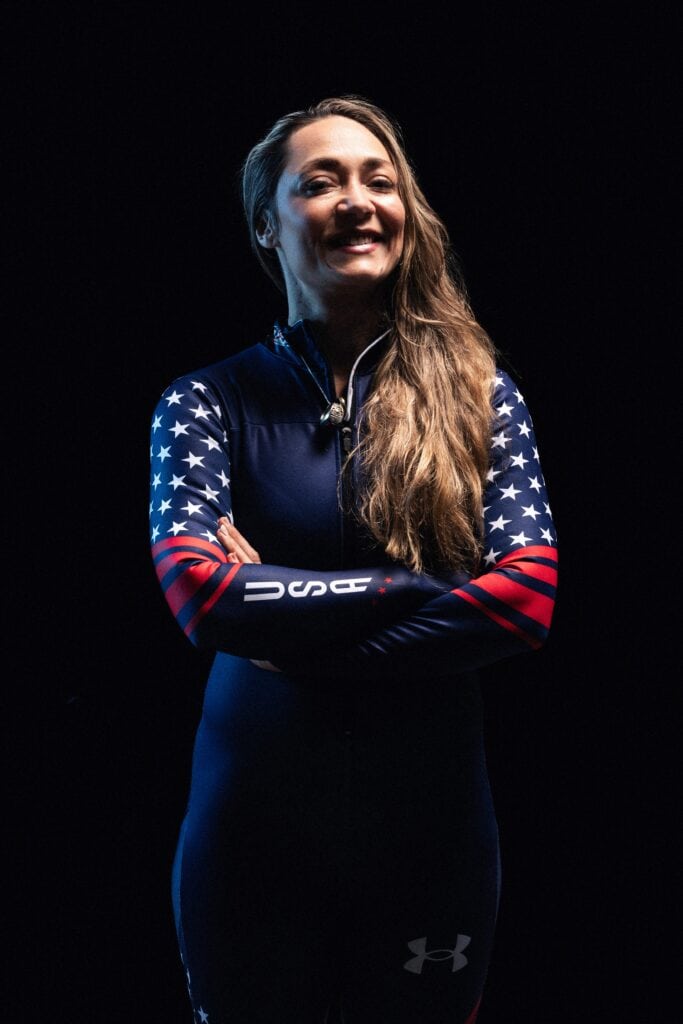
Katie Uhlaender is a five-time Olympian (2006, 2010, 2014, 2018, 2022) and serves as a senior special assistant at the Administration for Children and Families.