For more than two centuries, the United States has understood a simple truth about its own security: instability in the Western Hemisphere never stays local. From the earliest days of the Republic, American leaders recognized that hostile powers establishing a foothold close to home was not merely a diplomatic inconvenience — it was a strategic threat.
That understanding gave rise to the Monroe Doctrine, articulated by President James Monroe in 1823. It was not a call for conquest, but a declaration of strategic boundaries. The Western Hemisphere, Monroe made clear, was not open terrain for European powers seeking to recolonize, dominate, or project force against the United States.
The doctrine lay mostly dormant until President Theodore Roosevelt made it actionable through the Roosevelt Corollary, asserting that chronic instability in the Americas could justify decisive U.S. intervention and enforcement in defense of regional order.
Importantly, only a handful of presidents have truly understood what the Monroe Doctrine demands in practice. Beyond Monroe and Roosevelt, President Grover Cleveland invoked it during the Venezuela Boundary Crisis of 1895, forcefully warning Britain that hemispheric disputes were no longer European business.
President John F. Kennedy enforced it at the most dangerous moment of the Cold War during the Cuban Missile Crisis, when Soviet nuclear weapons in the Caribbean constituted a direct violation of Monroe’s original premise.
President Richard Nixon, clearly viewed Latin America as a strategic battleground, often covertly, to prevent Marxist regimes from aligning with Soviet power in the hemisphere.
President Ronald Reagan revived the doctrine explicitly, confronting Cuban and Soviet influence in Central America and the Caribbean. Most recently, President Donald Trump reasserted Monroe’s relevance by openly declaring it alive and applicable in countering Russian, Chinese, and Iranian influence in Venezuela and beyond.
Those principles were tested directly in 1983.
Operation Urgent Fury, the U.S.-led intervention in Grenada, was widely mocked at the time by critics who dismissed it as heavy-handed or unnecessary. History has been kinder. As I detail in my book, Turning Point: How Reagan Liberated Grenada and Won the Cold War, Grenada was not an abstract exercise in Cold War paranoia. It was a collapsing state under Marxist control, hosting Cuban military forces, building an airfield capable of supporting Soviet operations, and sitting astride vital Caribbean sea lanes.
The Reagan administration acted quickly, decisively, and with clear objectives. The regime fell. American students were rescued. Soviet and Cuban ambitions in the Eastern Caribbean were halted. Most importantly, the operation sent a signal to allies and adversaries that the United States still meant what it said about hemispheric security.
Crucially, Urgent Fury relied not simply on mass, but on precision. Elements of the Army’s most elite units including Delta Force were tasked with missions requiring speed, discretion, and lethality under extreme time pressure. Supporting them were the helicopter crews of new 160th Special Operations Aviation Regiment, whose night-flying capabilities enabled U.S. forces to operate where conventional units could not. These were not symbolic deployments; they were central to mission success.
That same reliance on elite, hemispheric-ready forces carried forward decades later in the Trump administration’s effort to remove Nicolás Maduro. While Venezuela did not see a conventional invasion, the operation rested on the credible threat and selective use of America’s special operations architecture. Intelligence collection, covert mobility, partner coordination, and rapid-strike readiness were all shaped by the same units designed for short-notice crises in America’s near abroad. The presence of Delta operators and Task Force 160 aviation assets in the region sent an unmistakable message: the United States retained escalation dominance, and it was prepared to act decisively if conditions demanded it.
Under Maduro, Venezuela transformed from a regional democracy into a narco-state aligned with America’s adversaries. Russian military advisers, Iranian operatives, and Chinese economic leverage followed predictable patterns. Organized crime merged with state power. Millions fled north, destabilizing neighboring countries and placing immense pressure on U.S. borders. This was not a humanitarian tragedy occurring in isolation; it was a direct challenge to hemispheric order.
The Trump administration’s efforts to remove Maduro through sanctions, diplomatic isolation, intelligence pressure, and overt signaling were not reckless improvisation. They were consistent with the same doctrine that guided American leaders from Monroe to Roosevelt to Reagan. The objective was not occupation or regime-building, but denial: denying adversarial powers a strategic beachhead in the Americas.
Critics often argue that intervention is outdated, that restraint is wisdom. History suggests otherwise. What fails repeatedly is not intervention, but half-measures. Hesitation masquerading as prudence. In Grenada, success came from speed, clarity, and resolve. In Venezuela, the lesson is the same. When hostile regimes collapse under their own corruption, the United States must be prepared to act or others will.
The Western Hemisphere remains America’s first line of defense. Geography has not changed. Power politics have not changed. Only our willingness to acknowledge reality seems to waver.
Operation Urgent Fury was not an aberration. It was a reminder. And as Venezuela demonstrates, the Monroe Doctrine is not a relic. It is unfinished business.
The next test of American seriousness in the Western Hemisphere will not arrive in the form of missiles or uniforms, but contracts and ports. China’s Belt and Road Initiative is already reshaping Latin America through debt-driven infrastructure projects that place strategic assets — ports, energy grids, telecommunications, and transportation corridors — under Beijing’s long-term influence. This is not benign development; it is geopolitical positioning by other means. When foreign powers gain leverage over critical infrastructure in America’s near abroad, the Monroe Doctrine is not violated symbolically — it is violated materially. History is unambiguous on this point: when the United States hesitates to enforce hemispheric boundaries, others move in. Grenada proved that decisive action can halt encroachment. Venezuela shows what happens when pressure stops short. If Washington fails to confront China’s creeping dominance now, the cost of restoring order later will be far higher — and the Monroe Doctrine will exist only as a slogan, not a strategy.
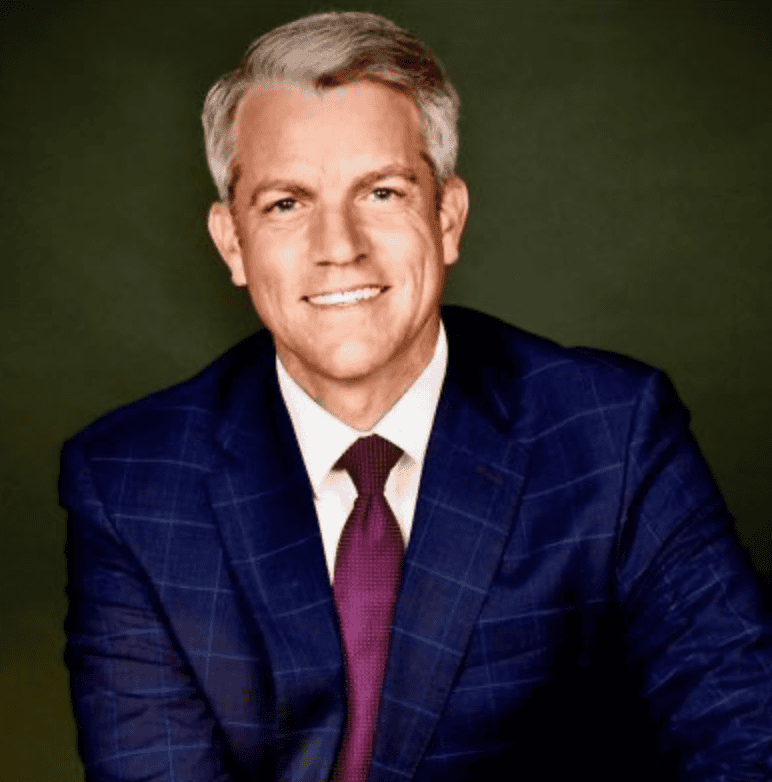
John Bachman is the Host of Newsmax’s John Bachman and the author of the upcoming book, Turning Point: How Reagan Liberated Grenada and Won the Cold War.