While the pearl clutchers continue to rail against investing in joint military defense for Israel, and by extension America, there should be a larger conversation about why such defenses are so essential; especially in Israel’s north. In 2006, United Nations Security Council Resolution 1701 required the Lebanese Armed Forces (LAF) to disarm Hezbollah, and the United States provided military assistance to Lebanon to enforce that resolution. In the two decades since then, successive U.S. administrations have spent more than $3 billion in taxpayer dollars to train and equip the LAF.
What both Republicans and Democrats promoted as building “the LAF’s capacity as the sole legitimate defender of Lebanon’s sovereignty” has, time and again, proven wholly incapable of performing the most basic task of any national military.
Over nearly two decades, the LAF has demonstrated that it is either unwilling or unable to rid itself of Hezbollah, and act as the sovereign military authority within Lebanon’s borders.
That failure is once again on full display. Israel and Lebanon recently entered a temporary ceasefire to allow negotiations between Jerusalem and Beirut after Hezbollah renewed its hostilities against Israel in early March. Yet Hezbollah continues to violate the ceasefire daily, forcing Israeli forces to respond. Meanwhile, Lebanon’s political leadership continues the same familiar song and dance about its ability to address the core issue that keeps the country in a state of paralysis.
At the same time, Hezbollah remains a key external node for the Islamic Revolutionary Guard Corps (IRGC), with reports indicating that Iran continues to send hundreds of millions to the group to help rebuild what was once the crown jewel of its terror proxy network. Hezbollah terrorists themselves have pointed out how unserious LAF efforts to disarm them have been.
In Washington, patience with the LAF is rapidly wearing thin. Senate Armed Services Committee Chairman Roger Wicker (R., Miss.), was perfectly clear when announced that “Congress should not support the LAF unless it acts to disarm Hezbollah completely and immediately.”
Likewise Senate Foreign Relations Committee Chairman James Risch, (R., Idaho) demanded that the “LAF to take tangible action to fully disarm Hezbollah and for the Lebanese government to follow through on long-promised economic reform. The era of complacency and unconditional bailouts must come to an end.”
This sea change in congressional sentiment comes not long after State-Foreign Operations Appropriations Subcommittee Chairman Lindsey Graham, (R., S.C.), abruptly ended a meeting with the head of the LAF after General Rodolphe Haykal refused to recognize Hezbollah as a terrorist organization.
Last fall, the State Department and Department of War allocated more than $200 million to the LAF in two drawdowns of funds. But as congressional approval for new LAF funding becomes increasingly difficult, officials at the Department of War appear to be searching for a workaround.
In its recent FY2027 budget request, the department seeks to provide the LAF with another $36 million through the Counter-ISIS Train and Equip Fund (CTEF). Lebanon has never previously received CTEF funding, as the overwhelming majority of anti-ISIS operations supported by the program have historically focused on Iraq and Syria.
This new budget line is a brazen attempt to fund the LAF under fresh and dubious pretenses, even as the original rationale for more than $3 billion in U.S. assistance over the past twenty years continues to go up in smoke. No matter the shade of lipstick, the policy of propping up the LAF has become yet another failure of the entrenched foreign policy bureaucracy.
This is precisely the kind of endless foreign aid that President Donald Trump has repeatedly railed against — programs that consume billions, fail to achieve their stated objectives, and persist solely through bureaucratic inertia. It is no surprise that leading policymakers are now arriving at the same conclusion.
Until all U.S. assistance to Lebanon and the LAF is directly, measurably, and unequivocally tied to the complete eradication of Hezbollah, that funding must cease. It is long past time to be honest about Lebanon, honest about its refusal to help itself, and to stop throwing good money after bad.
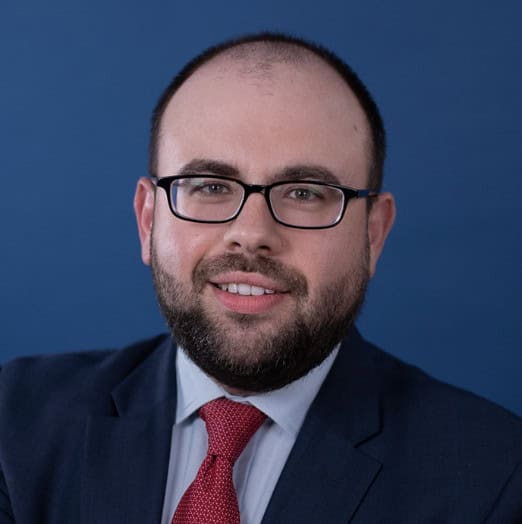
Boris Zilberman is the Senior Director of Public Policy and Strategy at the CUFI Action Fund