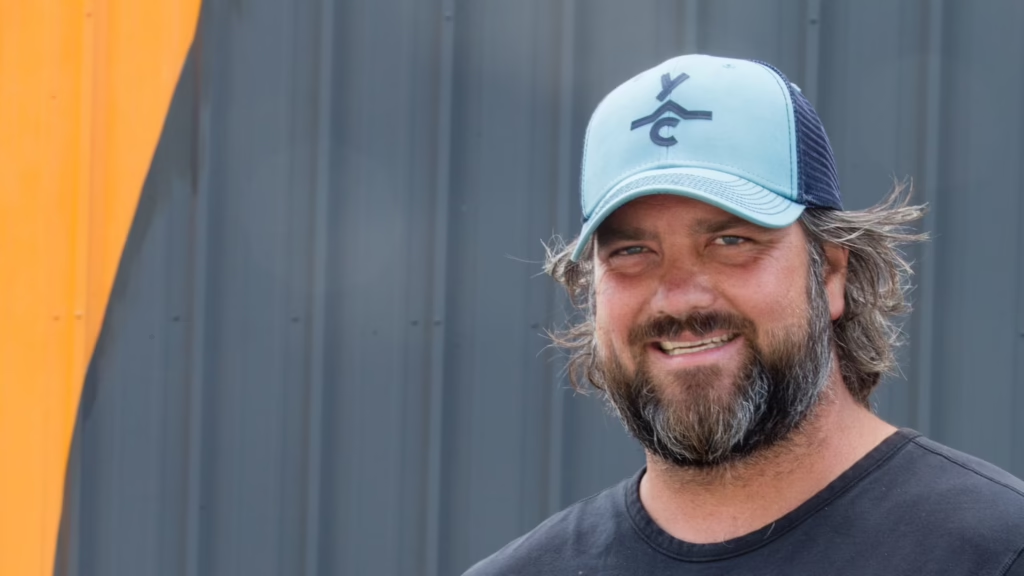
Georgia film executive Ryan Millsap had an unconventional path toward becoming a congressional candidate in Georgia’s open 10th District.
“I’m a commercial real estate guy who was an accidental entertainment entrepreneur, but we need the entrepreneurs to lead the revolution and the renaissance of money making in Hollywood,” Millsap told the Washington Reporter in an interview days after launching his campaign.
When Millsap moved to Georgia over a decade ago his career in commercial real estate took off. “After Lehman Brothers failed in 2008 and the world was a disaster, I partnered with two wealthy family friends of mine in Beverly Hills, and we went out and bought a billion dollars of apartments,” he said. “We raised a lot of money. We raised about $400 million of equity, took about $600 million of debt from Fannie and Freddie and some insurance companies, to buy 8,000 units. It was around 35 deals, and they were all in the southeast. So 4,000 units in Atlanta and 4,000 units in Raleigh, Nashville, Chattanooga, Savannah.”
Because of that work, he explained, “I was in the southeast three weeks out of the month, so I just decided to move to Atlanta. I moved in 2014, and now I’ve done a lot of other commercial real estate deals.”
Shortly after he moved, Millsap had a Chick-fil-A-related epiphany. “When I moved to Atlanta in 2014, Dan Cathy, who owns Chick-fil-A, had just built Pinewood Studios in Atlanta, which is a world class movie studio. It’s one of the best in the Western world, maybe the best, and Marvel had moved in and started making all their Marvel movies in Atlanta, and I was intrigued by that,” he said. So, he built a sprawling 850,000 square foot studio. “I leased my studio to Disney, Sony, Warner Brothers, HBO, Netflix,” and the companies quickly went to work producing some of the biggest movies in recent years.
“We made movies there like Venom, Jumanji, Jungle Cruise, Tomorrow War, Godzilla,” he said.
Millsap’s Georgia studio led him face-to-face with top actors, like Dwayne “The Rock” Johnson and Tom Hardy. One time, he “sat and watched The Rock do a scene where he’s hanging off a cliff in Jumanji for about four hours, and they had him in the same position, saying these same lines for four hours, just over and over and over. And they take breaks in between. They change the lighting, searching for that perfect tape, but the most fun thing about running a facility where they’re making movies is the set design.”
Millsap had constant interactions with staff on set. “I [was] dealing more with the line producers. And these guys are practical. They’re there to make a movie and they’ve got four months. They’re working investment banking hours. Most of those guys are conservative, honestly, because they make money and they don’t want to pay taxes. And then what’s really wild is when you find out that in that industry, probably three quarters of the union members are now conservative. They’re hammer swinging Trump voters who are conservative. They’re conservative, culturally American, and they’re frustrated by the non-Americanism of the left.”
But what got Millsap into politics was ultimately his interactions with Antifa, including one in 2022, when Antifa-aligned activists attacked his study, running up millions of dollars in physical damage.
Millsap said that he was targeted because he “had done a land exchange with DeKalb County that took three years [but] I had no reassurance this was ever going to actually happen.”
While the land exchange hung in limbo, a sprawling Cop City complex training center for police was built right next to him. The activists “moved on to my property, and DeKalb County, which is run by all Democrats, refused to enforce the law of trespassing, refused to enforce the law of sabotage, of vandalism. They just refused to enforce the laws, and I was left on an island.”

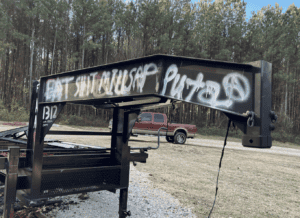


“Laws are only as good as their enforcement is,” Millsap cautioned. “Because Cop City didn’t really have a figurehead, my land next door was used as a staging ground to protest against Cop City and it became a cause that they sewed together, and I became the boogeyman of the entire cause. I became their effigy they could burn. And so then they turned it into stop Cop City and Hollywood dystopia; that was their catchphrase of the day. They burned my equipment…They tried to intimidate my family online. They came to our house. They tried to ruin my reputation. Leftist journalists at ProPublica were enlisted to write hit pieces on me, call me a racist, anti-Semite, anything they could do to try to hurt my life and put me in a bad political position, because obviously DeKalb County is mostly black Democrats, so they would call me a racist, which makes it impossible for me to get anything done in DeKalb County. And that was their point.”
That experience led him to get off the political sidelines himself. He plans to be a pugnacious Congressional candidate when it comes to taking the left on directly.
“If we don’t rise up and fight these people, they’ll take over all our beautiful land, probably try to make it illegal to own land,” he said. “I think that at this point, everybody after going through COVID and seeing all the abuse around COVID by the left, the abuse of power everywhere, I think all of us are much more highly aware of how bad it can get. And so I think my district responds to that and understands that it’s time to punch these people in the face.”
Millsap believes that “seeing what a Democratic dystopia is, and feeling the pain of having to deal with that puts me in a dual position.”
“One, I’m willing to endure the pain to fight my enemies, and I’m willing to endure the pain because I don’t want all of America to look like that,” he said. “I don’t want my kids to have to grow up in America like that. And if we don’t crush these people, they will slowly take over everything, because the only thing they’re actually pretty good at is infiltrating bureaucracy and abusing it. They’re terrible at making money; they don’t know how to build businesses. They don’t know how to do anything of value, but they do know how to be parasites and to use and abuse bureaucracy as a parasitical instrument to siphon power and money.
In Congress, Millsap wants to tackle illegal immigration via “total deportation,” which he said that “everybody wants” in Georgia’s 10th District. He also wants to be an ally to the crypto industry, which he noted is “really about freedom.”
While Millsap is himself moving out of the movie production business, he does think that the Warner Brothers merger with Paramount, which was spearheaded by Larry and David Ellison, will be beneficial to consumers, especially to conservative ones.
“We get a good glimpse of that in what Paramount has done, starting with Yellowstone,” he said. “When I started this, Yellowstone was one of the only shows like that, and you see what Taylor Sheridan has done with them and grown it into a juggernaut, but all on the back of core Americanism shows like Yellowstone, Landman, and Tulsa King. Taylor has a wonderful connection to Americanism, and can express it in a way that people resonate with. Paramount is supported largely by the red states, the flyover states, is what Hollywood calls them, and that’s because they’re speaking their language.”
“I think David Ellison and Larry Ellison are going to keep growing that, and I think you’ll continue to see that with the Paramount Warner Brothers merger,” he said. “I think they’ll go more right, and Netflix will continue to keep drifting left. Netflix’s has become a leftist bulwark.”
While Millsap has clear ideological differences with the Netflix of today, he was impressed by how the Netflix of years past.
“The guys who founded Netflix were tech guys who accidentally ended up in entertainment, and it started making content only as a last ditch effort to avoid bankruptcy,” he reflect. “In 2011, Netflix was going to die, and everybody was taking their content back from Netflix, and as a total Hail Mary, they put up the money for House of Cards, and House of Cards saved them. And at that moment, Wall Street said Netflix might be able to make their own stuff, and their stock started going up and up. Now, since that time, their stock has gone from around $15 million at the peak, to today, they’re at around $350 billion. So we’re talking about 15 years. In 15 years, they’ve created $350 billion. Those guys were entrepreneurs, but they were tech entrepreneurs who were accidental entertainment entrepreneurs.”
Millsap had a suggestion for producers who want to make movies about the Trump era: cast Dennis Quaid as the 45th and 47th President of the United States.
Quaid, Millsap said, “was a great Reagan, but I think it could be an even better Trump. Dennis has so much personality and Reagan had a lot of personality, but it was different. It was so much more patrician, and Trump’s an entrepreneur.”
“Trump’s an American wild man, and he’s quintessentially American in that regard,” Millsap said. “Trump might be the closest thing we’ve had to a pure American president since George Washington and Andrew Jackson. These guys are true, entrepreneurial wild men. They wanted to take no prisoners, they were no holds barred. And they decided to drive American success. Those are going to be amazing movies, but nobody would make those right now, I don’t think, but they should. Just the Maduro movie alone would be incredible. If you made a Black Hawk Down version of Maduro, that would be great. When this Iranian stuff’s done, the jet movies you could make about all those missions, the Navy movies you could make about the subs, the Navy SEAL movies and the Delta Force movies you could make about guys on the ground.”
Millsap wants to take that fighting spirit to Congress.
“I’m just focused on how can I wage war against the left and destroy these people from the inside out, no matter how long it takes me, because I’m motivated,” Millsap explained. “I’m personally motivated. I’m communally motivated in the sense that I just know what’s happening to us. I don’t want it to happen to other people, and it will if we keep ignoring the left, they’ll just keep growing like a cancer.”
Below is a transcript of our interview with Ryan Millsap, lightly edited for clarity.
Washington Reporter:
Ryan, you’re days into your campaign, and you have an unconventional background for a political candidate. For a long time, you were at the highest levels of one of the most liberal industries in America. How have you gotten here as a Republican?
Ryan Millsap:
I’ve always been a Republican. I grew up in a Republican family. My dad is from southern Missouri. He was a special forces Marine in Vietnam. His dad was an entrepreneur. My mom grew up in a cattle ranch in northern Nebraska, so my house was only divided about football. My mom was a diehard Huskers fan, and my dad didn’t necessarily have the same devotion to the Huskers. I grew up in a weird house where my mom was kind of a tomboy, woke up on Saturdays and was laying out her plan for what football game she was gonna watch. Even though I ended up in entertainment, I ended up in entertainment because of commercial real estate. I’ve been doing commercial real estate deals since I was in my mid-20s. I started out doing land deals, and then I started buying a lot of apartments, and I learned the apartment business from a really smart Harvard MBA, and I was a junior partner. We bought around 4,500 apartments together. And then after Lehman Brothers failed in 2008 and the world was a disaster, I partnered with two wealthy family friends of mine in Beverly Hills, and we went out and bought a billion dollars of apartments. And we raised a lot of money. We raised about $400 million of equity, took about $600 million of debt from Fannie and Freddie and some insurance companies, to buy 8,000 units. It was around 35 deals, and they were all in the southeast. So 4,000 units in Atlanta and 4,000 units in Raleigh, Nashville, Chattanooga, Savannah, but you’re buying 200 or 300 units at a time. And by the end of 2013, I had this massive portfolio, and I was in the southeast three weeks out of the month, so I just decided to move to Atlanta. I moved in 2014, and now I’ve done a lot of other commercial real estate deals. I’d taken warehouses and turned them into retail and taken warehouses and turned them into creative office space. And I’d taken old office buildings in L.A. and gutted them and turned them into cool and fun office space. We’d taken old retail and retenanted the whole thing and sold it to institutions. I had a lot of touches in commercial real estate. When I moved to Atlanta in 2014, Dan Cathy, who owns Chick-fil-A, had just built Pinewood Studios in Atlanta, which is a world class movie studio. It’s one of the best in the Western world, maybe the best, and Marvel had moved in and started making all their Marvel movies in Atlanta, and I was intrigued by that.
Washington Reporter:
Were you a comic book kid growing up?
Ryan Millsap:
I didn’t collect comic books, but I did read them. I have a wide variety of friends; whatever kind of esoterica you can imagine, I probably have a friend who’s into it, because I love wildly creative, wildly intelligent, wildly weird people. I’ve always had that really wide spectrum of friends like that. I know what you mean when you ask me ‘are you a comic book kid?’ It’s like asking me if I’m a golfer. Well, I play golf. But I know what real golf looks like. So I found out about the tax credit. I learned about why they were making movies in Georgia. Pinewood was in a really weird location an hour south of town that I had learned Dan Cathy was from. And so what I realized was there was no real real estate strategy. It was just a very, very wealthy guy. He was a wonderful guy. He’s a good friend of mine, but a very wealthy guy building something near his house, because that’s what he wanted, and it worked.
Washington Reporter:
Now were you a Chick-fil-A Guy?
Ryan Millsap:
I love Chick-fil-A. Interestingly, this is a total sidebar, but in my youth, I was in Scottsdale, Arizona, right where Paradise Valley and Scottsdale come together, and I went to an elementary school called Village Vista in the Paradise Valley School District. And at the mall that was by my house, there was a Chick-fil-A in the 80s, which only existed because there was one member of the Cathy family that had a house in Paradise Valley. And so they put a Chick-fil-A in that one random mall. It was the only Chick-fil-A on the West Coast. As a kid I had these really great memories of going in the mall, and that was back when they would hand you a Chick-fil-A chicken nugget on a toothpick. Going to Chick-fil-A was a treat because it was expensive. Next door there was a McDonald’s and we would want to get Happy Meals, but every once in a while, we’d get to have Chick-fil-A. But whether we’re getting Chick-fil-A or not, the first thing I did when I went to the mall was go get a chicken nugget, because they were always there with that tray. So I’ve loved Chick-fil-A my whole life. Anyway, Dan built Pinewood as a fun hobby. A lot of guys that are worth $100 billion build $300 million yachts for fun, and Dan built a $300 million studio for fun. So Pinewood was built in Fayetteville, and there’s a very basic real estate principle that says, if you have a use that works in a bad location, it’s going to automatically work better in a good location. So, on that very basic principle, I went and built an 850,000 square foot movie studio on 100 acres inside the perimeter of Atlanta, only 15 minutes from the heart of where everybody wanted to live was created, which is the south part of midtown Inman Park, Old Fourth Ward. And so it worked great, but I came at it from a real estate standpoint. I leased my studio to Disney, Sony, Warner Brothers, HBO, Netflix. I wasn’t in there making these movies. I just owned the facility where these guys came to rent. So my touches with the industry were not what you get in L.A., where it’s hyper liberal upper management with these major production companies; I’m dealing more with the line producers. And these guys are practical. They’re there to make a movie and they’ve got four months. They’re working investment banking hours. Most of those guys are conservative, honestly, because they make money and they don’t want to pay taxes. And then what’s really wild is when you find out that in that industry, probably three quarters of the union members are now conservative. They’re hammer swinging Trump voters who are conservative. They’re conservative, culturally American, and they’re frustrated by the non-Americanism of the left. So even though entertainment as a whole gets a real bad rap, and it should have a bad rap at the top, down below, it’s just Americans that sometimes swing left, sometimes they swing right, but there’s as many conservatives as there would be at Home Depot, or Costco; it’s a normal sampling of American life. So I ended up building that studio and opening at the very beginning of 2017. I decided to do it in 2015, it took me all of 2016 to get it built, and we opened it in the very beginning of 2017 and we made movies there like Venom, Jumanji, Jungle Cruise, Tomorrow War, Godzilla. So I get to see the highest level of Hollywood. Tom Hardy and The Rock and the top of the industry, were there.
Washington Reporter:
To the extent you’re a film executive, it is because you are a real estate guy.
Ryan Millsap:
I’m a commercial real estate guy. I had to teach the private equity world this, because when I built my movie studio, they thought I was an operator of a movie studio, and I said, no, I’m a landlord, and this is a giant commercial real estate play, and my tenants are Disney, Sony, and Warner Brothers. And so as I taught Blackstone, and KKR, and Carlyle, which had already been in the business, so they kind of understood, because they had bought a big equipment company that just leased cameras and lighting to the business. But most of these guys, it took me a number of years to convince them that movie studios were just real estate. And that’s when they all started to come into the business. Now basically the whole business is owned by private equity.
Washington Reporter:
Fast forward to 2022 which is when the Cop City activism in Atlanta is happening, and your facility is attacked to the tune of $10 million in damage by Antifa activists.
Ryan Millsap:
That’s just physical damage. We’ve even gotten to the economic damage, which was tens of millions of dollars.
Washington Reporter:
Why were you targeted?
Ryan Millsap:
I had done a land exchange with DeKalb County that took three years. We started that in 2018 and it got completed in 2021. By the time it got completed, I had no reassurance this was ever going to actually happen. So while the land exchange is going on, I’m running a parallel life, assuming that the government may never get there on this thing. And by the time that got done, I was in the middle of selling my studio, and the guys who were buying it wouldn’t pay me a fair price for that land. So I kept that land and sold in the studio and kept that land. And two months after that exchange was done, Antifa sued me. Now today, everybody accepts that Antifa exists, but in 2021 everybody was denying the existence of Antifa, and they were calling it a loose affiliation of people who had similar interests. But in reality, Antifa is a well organized network of people that are in law, government, protesters, NGOs, funding sources. This thing is a vast conspiracy network that they all will deny. But it exists. I was sued by a handful of nonprofits and individuals, all with Antifa ties, and at the same time, they moved on to my property, and DeKalb County, which is run by all Democrats, refused to enforce the law of trespassing, refused to enforce the law of sabotage, of vandalism. They just refused to enforce the laws, and I was left on an island. Now, the reason why this was happening is my 40 acres are right next door to the Police Training Center, which they call Cop City.
Washington Reporter:
To me, that sounds like a good name. I would like to live next to Cop City.
Ryan Millsap:
I agree, but laws are only as good as their enforcement is. Because Cop City didn’t really have a figurehead, my land next door was used as a staging ground to protest against Cop City and it became a cause that they sewed together, and I became the boogeyman of the entire cause. I became their effigy they could burn. And so then they turned it into stop Cop City and Hollywood dystopia; that was their catchphrase of the day. They burned my equipment. I have great pictures of that. They tried to intimidate my family online. They came to our house. They tried to ruin my reputation. Leftist journalists at ProPublica were enlisted to write hit pieces on me, call me a racist, anti-Semite, anything they could do to try to hurt my life and put me in a bad political position, because obviously DeKalb County is mostly black Democrats, so they would call me a racist, which makes it impossible for me to get anything done in DeKalb County. And that was their point. That’s what they’re trying to do. I’m still in a lawsuit with them. It’s been five years. We win everything, and they win by losing slowly, by abusing the courts. It’s all abusive litigation. There’s no merit to anything they’re talking about. Antifa and the left are very gifted at gaslighting. So here they sue me and make my land undevelopable because of the lawsuits, and then turn around and say, ‘Millsap’s not fulfilling any of the things that he told the county he would do,’ when I cannot fulfill any of the things that I told the county I would do, because they’re trying to say that the land swap was illegal, and so we don’t even know if the land swap will stand. It was totally legal and it will stand, but dragging out in court, they then want to use the fact that nothing’s happening against me, even though they’re the ones causing the delay. That’s the kind of heinous activity that you have to deal with when you’re fighting with the left.
Washington Reporter:
In both commercial real estate and even dealing with this lawfare, how does this inform how you would want to serve as a member of Congress in terms of what lessons and experience you want to draw on from all of this?
Ryan Millsap:
We’ve gotten to live through five years of absolute hell in dealing with character attacks, financial attacks, political attacks, and we’ve gotten to see a glimpse of what the world would look like if Democrats were in charge. DeKalb County is a microcosm of what the world looks like if the Democrats are in charge. And what I will tell you is that there are some moderate Democrats in DeKalb County, but they are manhandled by the far left. The far left has all the paid protesters who would flip a switch and they can have 100 people show up and act like they’re like locals who are dismayed about X, Y, or Z, and then the far left commissioner can be like, ‘the people really don’t want this.’ And so they can just play all this political theater, and they manhandle anybody who’s not far left. Seeing what a Democratic dystopia that is, and feeling the pain of having to deal with that puts me in a dual position. One, I’m willing to endure the pain to fight my enemies, and I’m willing to endure the pain because I don’t want all of America to look like that. I don’t want my kids to have to grow up in America like that. And if we don’t crush these people, they will slowly take over everything, because the only thing they’re actually pretty good at is infiltrating bureaucracy and abusing it. They’re terrible at making money; they don’t know how to build businesses. They don’t know how to do anything of value, but they do know how to be parasites and to use and abuse bureaucracy as a parasitical instrument to siphon power and money.
Washington Reporter:
To put the cart before the horse a bit, what committees in Congress are of interest to you?
Ryan Millsap:
I don’t know right this second, because we’re really focused on the race; I just know that I’m bringing a lot of talent. I have a lot of experience, a lot of talent in finance, a lot of talent in deal structuring, a lot of talent in understanding values of things and an ability to lead people and gather support around the right kind of causes. We’ll have to work on where that niche is. But right now, I’m just focused on how can I wage war against the left and destroy these people from the inside out, no matter how long it takes me, because I’m motivated. I’m personally motivated. I’m communally motivated in the sense that I just know what’s happening to us. I don’t want it to happen to other people, and it will if we keep ignoring the left, they’ll just keep growing like a cancer.
Washington Reporter:
You’re talking about the domestic left and its impact on Hollywood, but as a consumer of products of Hollywood, I see the Chinese impact on this. How do you see that impacting Hollywood and then more broadly, America?
Ryan Millsap:
You’re nailing it in that regard. I ran that studio for about six years, and one of the things I saw was exactly what you’re talking about, which is why one of the things I’ve been working on is how to build a parallel universe that doesn’t care about our enemies, that makes content for America, and believes that by making content for Americans in an American way, that the rest of the country and the rest of the world will love that just like they did in the 80s and 90s. That’s how we have massive cultural influence, but there’s just a lot less of that than there used to be. So there’s no way, unless you can create a studio that is outside of the Hollywood system of power. Right now, the Hollywood system of power absolutely bows to China.
Washington Reporter:
Tell me about the projects that you’re working on in that space. I saw most of the movies that you were talking about. Eminem is my favorite artist, there’s a great soundtrack with him in Venom. Are these examples of that? What does what you’re describing look like to an American consumer?
Ryan Millsap:
We get a good glimpse of that in what Paramount has done, starting with Yellowstone. When I started this, Yellowstone was one of the only shows like that, and you see what Taylor Sheridan has done with them and grown it into a juggernaut, but all on the back of core Americanism shows like Yellowstone, Landman, and Tulsa King. Taylor has a wonderful connection to Americanism, and can express it in a way that people resonate with. Paramount is supported largely by the red states, the flyover states, is what Hollywood calls them, and that’s because they’re speaking their language. I think David Ellison and Larry Ellison are going to keep growing that, and I think you’ll continue to see that with the Paramount Warner Brothers merger. I think they’ll go more right, and Netflix will continue to keep drifting left. Netflix’s has become a leftist bulwark.
Washington Reporter:
What do you think explains this? You’re mentioning that people in Hollywood do refer to places like where you’re from as flyover states. I know from when I was in Oklahoma a couple years ago that Brad Pitt is from Oklahoma.
Ryan Millsap:
Brad Pitt is from Springfield, Missouri.
Washington Reporter:
He was born in Shawnee, Oklahoma. He’s from there. The first Sonic is from there. Creed Humphrey with the Chiefs is from there. Regardless of where he claims to be from, more broadly, why is there this disdain for half of America with Hollywood? Even just from a basic financial standpoint, it would seem weird to have in many cases, open disdain for Americans. Look at the Oscars; these are just DNC rallies. What explains this?
Ryan Millsap:
Our civics education is incredibly poor in this country, so a lot of people don’t understand how anti-American they are at the fundamental level. If we took people back and said, ‘this is what our forefathers actually believed. These are the documents they gave us, and these documents were focused on one thing: individual liberty, and how do we maintain it,’ a lot would not get it. Now, individual liberty is not the freedom to vote. Individual liberty is the freedom that if 99 percent of people want X, but you are an American and you don’t want it, you get a veto. That’s individual liberty. Well, that precludes communism, that precludes forced socialism. And if we just started with great civics education, then at least if people want to take on these ideas, they’d understand from the beginning they’re anti-American. Right now they think that America is a democracy. They think whatever the masses vote for is what will happen, so America can be anything we vote for; that is not what our forefathers created. That’s not what our forefathers structured. Our forefathers actually hated that idea. I think the core problem is that they actually don’t understand what Americanism is. Let’s assume that if they had that education, they’d understand that the ideas that they like are not even American. But they don’t know that right now. Right now, they think that their ideas are American and their disdain is that they think that collectivism is more virtuous than individual liberty is. Whereas the flyover states, like southern Missouri where I was born, and Nebraska, where my mom was from, and Arizona, where I grew up as a kid, and in Georgia, where we have our whole life, these states, when you get into the rural areas, everyone understands individual liberty. No one wanders on each other’s land without permission. Everybody works together, knowing that we’re coming together, all saying yes to something, but we’re not going to force anything on anybody. That’s in complete contrast to what’s happening in New York with the warm embrace of collectivism; that is a lie. They want to suffocate us with a pillow, the way that Commodus did to his father in the movie Gladiator.
Washington Reporter:
What do you think that this Paramount Warner Brothers merger is going to mean for movie theaters?
Ryan Millsap:
Well, I was a seller of my studio, because there’s a lot of things in flux around making movies, how they’re made. AI is going to have a massive impact on all of that stuff. But with this, we’re talking about the ideas behind this. David Ellison and his father, Larry, who have backed this whole Paramount Warner Brothers buyout, have had a lot of success in the theaters. David has done all of the Mission Impossible movies and a bunch of other things that you’ve seen. I don’t think they want to abandon the theaters, and I don’t think they should. If we’re honest with ourselves as an American populace, all of us would go to more movies if there were better movies. I still love going. But last year, I went to two movies. I went to see Dune Two, which is an amazing movie.
Washington Reporter:
Are you a Dune guy?
Ryan Millsap:
I loved it, Frank Herbert is awesome. But look, I’m a generalist. I’m never like that. I’m never an extremist, and I also went to see Top Gun Maverick, which was fantastic. If there was a Top Gun Maverick or a Dune every week, I’d probably go to the theater a lot more often. I’d probably plan my life around it, but right now, the movies are so bad, and part of the reason they’re so bad is that the left doesn’t even understand good versus evil, because they don’t even believe in evil, but all the best movies are good versus evil. So that’s why they’re so bad at telling stories; they’ve lost the plot.
Washington Reporter:
What explains the lack of even just base financial motivation? These people are some of the richest people on earth.
Ryan Millsap:
Well, yes and no. Try and name one person in America that you know of that you can think of who has gotten billionaire rich off of entertainment who’s alive today. It’s hard. You can’t do it. There’s no Elon Musk there. When I was running a studio, I grappled with this, because I was struggling with where are the smart people? Where are the good decision makers? Where are the entrepreneurs? And as I pushed up the ladder, I finally realized I’m not going to find these people, because Hollywood’s a 100 year old industry, and all the entrepreneurs have been dead for 50 years, so all the people running these studios have inherited those keys from somebody else who inherited them, who inherited them. We’re ten, 15, I don’t know how many generations of leadership in, and these guys are not rich. They didn’t make this money. They might be relatively rich as upper middle class, but they didn’t create this stuff. The guys who founded Netflix were tech guys who accidentally ended up in entertainment, and it started making content only as a last ditch effort to avoid bankruptcy. In 2011, Netflix was going to die, and everybody was taking their content back from Netflix, and as a total Hail Mary, they put up the money for House of Cards, and House of Cards saved them. And at that moment, Wall Street said Netflix might be able to make their own stuff, and their stock started going up and up. Now, since that time, their stock has gone from around $15 million at the peak, to today, they’re at around $350 billion. So we’re talking about 15 years. In 15 years, they’ve created $350 billion. Those guys were entrepreneurs, but they were tech entrepreneurs who were accidental entertainment entrepreneurs. I’m a commercial real estate guy who was an accidental entertainment entrepreneur, but we need the entrepreneurs to lead the revolution and the renaissance of money making in Hollywood. There’s not enough people who know how to start with zero, start with a blank sheet of paper, You’re asking me ‘why are they not driven by the profit motive?’ Well, because most these guys inherited entire organizations. They make giant salaries, they already have a corporate jet, and their lives are really good. So they’re like, ‘why would I take risks?’ It’s incentive models. Elon Musk says it best. Warren Buffett says it too. Show me the incentive, and I’ll show you the outcome, and right now the leadership in Hollywood is not incentivized to be entrepreneurial.
Washington Reporter:
You’ve been a candidate for a couple of days now; what are the top issues that you’re hearing from voters in Georgia’s 10th District?
Ryan Millsap:
We all want to get our country back from illegal immigrants, and we know that the illegal immigration problem is tied to the Democrats’ abuse of voting, to Democratic abuse of voter districts, who gets how many representatives and then who’s actually voting? Deportation of illegal immigrants cleans the country from a representation standpoint, from a voting standpoint, from a cost control standpoint; everybody wants this. In my district, and in my life, that’s an easy decision, total deportation. I’m shocked every time we debate about transgenderism and health care; they call it health care, but really it’s mutilation of children, whether it’s by drug or by knife, it’s just insanity to me. I think we need to take that off the table and call it what it is, which is just child abuse. District 10 has true patriots; they understand how important the hard choices President Trump’s made about Venezuela going in and changing Venezuela so quickly, partnering with the Israelis to take over, to crush our enemies in Iran, that we’ve had a 50 year war with, as long as we do that, decisively, quickly, aggressively and with a level of commitment that ends it, I think everybody’s behind that. I know I am. If we pull off what we are trying to do in Iran, I think we create a Pax Americana like we haven’t seen for 100 years. District 10 is not directly affected by the left and Antifa as much, because it is truly a little paradise of farms and hunting and bucolic life. But it’s coming. It’s on the edge. If we don’t rise up and fight these people, they’ll take over all our beautiful land, probably try to make it illegal to own land. I think that at this point, everybody after going through COVID and seeing all the abuse around COVID by the left, the abuse of power everywhere, I think all of us are much more highly aware of how bad it can get. And so I think my district responds to that and understands that it’s time to punch these people in the face.
Washington Reporter:
You were talking about the Venezuela operation and the Iran operation. I’m thinking this is going to be an unbelievable movie. Would a movie studio produce movies about this that makes Trump the hero?
Ryan Millsap:
I would, I would in a heartbeat.
Washington Reporter:
Who would you cast as Trump?
Ryan Millsap:
Who would I cast as Trump? Maybe Dennis Quaid. He could be great.
Washington Reporter:
He was a great Reagan.
Ryan Millsap:
He was a great Reagan, but I think it could be an even better Trump. Dennis has so much personality and Reagan had a lot of personality, but it was different. It was so much more patrician, and Trump’s an entrepreneur. Trump’s an American wild man, and he’s quintessentially American in that regard; Trump might be the closest thing we’ve had to a pure American president since George Washington and Andrew Jackson. These guys are true, entrepreneurial wild men. They wanted to take no prisoners, they were no holds barred. And they decided to drive American success. Those are going to be amazing movies, but nobody would make those right now, I don’t think, but they should. Just the Maduro movie alone would be incredible. If you made a Black Hawk Down version of Maduro, that would be great. When this Iranian stuff’s done, the jet movies you could make about all those missions, the Navy movies you could make about the subs, the Navy SEAL movies and the Delta Force movies you could make about guys on the ground.
Washington Reporter:
Think back to when American Sniper was made, and it was an unbelievable movie about an American hero, and yet it was not without controversy, because he’s killing terrorists. Do you think that we’ll get to a point where movies like what you just said could be made?
Ryan Millsap:
One-hundred percent. I’m working on that. I need to find the right financial backing, because these are multi-billion dollar enterprises, but that’s where it’s going. Frankly, if we were doing this well, we would be funding this as a country and partnering to create entertainment that told our stories.
Washington Reporter:
This is not without precedent in America, where a lot of our best movies were propaganda for the Cold War.
Ryan Millsap:
One-hundred percent. Think about the original Top Gun and what it did to Navy recruiting. We should be doing that. If you look at the White House Twitter right now, the White House social media feeds, the content they’re putting out in little one minute, two minute clips, that is beautiful Americana. We should be doing that on the big screen.
Washington Reporter:
In one of your campaign videos, you talked about how immigration policies allowed our country to be invaded by people who hate us with a video of these Palestinian, anti-Semitic, anti-American demonstrators. There’s a potential divide within Republicans on Israel, even as you have Islamic homegrown terrorists fire bombing New York City right now. Is this a divide that you see materializing, or are most people aligned with the President on this?
Ryan Millsap:
I’m certainly aligned with the president on it. My district, I believe, is aligned with the president on it, and you can’t argue that Israel has been an amazing ally to us, and we watch what’s happening with this war and between American strength and Israeli strength, we are leveling our enemies. That feels good. It feels good to finally unleash on people that have been chanting Death to America for 50 years and it feels good to see us work so well together in the Middle East. And I think you also see that that strength is creating more allies. Look at the way we an have alliance with Saudi Arabia. I was recently in the UAE before the war started, and I was amazed at how pro-American the UAE is, and how pro-business the UAE is. We are building alliances that are going to make a true Middle Eastern peace, and the last block of that is taking all the economic power from the extremists in Iran. If we can get back to the Persians, if we can get back to the Iran of 1975 that loved the West, that loved western ideas, that loved western lifestyle, and we can secure the Persian Gulf in an area surrounded by people that love westernism, that’s where this Pax Americana comes in for 50 years, for 100 years. It’s going to be very hard for our enemies to thwart the strength that is born from a peaceful Middle East, from a peaceful South America, and from that kind of American strength.
Washington Reporter:
You mentioned Dennis Quaid as President Trump. Who do you think should be cast as Bibi Netanyahu, Xi Jinping, and Putin?
Ryan Millsap:
Are you fishing for a role?
Washington Reporter:
No, I’m not. I’m not attractive enough to be Netanyahu.
Ryan Millsap:
Maybe Jason Statham as Putin. He’s got the hairline, and he’s got the mean face. Casting the Asians is harder for me, because I don’t know those actors as well by name.
Washington Reporter:
I would submit Winnie the Pooh for Xi Jinping. He would be the guy.
Ryan Millsap:
For Netanyahu, I think Al Pacino.
Washington Reporter:
Closer to home, affordability, obviously, is a buzzword for Democrats, after trillions of dollars of inflationary Biden-era spending. What does that mean in Georgia’s 10th District? What are the issues there?
Ryan Millsap:
There are two major things that need to change in order for our economy to really thrive, and that is we need to get rid of all the corruption, all the graft, all of the fraud; just that alone, the amount of money that’s pumped back into the system in a healthy way would be incredible. But two, if you have stability and predictability, economies thrive. And right now, the president, at this point, should have earned everybody’s trust; everything he’s chosen to do has been smart, and I’ve watched that with myself over however many years he’s now been in politics, going from ‘all right, let’s see what he does,’ to ‘this guy knows what he’s doing. This guy’s smart, he’s seeing things other people aren’t seeing, and he’s making decisions that people aren’t willing to make. He’s making entrepreneurial decisions.’ If the Republican Party could get rid of all of the career politicians who have no entrepreneurial background and who have no risk tolerance because they don’t want to risk their careers, and they could get on board with the president in this entrepreneurial activity, we could turn this country into something that had predictable outcomes, predictable economic situations, that then create the environments where you can have thriving economies.
Washington Reporter:
One of your other priorities is crypto. Is this a thing that you’ve tracked throughout your career, or is this something that you’ve discovered more recently?
Ryan Millsap:
Well, it’s really about freedom. So if you believe that Americanism, at its core, is about individual liberty, then you want people to have alternative forms of holding wealth, more liquid forms of holding wealth, easier ways to trade wealth and make trades amongst each other. And I think that crypto is a wonderfully decentralized way for people to express their freedom.
Washington Reporter:
Our of all of the movies that have been produced at your property, which is your favorite?
Ryan Millsap:
With my favorite to watch, it’s probably hard to make a distinction between Tomorrow War and Venom. I thought they’re both just fantastic. My favorite to watch be made was Jungle Cruise. The sets they built on Jungle Cruise were out of this world. They turned my sound stages into jungles and boats and mansions and just the most incredible stuff. It’s funny, because watching movies get made is sometimes like watching paint dry. I sat and watched The Rock do a scene where he’s hanging off a cliff in Jumanji for about four hours, and they had him in the same position, saying these same lines for four hours, just over and over and over. And they take breaks in between. They change the lighting, searching for that perfect tape, but the most fun thing about running a facility where they’re making movies is the set design.
Washington Reporter:
What happens after the movie’s done?
Ryan Millsap:
They’ve tried to create ways to recycle, but it’s so inefficient, and because these movies are all on tight budgets, when you’re at the level of actually producing a movie, now you have a project that has a budget, and the guy who’s in charge of that has strict control and reputational strict liability he doesn’t have the financial liability of it, but he has a strict reputational liability of did you get it done for the budget on time? Again, back to incentives, because his incentive is to stay within the budget, if it’s twice as much cost to recycle, then nothing’s gonna get recycled. And so that’s what the truth of what happens is, basically everything gets trashed.
Washington Reporter:
I watch a lot of movies, and you seem like a suburban Russell Crowe; I don’t know if this is a thing you’ve heard. Who would you cast as me in a movie? Who do I remind you of in your time as a movie viewer, not as a generalist, but I’m curious. I’ll take what I’ll take whatever I can get. I mean, who’s the most attractive actor?
Ryan Millsap:
Let me think. I’ll tell you a funny story. Years ago, I was at the Indy 500 with an old, famous racecar driver named Parnelli Jones. And Parnelli had raced everything in his life, and he got into racing snowmobiles for a while, and one of the guys that was a big snowmobile racer at the time was Sarah Palin’s husband. So he was good friends with Sarah Palin’s husband, and I ended up at a dinner sitting across from Sarah Palin. And Sarah and I had a 40 minute conversation, she is very intelligent, obviously she was very maligned in the press, but it was very enjoyable, intelligent. And at the end of that conversation, she said, ‘you remind me of someone,’ and I said, ‘Brad Pitt?’ And she laughed, and I said ‘George Clooney.’ But she said Mark Cuban.
Washington Reporter:
Interesting. I’ve interviewed Mark Cuban several times.
Ryan Millsap:
She clearly, however, did not think that I look like Brad Pitt or George Clooney.
Washington Reporter:
Russell Crowe is not bad.
Ryan Millsap:
I’m probably fat Russell Crowe.
Washington Reporter:
Well, you’re not in Gladiator. You look like if they did The Next Three Days Part Two: The Next Six Days. You would be living in suburban Atlanta, and your daughter gets kidnapped, and then you have to save her. You’re dressed for it, and you’ve got the hair for it; that is good in politics, that’s rare.
Ryan Millsap:
They say that politics is Hollywood for the ugly.
Washington Reporter:
What’s your thought on that?
Ryan Millsap:
Well, I figure I’m well positioned for it. Okay I’ve got it for you: Adam Sandler. Actually, a combination between Adam Sandler and Timothée Chalamet. Even though you are far more masculine than Timothée, you could sometimes be serious. And I think you could pull off a lot of Adam Sandler’s dry humor.
Washington Reporter:
Ryan, thank you for that, and for chatting today.