INTERVIEW: Off the Hill Leaders, featuring Jason Stverak of the Defense Credit Union Council.
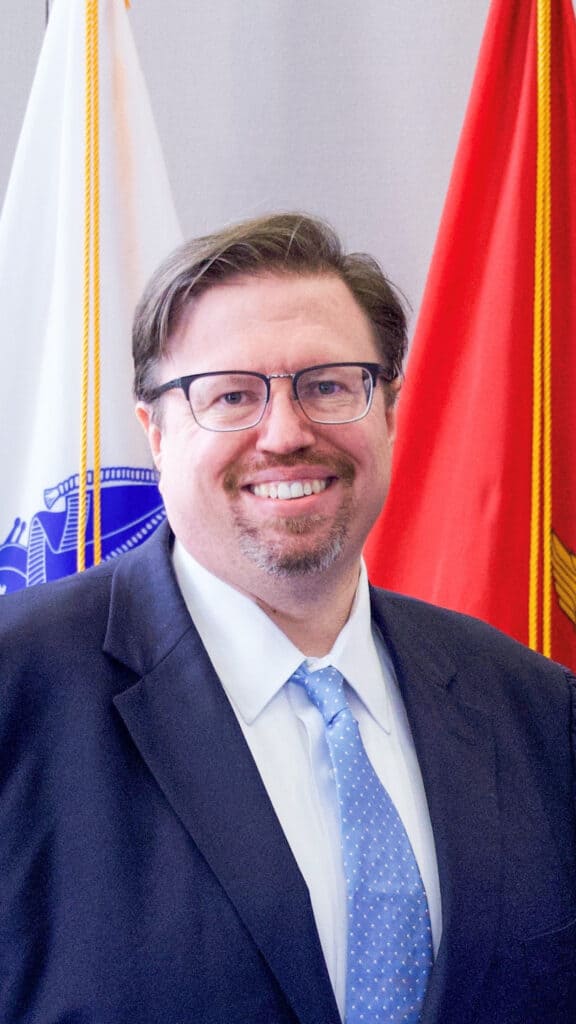
We are delighted to feature Jason Stverak as our next featured Off-the-Hill leader. Jason is deeply-respected downtown, on the Hill, and in the Admin, and he is a prime reason when the Defense Credit Union Council punches above its weight in financial services circles.
Read our interview with Jason here and more about his biography at the end. Of particular interest is Jason’s advice to Hill staffers on how to build mentorships and relationships that will be useful for the long term.
If you have more candidates who you think we should feature in this section, please send them to Brian@WashingtonReporter.news.
- What was your first job in politics or policy?
My first meaningful entry point into politics was interning in college for Larry Pressler. For someone growing up in South Dakota, that opportunity wasn’t just exciting—it was formative. It gave me an early understanding that public service is not theoretical; it’s deeply tied to the lives of people you represent.
What stood out to me even then was how much the job required balancing policy knowledge with constituent awareness. You could be discussing complex legislative issues one moment and then hearing directly from someone impacted by those decisions the next. That connection between policy and people stayed with me and ultimately shaped how I approach every role I’ve held since.
That experience also grounded me in something I still believe today: if you’re going to work in public policy, you have to approach it with humility and a genuine commitment to serve. That lesson started there and has never left.
- Which past job helped prepare you best for your current role?
Without question, my time as Deputy Chief of Staff for Kevin Cramer during the COVID-19 pandemic was the most defining experience of my career.
That period required constant decision-making in an environment with no clear roadmap. Every day involved navigating evolving policy, managing constituent crises, and operating in a high-pressure political environment. It sharpened my ability to think strategically, communicate clearly, and execute under pressure.
But more importantly, it reinforced the importance of loyalty. Loyalty to your team, to your principal, and to the people you serve. In moments of uncertainty, loyalty builds trust and allows teams to function effectively when it matters most. It ensures that decisions are made with unity and purpose, not hesitation.
Working for Senator Cramer also reinforced a broader leadership lesson: this work is about people first. Policy matters, but it’s the people behind it—the constituents, the staff, the stakeholders that ultimately define success. That perspective continues to shape how I lead and advocate today at DCUC.
- Tell us how you got to DCUC—were you recruited? Did you reach out? How was the interview process?
My path to the Defense Credit Union Council was built over time through relationships and a deep commitment to the credit union movement. Having previously served in senior advocacy roles within the industry at CUNA and ACU, I had developed both the policy expertise and the relationships that positioned me for the role.
When the opportunity at DCUC came about, it was a natural alignment. The mission supporting the financial readiness of servicemembers, veterans, and their families is not just important, it’s essential. Defense credit unions operate in environments and serve populations that require a different level of understanding and commitment.
The process itself was less about a traditional recruitment path and more about mission fit. It was clear that DCUC was looking for someone who could navigate complex policy issues while also understanding the real-world impact of those policies on military communities. That alignment made the transition a natural one.
- What’s your favorite thing you’re working on right now at DCUC?
The work I find most meaningful right now is advancing policies that expand economic opportunity for servicemembers and veterans—particularly through veterans Member Business Lending (MBL) reform.
Today, too many veteran entrepreneurs face unnecessary barriers when trying to access capital through credit unions because of outdated statutory caps and regulatory limitations. These are individuals who have already demonstrated leadership, discipline, and a willingness to take risks in service to our country. When they transition to civilian life and seek to start a business, they should not be held back by policies that no longer reflect today’s economic realities.
That’s why advancing legislation like the Veterans Member Business Loan Act is so important. These reforms provide targeted flexibility that allows credit unions to responsibly expand lending to veteran-owned small businesses without compromising safety and soundness.
What makes this work especially rewarding is its direct, tangible impact. This isn’t theoretical policy it’s helping a veteran secure financing, open a business, create jobs, and contribute to their community. It’s about ensuring that the financial system works for those who have already given so much in service to this country.
At DCUC, we’re not just defending the credit union model, we’re advancing it. Veterans MBL reform is a clear example of how thoughtful policy can expand opportunity while staying true to the mission.
- Who is a mentor you admire that has been helpful to you in your career?
I’ve been fortunate to learn from a number of strong leaders, but Senator Kevin Cramer has had a particularly meaningful influence on my career. His leadership style grounded in conviction, clarity, and a deep understanding of the people he represents left a lasting impression.
What stands out most is his ability to navigate complex policy challenges while staying focused on outcomes that matter to his constituents. He leads with purpose, but also with an appreciation for the responsibility that comes with public service.
More broadly, I’ve always tried to learn from leaders who combine strategic thinking with authenticity those who can make tough decisions while maintaining trust and credibility. Those are the qualities that define lasting leadership.
- What’s one piece of advice you would give to a Hill staffer just starting out?
Take every meeting you can. Early in your career, it’s easy to think certain meetings aren’t relevant or worth your time. That’s a mistake. I still encounter people today, years later, who I met once early in my career, and those relationships continue to be valuable in ways I couldn’t have predicted at the time.
Also, understand that while an issue may not seem like the most important thing to you, it is often the most important thing to the person sitting across from you. Treat that with respect. Listen carefully, engage seriously, and never dismiss someone’s concerns simply because they fall outside your immediate priorities.
The Hill is fundamentally a relationship-driven environment. Your credibility is built over time through how you treat people, how you follow through, and whether others can rely on you. If you approach every interaction with respect and a willingness to listen, it will serve you well not just on the Hill, but throughout your entire career.
****
Jason was named the Chief Advocacy Officer for the Defense Credit Union Council in April 2024. Previously he served as the Deputy Chief Advocacy Officer for Federal Government Affairs for the Credit Union National Association (CUNA), now America’s Credit Unions since October 2021. He also performed the duties as Interim Chief Advocacy Officer for CUNA in 2022 and 2023. Before his time with CUNA, Jason worked as the Deputy Chief of Staff for U.S. Senator Kevin Cramer (R-ND).
Additionally, Jason has served as the Legislative Director and Lobbyist for Christians United for Israel Action Fund, and as Deputy Chief of Staff and Communications Director for Congressman Cramer in the U.S. House of Representatives.
A respected voice on Capitol Hill, Jason is a sought-after voice on important issues facing credit unions and the financial services industry. Known for his influential voice for credit unions, Jason has appeared as a guest on nationally syndicated radio shows and the Fox News Channel on several occasions. His articles and press releases have appeared in USA Today, National Review Online, Roll Call, The Hill, Politico, Fox News, Forbes, the Washington Examiner, American Banker, CU Times, and numerous other publications.
Jason was named one of The Hill’s Top Lobbyists in 2022 and 2023, as well as a Top Lobbyist by The National Institute for Lobbying and Ethics (NILE) in 2022, 2024 and 2025. He was named as one of Washington DC’s Most Influential by The Washington Reporter in 2025 and named as a Credit Union Luminaries Finalist in 2025.
Jason is a 1996 graduate of Baylor University. He and his family live in Ashburn, VA.