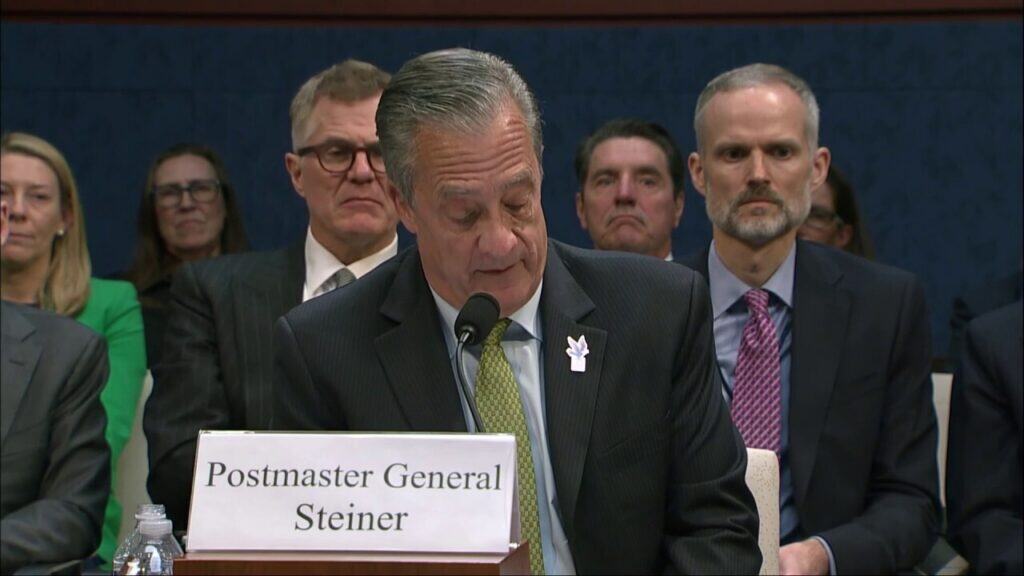
Postmaster General David Steiner indicated new uncertainty around the Postal Service’s controversial USPS Ship program during a House Oversight Committee hearing Tuesday, telling lawmakers the agency is actively reviewing whether to continue the effort after spending roughly $1.5 billion.
The comments came in response to questioning from House Oversight Chairman James Comer (R., Ky.), who pressed Steiner on why the program remains active despite a scathing recommendation from the USPS Office of Inspector General to shut it down. The OIG concluded the platform duplicates services already offered by the private sector and raised concerns about its cost effectiveness.
Steiner did not defend the program. Instead, he acknowledged the findings and signaled that leadership is reconsidering its future.
“We are reviewing the USPS Ship program right now,” Steiner said. “We have looked at the OIG report very carefully. We understand the concerns about the cost and the return on investment.”
He went further, committing to a firm timeline for a decision.
“I will commit to you today that we will make a final decision on the future of that program and get back to the committee in writing within the next 30 days,” Steiner said.
The USPS Ship platform was designed to replace or compete with private shipping software providers that have long powered e-commerce transactions through the Postal Service. Critics argue the agency has spent heavily to replicate capabilities that already exist in the market at lower cost.
The program has become a focal point for lawmakers scrutinizing waste and duplication within federal agencies, particularly as the Trump administration and congressional Republicans intensify efforts to root out inefficient spending.
A Hill source told the Reporter, “Waste at the post office has been a huge concern for decades. This is a great chance for the leadership appointed by President Trump to finally get it right.”
Steiner’s comments suggest the Postal Service may be nearing an inflection point, with mounting political pressure and internal concerns forcing a decision on whether to abandon one of its most expensive recent technology initiatives.