EXCLUSIVE: Republicans slam Pritzker’s economic record, job losses, and “credit card mess”
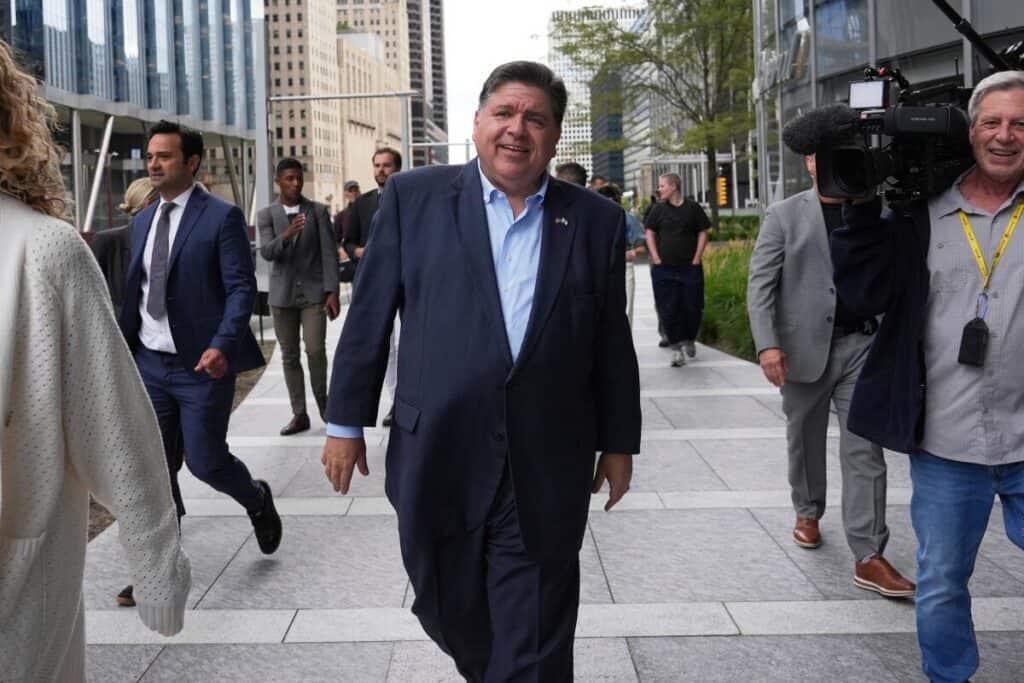
Gov. JB Pritzker (D., Ill.) is mired in a growing political mess after federal regulators gutted his signature credit card fee law, the latest setback for a governor whose state bleeds jobs and residents, and whose economic record is scrutinized heavily. Pritzker is seen widely as a leading 2028 Democratic presidential contender.
“Nobody thinks Illinois is a blueprint for success. Pritzker’s budget deficit is crushing working families, good paying jobs are harder to find, and people are fleeing for safer communities. Pritzker’s legacy is one of destruction and sky high taxes,” Kollin Crompton, communications director for the Republican Governors Association, told the Washington Reporter.
U.S. Census Bureau estimates show Illinois lost more than 40,000 residents to other states in 2025 alone, putting the state on track to lose another congressional seat after 2030. The state already carries some of the largest unfunded pension liabilities in the country, a challenge frequently flagged by watchdogs like the Illinois Policy Institute. Property taxes rank among the nation’s highest, and employers cite the cost and unpredictability of doing business in Illinois as a drag on investment.
Against that backdrop, the unraveling of Pritzker’s credit card policy has only intensified criticisms. Illinois’ Interchange Fee Prohibition Act (IFPA), a first-in-the-nation measure that regulated whether consumers could use credit cards on tips and taxes, was sold as a win for retailers. Major retailers lobbied for the law. However, industry groups and small business associations warned the law was complicated, would cost businesses millions of dollars in compliance, and interfered with federal banking law.
The Office of the Comptroller of the Currency has determined that the IFPA is preempted by federal law and cannot be enforced. The agency warned the law would create a “complex, potentially unworkable, and destabilizing” set of rules on the payments system, especially if other states followed Illinois’ lead. The federal preemption takes effect June 30, just one day before the IFPA was set to go live.
A Republican strategist told the Reporter that “Illinois is becoming only more of a basket case economically. The state is broke, taxes are going up, and the credit card mess blew up in their face. Only the lawyers won. It’s a prime example of why Gov. Pritzker is in the third tier of Democratic 2028 hopefuls, if even that.”
The Illinois Republican Party, in an exclusive statement to the Reporter, tied the broader pattern to the governor personally.
“JB Pritzker’s track record for Illinois includes a failed crime policy allowing violent criminals back on the streets, horrific tax policy driving job creators and families out of the state, and a continuation of the machine politics criminals like Mike Madigan made standard practice in this state,” the party said, referring to the former Illinois House Speaker convicted on federal bribery and wire fraud charges. “Pritzker has failed the state of Illinois, making cost of living and doing business worse from top to bottom.”
The Pritzker administration has defended the governor’s economic record, citing infrastructure investments and efforts to reduce costs. But with Illinois losing residents, employers wary of new investment, and the IFPA’s core mechanism gutted in Washington, Republicans will likely continue highlighting Pritzker’s economic record as a political liability.