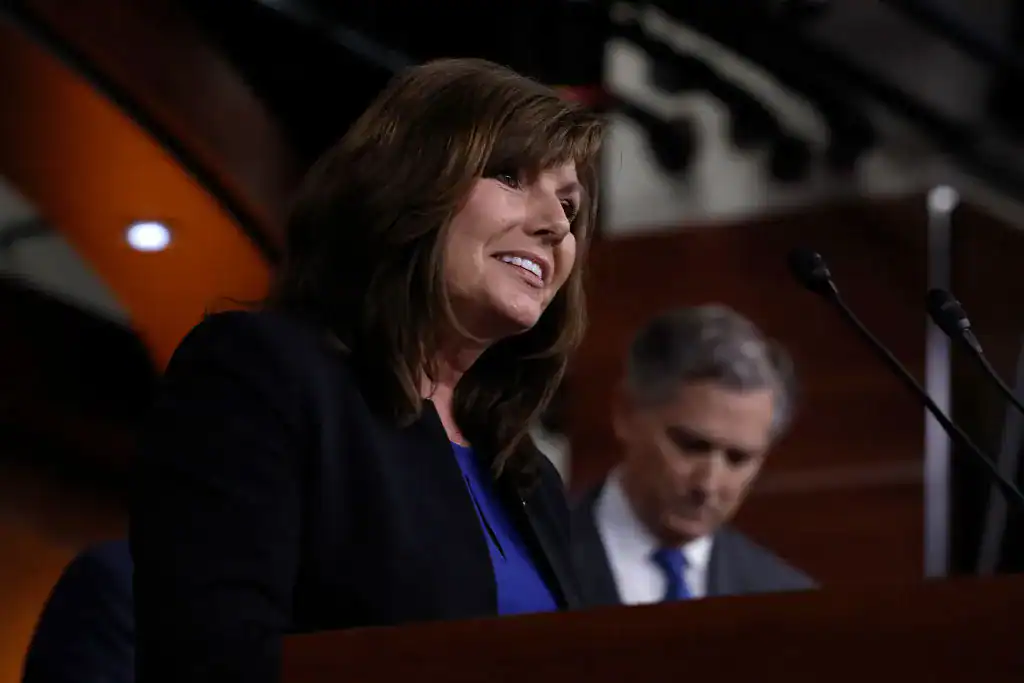
Rep. Diana Harshbarger (R., Tenn.) wants answers from the American Medical Association (AMA) about its “neurostimulator coding working group and its review of Current Procedural Terminology (CPT) codes 64555 and 64590” after the medical group ignored her previous demands for information, which were obtained exclusively by the Washington Reporter.
The Reporter previously reported that Harshbarger wanted increased transparency about the AMA’s CPT codes; but, in her latest letter to the AMA’s president and CEO — Willie Underwood III and John J. Whyte, respectively — Harshbarger noted that she had previously “requested a written response within 30 days. The deadline passed on August 9. As of today, more than nine weeks after my letter was delivered, I have received no substantive response from the AMA.”
“I take that silence seriously,” Harshbarger, a longtime pharmacist, cautioned in her latest letter to the AMA. “A Member of the committee with primary jurisdiction over Medicare asked the organization that administers the nation’s physician coding standard a set of direct questions about conflicts of interest, and the organization chose not to answer. That is the same posture the AMA has taken for months toward the physicians, patients, manufacturers, and journalists who have asked the same questions.”
Harshbarger noted to the AMA that its latest moves have “not resolved my concerns. [They have] confirmed them.” She noted that “what has changed since July is that the membership of the working group has now become public. The AMA did not announce the disclosure, and it did not provide the information in response to my letter. The names appear in a work plan document posted to the AMA’s website without notice, roughly ten months after the working group was formed.”
The AMA’s CPT Editorial Panel is rife with potential conflicts of interests, based on its newly-disclosed membership. “One individual thus sits in the room where the code is written, the room where its application is explained, and the room where its value is set,” she noted. “Yet the work plan discloses no conflict-of-interest findings, identifies no recusals, and instructs the public that unsolicited communications to working group members are not permitted.”
The Reporter previously asked the AMA for its conflict of interest policy for doctors serving on the workgroup, and specifically whether doctors on the workgroup could also be receiving some compensation from companies impacted by the group’s recommendations, but the AMA did not respond.
The Tennessee lawmaker noted that since the AMA did not respond to any of her initial questions, she continues to have the same concerns that she initially stated. She now also has seven new questions and demands for the organization, which include that it “produce the conflict-of-interest disclosures submitted by each member and advisor of the working group, or state the basis on which the AMA declines to produce them.”
Harshbarger concluded her letter to the AMA by noting that she is not alone in having concerns about its policies, and that she will continue her work. “The CPT code set holds its position as a national standard because Congress and the Centers for Medicare & Medicaid Services have trusted the AMA to administer it fairly and transparently,” she cautioned. “That trust is not unconditional, and I am not alone in questioning it. The Chairman of the Senate Committee on Health, Education, Labor, and Pensions has opened an inquiry into the CPT licensing structure, and the Chairman of the House Committee on Oversight and Government Reform has written to CMS about the federal government’s reliance on it. I intend to raise this matter with my colleagues on the Committee on Energy and Commerce and with CMS, and I am prepared to pursue the oversight tools available to the Committee if the AMA continues to decline to answer. I would prefer that not be necessary, and a prompt and complete response would go a long way toward making it unnecessary.”