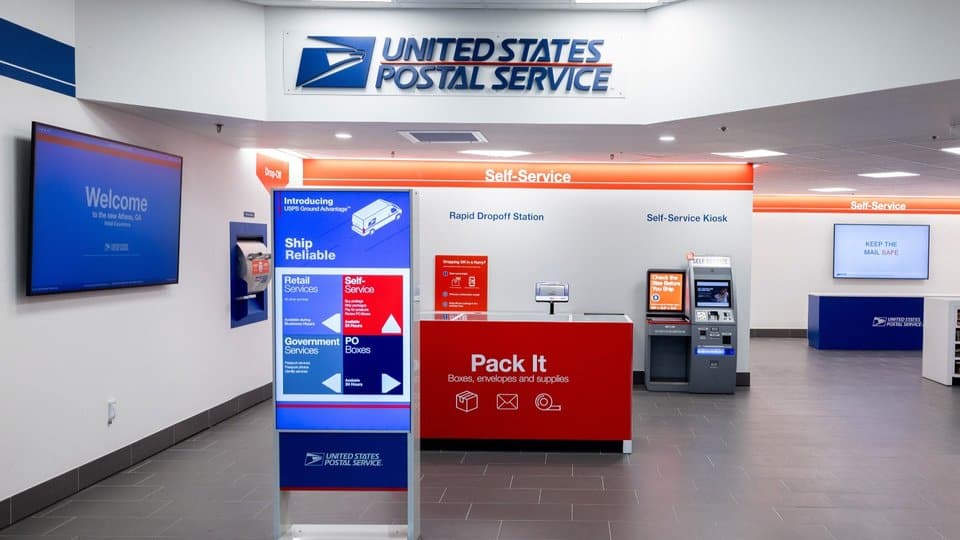
The United States Postal Service has spent roughly $1.5 billion building a government software system that replicates technology the private sector already provides.
The platform, known as USPS Ship, was intended to replace the long-standing PC Postage ecosystem, a network of private software companies that has powered ecommerce shipping through the Postal Service for decades. The model dates back to the Postal Service’s Information-Based Indicia Program launched in 1999, which authorized private developers to sell digital postage and integrate USPS shipping directly into business software.
Companies such as Stamps.com, Pitney Bowes, and Endicia built platforms that allow merchants to buy postage, print labels, manage shipments, and integrate USPS services directly into ecommerce storefronts and logistics software. These companies operate under USPS certification rules outlined in the Information-Based Indicia Program and the Postal Service’s PostalPro shipping technology framework.
For years this public-private model worked well. The Postal Service focused on delivering mail and packages while private companies competed to build better software tools for shippers.
That ecosystem helped power USPS’s growth in ecommerce shipping. According to the USPS FY2023 Annual Report to Congress, the Postal Service generated $78.2 billion in total revenue, including $31.7 billion from shipping and packages. Much of that shipping volume flows through integrations built by private software providers using the Postal Service’s shipping APIs and developer tools.
Rather than continuing to rely on that competitive ecosystem, USPS began building its own alternative platform known as USPS Ship, part of the agency’s broader Delivering for America modernization strategy. The system attempts to replicate capabilities already widely available in the private market: buying postage, generating shipping labels, managing shipments, and integrating with ecommerce systems.
Much of the work has been outsourced. Federal procurement records show large technology contracts awarded to Accenture Federal Services to support USPS technology modernization and digital commerce systems.
Oversight officials have raised concerns about how those contracts have expanded. A USPS Office of Inspector General audit of Accenture contracting practices found the Postal Service raised the ceiling on a major Accenture contract from $750 million to $1.95 billion without evaluating competitive pricing.
The watchdog concluded that the Postal Service had “continued to rely heavily on Accenture’s services” while expanding the contract rather than seeking competitive bids. Further, the Inspector General concluded the waste was so significant that the program should be shut down immediately—a recommendation the USPS CFO agreed with.
Oversight officials have also warned that the Postal Service’s massive contracting footprint creates fraud risks if systems are poorly monitored. Investigations by the USPS Office of Inspector General have repeatedly uncovered contractor fraud schemes tied to postal technology and payment systems.
The economics of USPS Ship are also difficult to ignore. Postal contracting records and oversight reports indicate the Postal Service has spent well over $1 billion on ecommerce and shipping IT systems, including major development work tied to USPS Ship and related platforms.
Industry estimates place the total cost of the project and related systems at roughly $1.5 billion.
Yet available market data suggests the platform processes only a small fraction of overall postal shipping volume. The Postal Service reported $31.7 billion in shipping and package revenue in FY2023 in its Annual Report to Congress. Industry estimates suggest USPS Ship currently handles roughly $1–2 billion of that total, meaning the government-built platform processes only a small share of postal ecommerce shipping despite the enormous investment required to build it.
Meanwhile, the private PC Postage ecosystem continues to process vastly larger volumes of shipping transactions while costing the Postal Service far less to operate.
Not surprisingly, many shippers have shown little interest in migrating. Businesses already have mature integrations through private shipping software providers that offer reliable tools, fraud protections, and responsive support. Switching systems would require engineering work, operational changes, and employee retraining with little obvious benefit.
Yet USPS has continued pushing customers toward the new platform. Some shippers say they have been warned that shipping discounts could disappear if they continue using private postage platforms instead of migrating to USPS Ship.
That raises a deeper policy concern. The Postal Service operates under oversight from the Postal Regulatory Commission and statutory frameworks such as the Postal Accountability and Enhancement Act and the bipartisan Postal Service Reform Act of 2022, which were designed to stabilize the agency’s finances while maintaining fair competition in postal markets.
A Senate aide familiar with postal oversight put it bluntly: “If USPS wants to grow its package business, the last thing it should do is push away the private companies that built the ecommerce ecosystem in the first place.”
Another congressional staffer described the situation even more simply: “This is government trying to reinvent software the market already solved.”
The Postal Service should absolutely modernize its technology. But innovation should improve what works, not replace it with expensive government-built alternatives like USPS Ship.