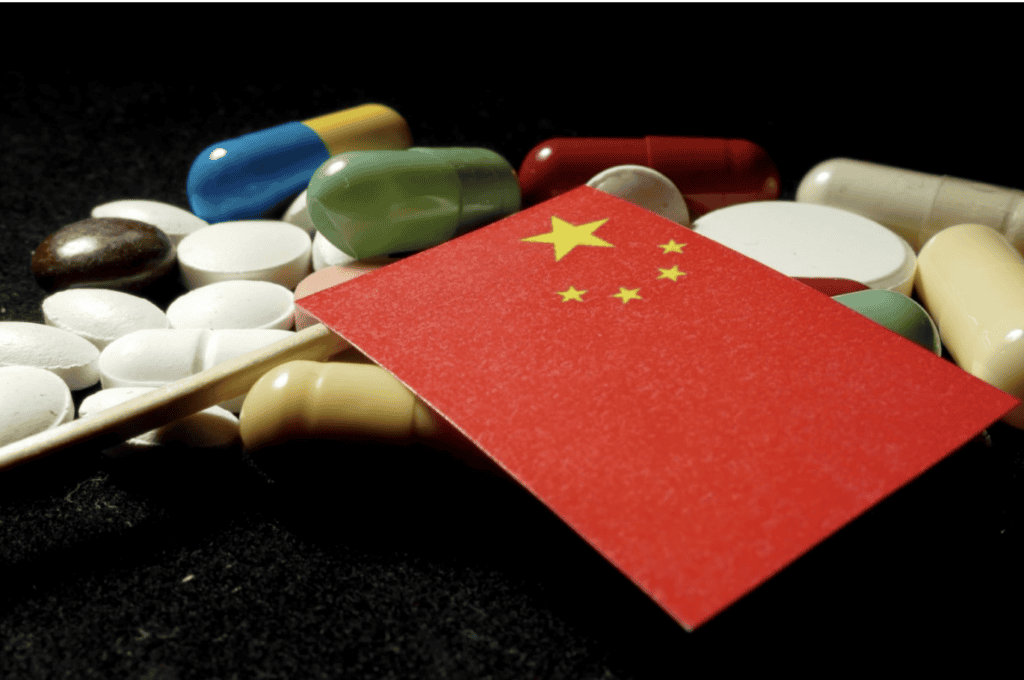
A Chinese drugmaker with a record of regulatory problems and ties to the Chinese Communist Party (CCP) should not be operating anywhere near the U.S. pharmaceutical supply chain. Yet Sinopep, the Chinese drugmaker, has managed to do just that, prompting fresh scrutiny on Capitol Hill and a blunt warning from Sen. Rick Scott (R., Fla.). As Scott put it, the FDA’s decision to allow the company favorable treatment “is not just a public health failure” but “a direct threat to American national security.”
We agree with Senator Scott.
As Sen. Tom Cotton (R., Ark.) has pointed out in his well-regarded report on decoupling from China, the United States remains deeply dependent on China-linked sources for critical drugs. Congressional hearings have focused on this risk. Sen. Eric Schmitt (R., Mo.) has also been a leading voice on the need to address the threat of China to our drug supply chain.
To its credit, the Food and Drug Administration’s (FDA) leadership has taken these risks seriously. Administrator Mehmet Oz has made supply chain resilience top priority and he deserves full credit.
But cases like Sinopep show that much more needs to be done.
At the Washington Reporter, we understand the FDA faces a difficult balancing test. It is easy to demand getting China out of our drug supply chain, but what happens when Chinese companies have the only products available? But as Senator Scott and others have pointed out, it is better to fix the problem for long term than wake up during the next COVID crisis and be fully depending on the Chinese Communist Party for access to medicine.
At a minimum, the FDA should increase scrutiny of high-risk foreign manufacturers, limit carve-outs for repeat violators, and work with Congress to accelerate domestic production of key drug inputs. If the FDA gets this done, especially with regards to companies like Sinopep, they will have our full support and appreciation from the American people.