No one questioned President Joe Biden’s ambitious goal to tackle the disease that would take his son’s life. His “Cancer Moonshot,” launched in the final months of the Obama administration, and emphasized during his own presidential campaign, declared that his administration would “cure cancer as we know it.”
It was a lofty goal, and one clearly close to his heart. He made it a central part of his legacy. However, the breakthrough millions of Americans suffering from cancer had hoped for did not materialize.
While the “Moonshot” helped elevate the conversation through roundtables, advisory efforts, tobacco-related proposals, and commitments to expand research and data-sharing, it has yet to be directly tied to new treatments or clear near-term breakthroughs.
Despite this limited progress, if you look around today, scientists are on the cusp of a revolution in how we treat cancer. Much of the groundwork for that shift was actually laid during President Donald Trump’s first term.
When the United States confronted the worst pandemic in a century, President Trump repeatedly took decisive steps to unleash America’s drug makers to do what we do best: Innovate. Most experts said it would take years to develop an effective vaccine for COVID-19, but Trump promised America would develop a gold standard vaccine in less than a year — an unprecedented time frame — and put his administration to work to get it done. He made a bet that when we unleash the full power of American industry and remove the red tape that so often gets in their way, we can deliver for the American people.
In the process, the President didn’t just deliver on his promise — he helped save untold lives and in so doing laid the foundation for the next breakthroughs that will tackle various diseases and transform cancer treatments.
For decades, scientists had studied the potential for messenger RNA, or mRNA, technology to treat serious diseases, including cancer. By encoding instructions that train the immune system to recognize specific threats — such as a virus or a tumor — and then produce proteins that neutralize these threats, the theory was that mRNA could produce more precise and effective treatments. It also offered the potential to develop new treatments faster because unlike conventional therapies and vaccines, producing mRNA treatments doesn’t require complex biological manufacturing.
But there were still hurdles inside and outside of the lab to translate this promise into real-world success. As COVID-19 spread, time was our enemy. President Trump’s quick actions and smart policies completely changed the game. His team freed up the infrastructure and resources to test this technology at scale, refine the science, and figure out how to safely administer mRNA treatments into the body.
Trump’s leadership paid off. Now mRNA vaccines are credited with saving millions of lives, and potential applications across a wide range of diseases have raced ahead.
Today, over 100 clinical studies worldwide are underway. They’ve enrolled thousands of patients testing mRNA treatments for cancer, including some of the deadliest forms — lung, pancreatic, kidney, bladder, glioblastoma, and more. The early results for many of these treatments are extremely promising, showing dramatic reductions in cancer recurring or leading to death over the span of years. It’s likely we’ll see the first mRNA cancer therapies go to market before the end of President Trump’s second term.
These aren’t one-size-fits-all treatments either. Every tumor has its own fingerprint, and thanks to advances in mRNA technology, the treatments being tested are tailored to each person’s unique cancer. As Larry Ellison said when Trump launched his landmark Project Stargate to catalyze AI development in America, AI is supercharging this process, equipping scientists with new algorithms to analyze tumors, sequence their unique mutations, and design treatments that match those mutations.
In short: we’re on the verge of patients being able to get more precise and genuinely personalized cancer treatments. That progress is the direct result of President Trump’s leadership and belief in American ingenuity — and it may turn out to be his most consequential achievement of all.
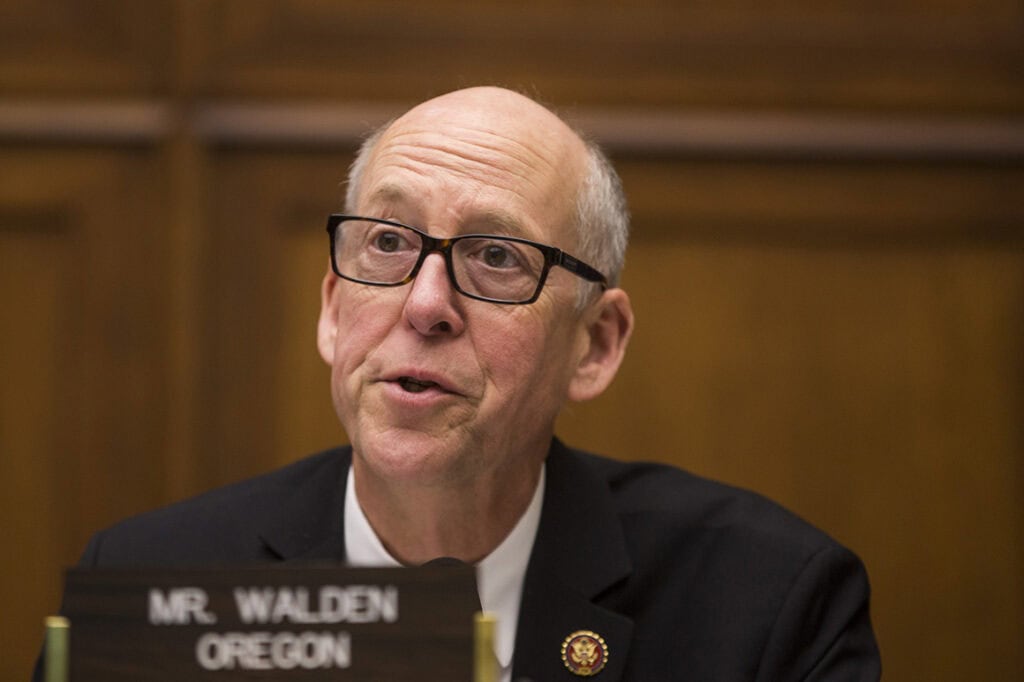
Rep. Greg Walden is a former United States Congressman who represented Oregon’s 2nd congressional district.