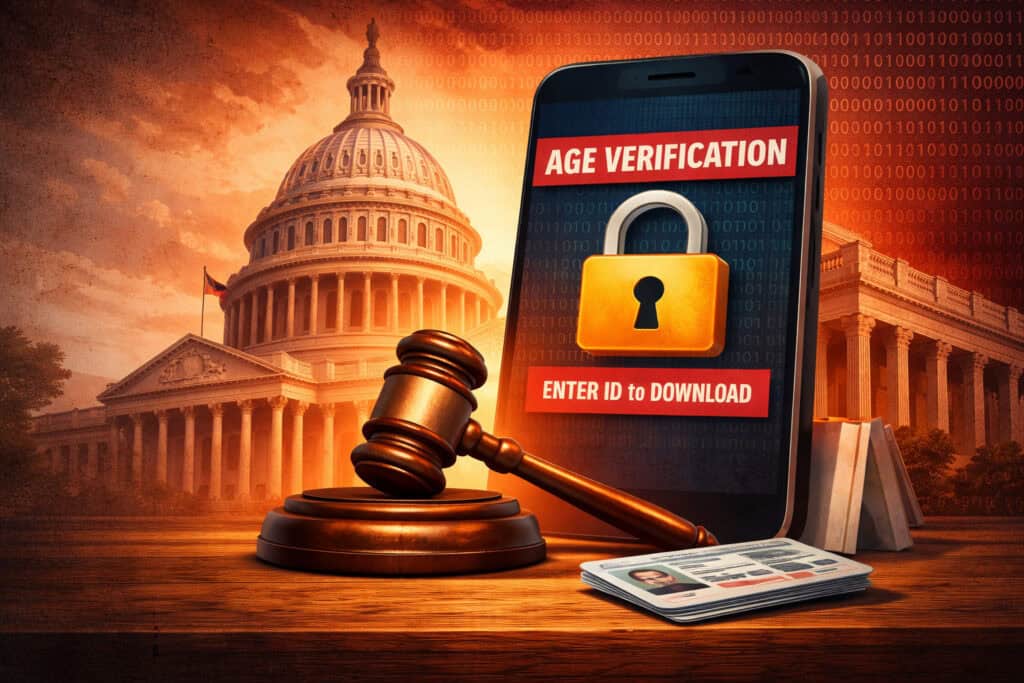
The App Store Accountability Act, championed by Rep. John James (R., Mich.), is Congress’s latest effort to protect children by regulating how app stores operate. The bill would require major app marketplaces to verify users’ ages and obtain parental consent before minors can download or purchase apps.
Proponents argue this is common sense. There are age restrictions for buying alcohol, so why shouldn’t there be enforced age restrictions for downloading apps? And as social psychologist Jonathan Haidt argues in The Anxious Generation, excessive time online and on social media can have real negative effects on teens.
But like many bills that sound good on the surface, the current version of the App Store Accountability Act carries serious unintended consequences.
First, it effectively turns app stores into compliance arms of the federal government. The only way Apple or Google could “know” whether a user is an adult is by requiring people to submit a driver’s license or other identification before downloading apps. That would apply to everyone, not just parents or kids. Some people might accept that. Many will not. Why should an adult need to upload a driver’s license to download WhatsApp? How will seniors react when they are told they can no longer download basic apps without submitting ID?
Second, this kind of mandatory data collection creates obvious security risks. Centralizing copies of driver’s licenses or passports in app store systems makes those platforms even bigger targets. When there is a breach, the damage would be enormous.
Third, this approach risks creating the appearance of, but not delivering, safety. Fake IDs exist and kids can still use their parents’ devices.
Parents are rightly worried about screen time and the addictive and often toxic nature of social media. Many already delay giving kids smartphones or access to social platforms in the first place (as any parent with young kids can attest to). What we do not hear is parents saying they would feel much better if their kids just needed a one-time permission to download apps.
There are better approaches, like the bipartisan effort led by Sens. Tom Cotton (R., Ark.) and Tim Kaine (D., Va.) to get phones out of schools. Another is giving FBI Director Kash Patel’s agency the resources it needs to go after online predators and criminal networks directly.
The App Store Accountability Act identifies a real problem. But in its current form, it sweeps too broadly, creates new risks, and needs serious revision if it is going to protect kids without sacrificing privacy, security, and basic common sense.