The greatest challenge facing the United States today is not a distant or theoretical threat. It is happening now, and it will determine whether we lead the world in the decades ahead or if we watch a hostile foreign power set the rules. This challenge will shape economic growth, national security, and global power for the next century.
That challenge is artificial intelligence (AI).
Research shows that China is rapidly closing the gap with the United States in AI research and talent development. If America fails to lead, China will set the standards for how artificial intelligence is developed, deployed, and used around the world. China has made its ambitions unmistakably clear. The Chinese Communist Party (CCP) has declared artificial intelligence central to its national strategy, with President Xi Jinping calling AI an “epoch-making technological transformation” capable of reshaping humanity and directing Chinese firms to lead humanity’s development. Beijing is backing that rhetoric with massive state investment in AI research, industrial capacity, and talent pipelines.
China is a bad actor. It steals intellectual property, coerces private companies, censors information, and uses state power to distort markets. The Information Technology and Innovation Foundation warns that China’s coordinated push to dominate advanced industries, including artificial intelligence, poses a direct threat to U.S. economic strength and national security if left unchecked; simply put, this is not a fair competition.
President Donald Trump understands this threat clearly. His administration prioritized American strength, whether through restoring U.S. energy independence or elevating U.S. leadership in artificial intelligence, with Trump officials openly framing AI innovation as central to the competition with China and issuing executive orders and directives to accelerate that effort.
Trump was early and he was right. What should concern Americans today is reflexive opposition to Trump. Too often, the far left appears more motivated by its hatred of Trump than by clear-eyed assessments of American strength. We have seen this pattern repeatedly.
When Trump moved to restore American energy independence, the left reflexively opposed it, dismissing expanded domestic production as unnecessary or even dangerous. Today, however, reliable and affordable energy is widely recognized as essential to economic stability and national security and to powering modern infrastructure, including data centers and advanced technologies.
Similarly, when Trump raised concerns about China’s lack of transparency during the early days of COVID and criticized international institutions for deferring to Beijing, he was ridiculed and attacked. Subsequent reporting confirmed that Chinese authorities delayed the release of key outbreak data, frustrating global health officials and hindering early response efforts.
We cannot afford to let political resentment from the left undermine policies that protect our country. If China succeeds in dominating AI, it will not simply build better tools. It will shape global technical standards, surveillance systems, military applications, and economic rules in ways that reward authoritarian control and punish free enterprise. That outcome would weaken American workers, companies, and sovereignty.
The path forward is clear. The United States must own the future of AI by investing in American innovation, protecting intellectual property, securing supply chains, and ensuring energy abundance to power the technologies that will define the next century.
The question is simple. Will we lead the future, or will we allow political resentment to weaken America at the moment strength is required?
For the sake of the next generation, the United States must choose leadership.
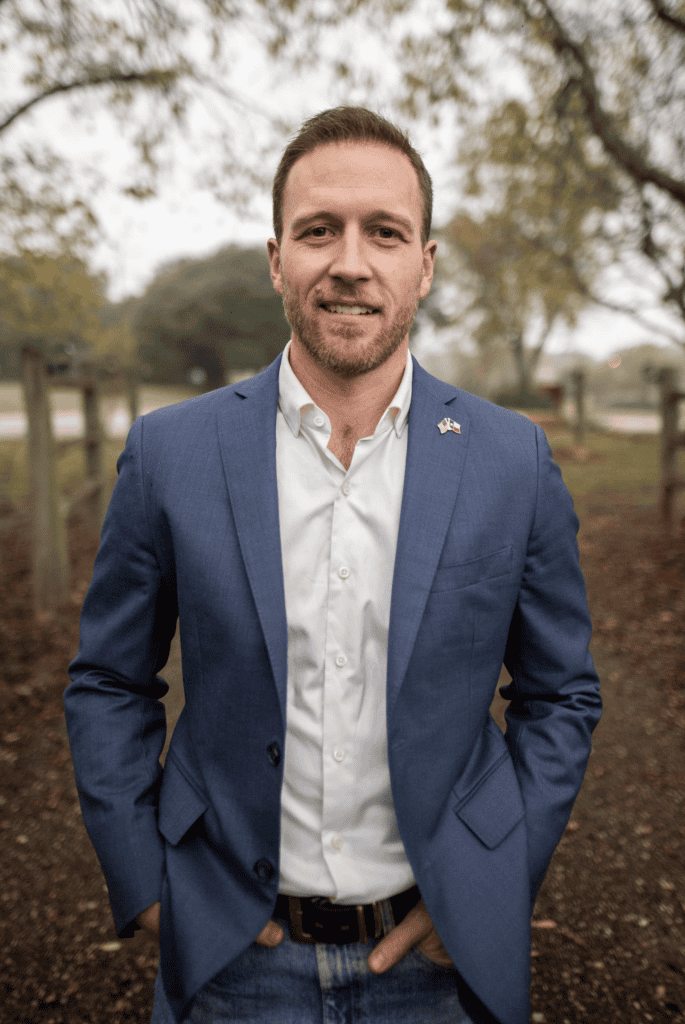
Jace Yarbrough is the Trump-endorsed Republican candidate for Congress in Texas’s 32nd District, representing communities across northern and eastern Texas. An Air Force Reserve officer and attorney, he is a graduate of the University of Texas at Austin and Stanford Law School and focuses on national security, technology policy, and ensuring America wins the strategic competition with China.